Skip to content
You can now search across every topic, entity and event.What's new
Iran Conflict 2026
3JUN

Day 59: zero Iran instruments signed

3 min read
09:04UTC

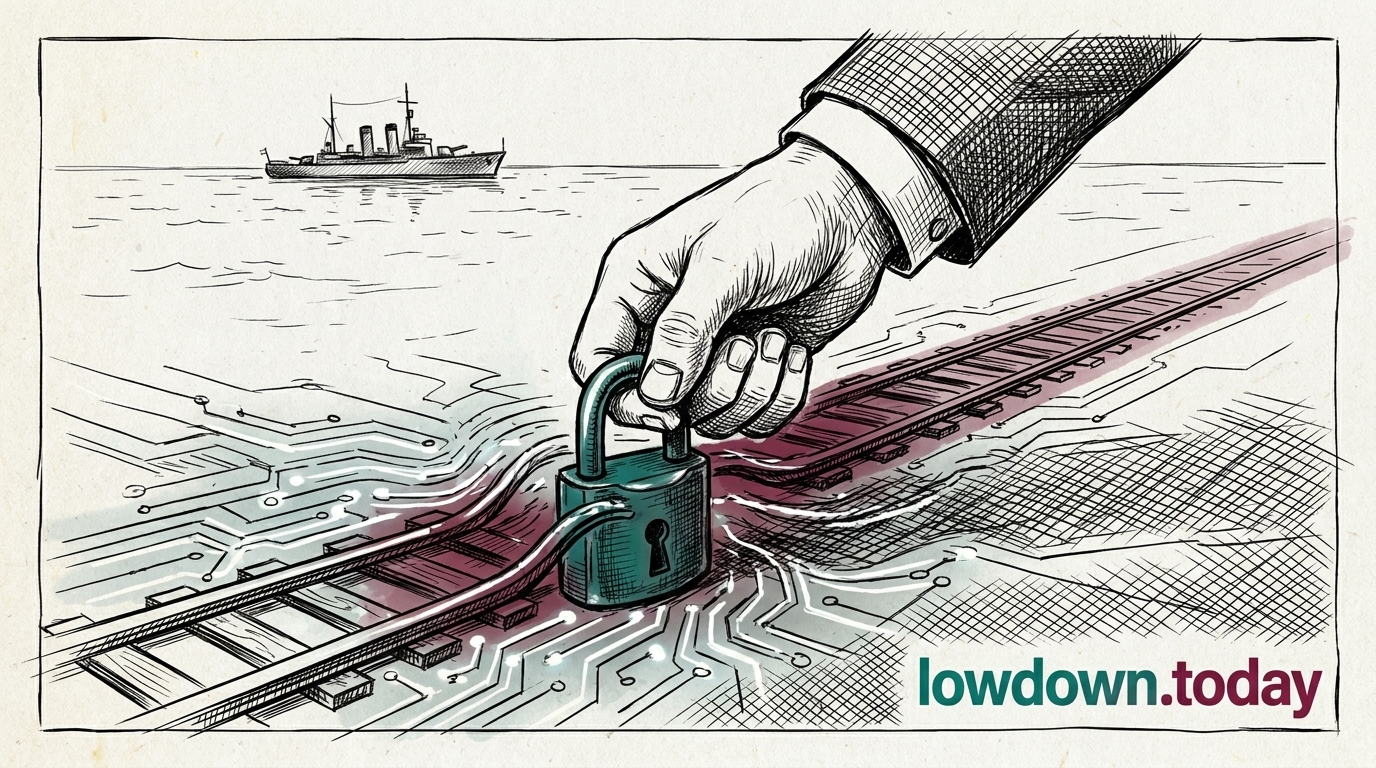
The White House presidential-actions index showed zero Iran-related signed executive instruments as of 27 April, Day 59 of the war. The signing pen has been demonstrably available for energy permits, Enbridge pipelines and a budget sequestration order across the same window.

ConflictDeveloping
Key takeaway

Trump's signing pen has touched Enbridge and energy permits this week; it has not touched the war.

The White House presidential-actions index recorded zero Iran-related signed executive instruments as of Day 59 of the war on 27 April 1. The most recent items in the index are the 20 April energy-sector Presidential Determinations and an 18 April executive order on mental-illness treatment. Across the 59-day window, Trump has signed Enbridge pipeline permits and a budget sequestration order; OFAC (the Office of Foreign Assets Control inside Treasury) has signed nothing for Iran. The signing pen has been demonstrably available all week, for everything except the war being run.

The public line and the private aside contradict on substance. Trump told journalists at the White House Correspondents' Association dinner on Saturday 25 April that Iran had sent a "much better" proposal 2; he added the offer arrived within ten minutes of his cancelling the Witkoff and Kushner Islamabad trip and that negotiations would now be conducted "over the phone". Press Secretary Karoline Leavitt told reporters on Sunday 26 April that there had been only "some progress from the Iranian side in the last couple of days". The Federal Register test is the cleanest one available: a Truth Social post becomes policy when OFAC writes it down, and on this war neither Treasury nor CENTCOM has done so. Trump's verbal shoot-kill order against Iranian mine-layers sits in spoken English; the toll line he posted to Truth Social on 12 April was not picked up by the operational order. Posts have not crossed into paper.

Cole Allen, 31, was arrested at the WHCA dinner after the same evening's shooting; the arrest is the small administrative detail that frames the 25 April "much better" remark, made on-the-record to journalists rather than as a private aside. The contradiction between Trump's framing and Leavitt's sanitised public read is what put the rhetoric/policy gap in plain view.


Deep Analysis

In plain English

After 59 days of war, the White House has not signed a single legal document specifically about the Iran conflict. Presidential actions for energy companies, healthcare and budgets have been signed throughout. Nothing on Iran. At the same time, Trump told journalists at a dinner on 25 April that Iran had sent a 'much better' proposal. Karoline Leavitt told reporters on 26 April there had been only 'some progress'. Trump's 'much better' and Leavitt's 'some progress' describe different things, on different days, to different audiences. A war run on verbal orders leaves no Federal Register entry for any court, ally, or adversary to cite. Iran's 27 April written text sits in Pakistan's diplomatic archive. Washington's response exists as a press briefing on Sunday and a dinner remark on Saturday.

Deep Analysis
Root Causes

The Federal Register test documents one structural cause: every presidential action with legal force must appear in the Federal Register. Actions that appear only on Truth Social or in spoken remarks carry no binding legal authority. Trump's 59-day avoidance of the Federal Register for Iran creates a war prosecuted entirely outside the administrative-state architecture that the administration has otherwise used aggressively across energy permits, budget sequestration, and trade instruments.

Enbridge pipeline permits, energy Presidential Determinations, and a budget sequestration order all cleared the signing desk inside the same 59-day window. The Trump administration's Iran file sits unsigned across all 59 of those days, making it the one topic whose policy exists exclusively in spoken form.

What could happen next?
  • Risk

    If the WPR deadline passes on 1 May without a signed instrument from the White House or Congress, every day of continued military operations becomes constitutionally contested, giving any federal court with jurisdiction a potential basis to enjoin CENTCOM operations.

  • Consequence

    Iran's willingness to deliver a written proposal while Washington responds verbally creates a documentary asymmetry: if a post-war inquiry or international arbitration reviews the record, Iran will hold the paper and Washington will hold the tweets.

First Reported In

Update #81 · Iran writes Phase 3; Trump posts Phase 1

White House· 27 Apr 2026
Read original
Different Perspectives
Oil markets and Lloyd's of London
Brent fell to $89.25 on ceasefire probability, not new barrels, with traders voting for Trump's deed over Tehran's denial. Lloyd's has not repriced Hormuz war-risk cover because its trigger requires a UN Security Council resolution or government certification, so tanker insurance costs remain elevated regardless of the spot move.
Pakistan and Qatar mediators
Pakistan's Mohsin Naqvi was in Tehran for his second visit in under a week, using the Pakistan-Qatar channel that delivered April's ceasefire after an identical public-denial cycle. The channel carries both civilian and military buy-in from Islamabad, the only configuration Iran's split command cannot dismiss as a partial signal.
India
India
India summoned the US Deputy Chief of Mission after three Indian sailors were killed aboard MT Settebello, the first formal grievance from a major non-belligerent directed at US enforcement. Indian seafarers supply roughly 12 per cent of the global maritime workforce; their presence on third-flag Gulf tankers is structurally inevitable regardless of bilateral diplomacy.
Islamic Revolutionary Guard Corps (IRGC)
The IRGC declared Hormuz closed on 11 June while civilian negotiators were on the same mediation channel, then issued no public comment on the MoU framework. Its silence on the framework, rather than any foreign ministry statement, is the operative approval signal; the corps' unilateral Hormuz closure shows it did not treat the diplomatic track as binding on its operations.
Iran foreign ministry (Baghaei)
Esmail Baghaei told IRNA that reports of a finalised deal were 'merely speculation' and that Iran had 'not yet made a final decision'. The denial is structurally identical to Iranian foreign ministry statements during the April ceasefire talks, which produced a binding text within 48 hours of the same language.
Trump administration / CENTCOM
Trump cancelled the third strike day and called the MoU 'very strong' and almost ready to sign, while CENTCOM kept tanker enforcement running in the same 24-hour window. The administration is simultaneously withdrawing the military pressure it claims drove the deal and sustaining the enforcement campaign it is trying to trade away.



