Skip to content
You can now search across every topic, entity and event.What's new
Iran Conflict 2026
22MAY

The nuclear core is left for later

3 min read
11:08UTC

Araghchi said nuclear issues would not be addressed in the initial document, deferring them to a 60-day window, while Trump and Washington described the uranium's fate two different ways.

ConflictDeveloping
Key takeaway

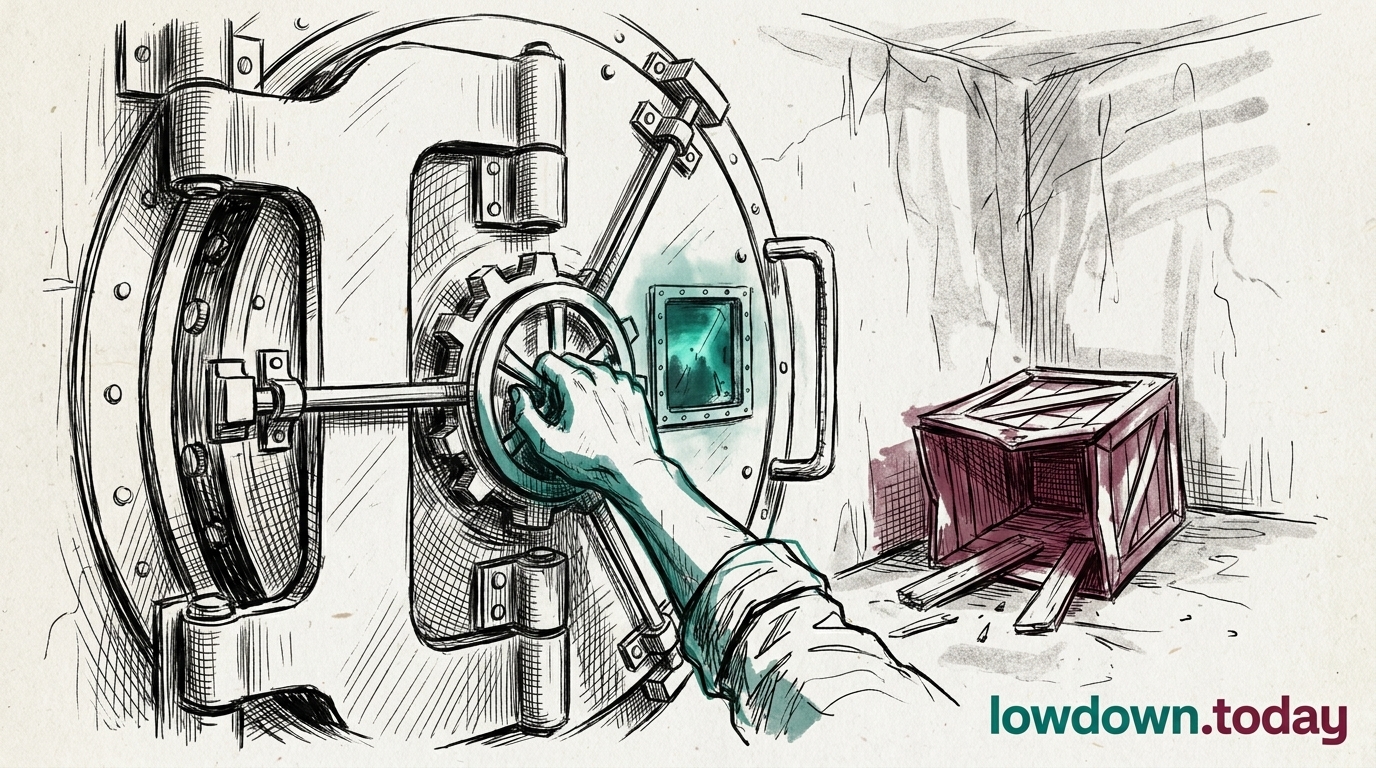
The deal defers the nuclear question, and the US and Iran still disagree on what happens to the uranium.

Iran's foreign minister Abbas Araghchi said "nuclear issues will not be addressed" in the initial memorandum, announced on 14 June 2026, deferring them to a 60-day window in which Iranian state media says Tehran will "negotiate to retain uranium enrichment capabilities." 1 The memorandum does not settle the nuclear question; it postpones it. Deputy foreign minister Kazem Gharibabadi, one of Iran's lead nuclear negotiators, said the text "does not signify trust in the enemy and was drafted in an atmosphere of continued distrust." 2

Donald Trump's framing pulls against the terms reported a day earlier. On 13 June Washington had dropped its demand to ship Iran's uranium abroad and accepted dilution inside Iran , meeting the red line Araghchi had set the same day . Then Trump told the Wall Street Journal he felt "no urgency" on the material: "At the appropriate time, when all is calm, we will go in and get the Nuclear Dust." 3 Extraction and dilution-in-place are not the same plan, and both cannot be the end-state.

The stockpile underneath both versions is the same 440.9 kg of 60%-enriched uranium the IAEA, the UN nuclear watchdog, logged before the war and has been unable to locate since inspector access stopped on 28 February 2026. 4 The agency declared loss of continuity on that material after 97 days without access . At 60% enrichment, two technical steps short of weapons grade, it is the single most dangerous item in the war, which is why the file the memorandum leaves for later is the one that matters most. Araghchi pledged to protect the material as talks advanced , but with no inspectors on the ground that pledge cannot be checked.

Deep Analysis

In plain English

Iran has a stockpile of uranium enriched to 60 per cent purity. Weapons-grade uranium sits at around 90 per cent; 60 per cent is two technical steps short of that. Before the war, the IAEA (the International Atomic Energy Agency, the UN's nuclear watchdog) logged 440.9 kilograms of this material. Since inspectors lost access on 28 February 2026, nobody knows exactly where it is or how much has changed. The MOU announced on 14 June does not address this stockpile at all. Instead, it opens a 60-day negotiating window for 'nuclear issues'. The problem is that the two sides already disagree about what the answer will be: Iran says it will dilute the uranium inside Iran to make it less dangerous; Trump told the Wall Street Journal the US will eventually 'go in and get the Nuclear Dust'. Diluting 440.9 kg of uranium inside Iran leaves the material in Iranian hands; extracting it removes Iranian control entirely. The 60 days begins with Washington publicly committed to both at once.

Deep Analysis
Root Causes

The nuclear deferral results from a direct contradiction between the two tracks inside the US negotiating position.

The State Department track accepted dilution-in-place to meet Araghchi's red line , which he stated publicly on 13 June: the only acceptable approach is diluting the material inside Iranian territory. That concession was the key to unlocking the MOU structure.

Trump's personal track, expressed to the Wall Street Journal, asserts extraction ('we will go in and get the Nuclear Dust'). These two tracks are not reconcilable: dilution inside Iran means the material stays in Iran; extraction means it leaves. Gharibabadi's 'atmosphere of continued distrust' formulation reflects awareness of this internal US contradiction.

The 60-day deferral is therefore not a diplomatic solution but a postponement of a decision the US negotiating team has not internally resolved. The Phase 2 nuclear round opens with both sides having publicly committed to incompatible outcomes.

What could happen next?
  • Risk

    Without IAEA inspectors on the ground during the 60-day window, Iran can move or modify the HEU stockpile before any verification baseline can be established for Phase 2.

    Immediate · Assessed
  • Consequence

    Trump's WSJ 'Nuclear Dust' statement has given Iran's hardliners evidence that the US extraction demand survives inside the administration, weakening Araghchi's argument to domestic critics that dilution-in-place is secured.

    Short term · Assessed
  • Risk

    A 60-day deferral without an agreed verification framework creates the same structural flaw as the 1994 Agreed Framework with North Korea: time and physical control accrue to the party holding the material.

    Medium term · Assessed
First Reported In

Update #128 · Trump declares Iran war over

CBS News· 15 Jun 2026
Read original
Causes and effects
This Event
The nuclear core is left for later
The deal postpones its hardest term, leaving 440.9 kg of near-weapons-grade uranium unverified and described differently by each leader 60 days before a signature that has not happened.
Different Perspectives
Oil market and P&I insurers
Brent cleared $87 intraday only once CENTCOM's blockade became physical rather than declared, even though P&I Clubs had already excluded Hormuz war risk a week earlier on 7 July: capital hedged ahead of enforcement, but prices moved only after it.
UAE reporting
UAE reporting
UAE reporting placed the Omani tanker deaths at one seafarer against the International Maritime Agency's count of two, the first time in this war that a Gulf state's casualty figures have diverged from an international monitor's.
Jordan
Jordan
Iranian strikes reached Jordan again on 14 July as part of the Gulf-wide retaliation for the Hormuz blockade, extending the conflict's geographic footprint to a state with no direct stake in the strait itself.
Bahrain
Bahrain
Bahrain sounded air-raid sirens on 14 July during Iran's Gulf-wide retaliation, the same day CENTCOM's blockade order and fourth night of strikes pushed the conflict's physical reach into the wider Gulf littoral.
Kuwait
Kuwait
Kuwait intercepted Iranian missiles and drones on 14 July as Tehran's blockade retaliation reached Gulf states beyond Iran's immediate shoreline, confirming Kuwaiti airspace now sits inside Iran's retaliatory envelope.
Oman
Oman
Oman absorbed the war's first tanker casualties in its own waters on 14 July, with two supertankers disabled and seafarers killed, putting the sultanate's shipping lanes directly in the path of the blockade fight for the first time.