Skip to content
Briefings are running a touch slower this week while we rebuild the foundations.See roadmap
Iran Conflict 2026
21MAY

GL-V opens a 24 May Iran deadline

4 min read
09:55UTC

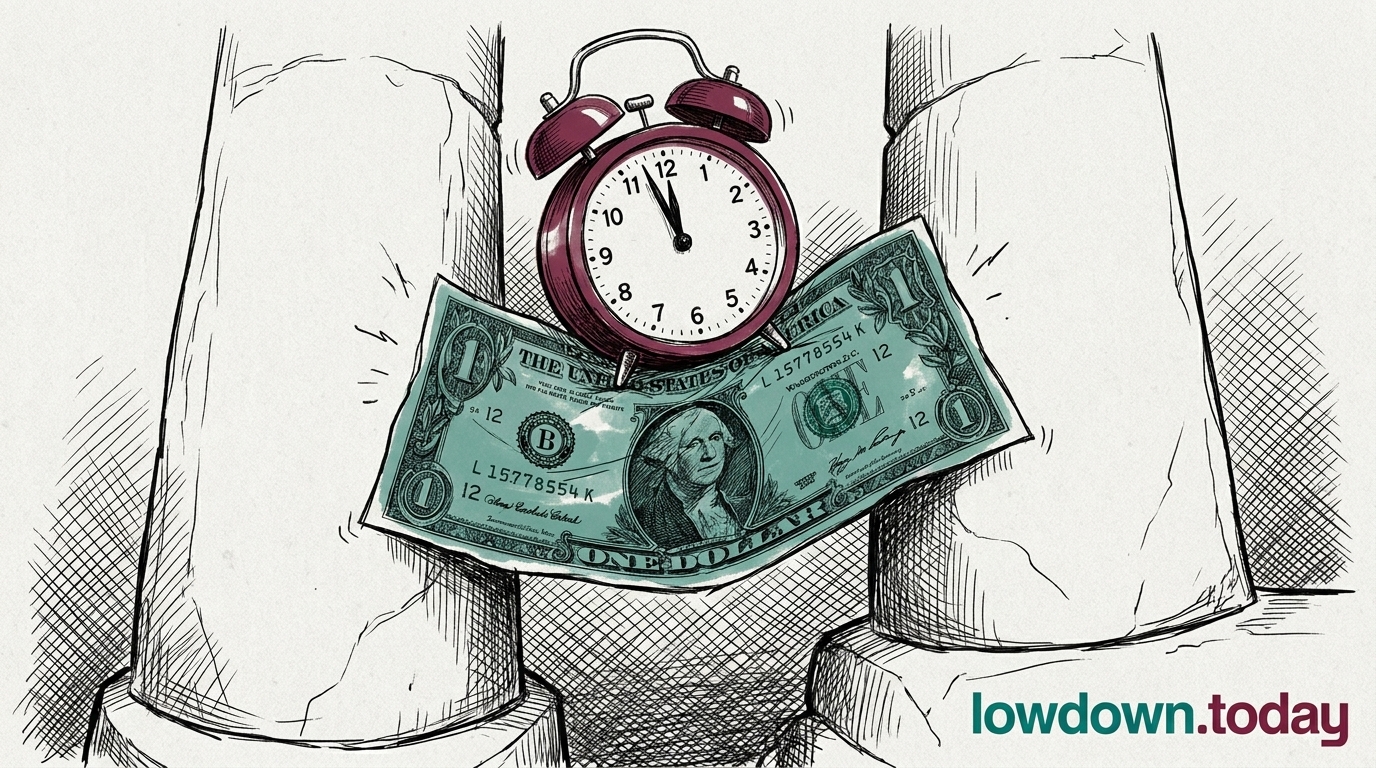
OFAC's General License V, the only signed Iran instrument of the war, gives Hengli Petrochemical (Dalian) thirty days to wind down. Beijing has held its response at embassy level. Hengli denies any Iran trade.

ConflictDeveloping
Key takeaway

OFAC's wind-down licence on Hengli closes 24 May; Beijing's response is held at embassy level until then.

The Office of Foreign Assets Control, the US Treasury bureau that administers economic sanctions, issued General License V on Friday 24 April authorising a thirty-day wind-down of transactions with Hengli Petrochemical (Dalian) Refinery Co. and its majority-owned subsidiaries through Sunday 24 May 2026 1. A wind-down licence is permission to keep paying suppliers and complete in-flight contracts inside a fixed window so a counterparty can exit without a default cascade. After 24 May, every continuing transaction with Hengli is a primary sanctions violation under Treasury's enforcement framework. The licence is the only signed Iran instrument the Trump administration has produced across sixty days of war .

Hengli Petrochemical, the Dalian-based independent refiner targeted in the designation, said in a Sunday 26 April statement that it has 'never engaged in any trade with Iran' and that crude origins fall outside US sanctions scope 2. China's Washington embassy called the OFAC action 'illegal' and threatened retaliatory measures , yet Beijing has held its formal response at embassy level. The Ministry of Commerce (MOFCOM) has issued no specific instrument; CGTN's coverage of the Putin-Araghchi meeting on Monday omits Hengli entirely 3, separating the bilateral diplomatic story from the trade designation.

The licence has structurally mattered in a way Day 60 reads do not capture. Hengli is one of the largest independent refiners of Iranian-origin crude in Northeast Asia; a successful wind-down would remove a meaningful share of the laundering capacity that has kept Iranian barrels moving through East Asian ports under sanctions for the past decade. A failed wind-down, with continuing trade after 24 May, would force Treasury to choose between escalating against the parent company in Beijing's domestic market and accepting that primary sanctions are non-binding on Chinese state-adjacent refiners. OFAC's thirty-day window has converted that choice from a policy debate into a calendar entry.

Three actors are running coordinated denial postures with one shared interest: removing the 24 May pressure without escalating before then. Hengli denies the trade; the Washington embassy protests; CGTN omits the file. OFAC's deadline lands on Sunday 24 May 2026 regardless of which posture holds.

Deep Analysis

In plain English

America has signed exactly one Iran-related document in the whole 60-day war: a permission slip for a Chinese oil refinery to keep doing business with Iran for 30 more days, after which it becomes illegal. The refinery denied it ever dealt with Iran at all. China's government called the US action illegal but has not done anything about it yet. China does have a legal tool ready that could retaliate , it created it eleven days before the US targeted the refinery.

Deep Analysis
Root Causes

OFAC's Hengli designation is the first nuclear-framed US sanctions action against a Chinese entity in this conflict. Prior rounds targeted shipping, missile components and financial intermediaries. The nuclear framing (under Executive Order 13382, Weapons of Mass Destruction Proliferators) carries a harder secondary-sanctions trigger: any bank processing payments for Hengli after 24 May risks correspondent-banking access to the US dollar system.

Hengli processed roughly 50-60 million barrels of Iranian crude annually before the conflict, making it one of the three largest independent refiners of Iranian-origin crude. The wind-down's economic scale and the nuclear framing together explain why China's response was elevated to State Council level via Decree 835, rather than staying at MOFCOM.

What could happen next?
  • Consequence

    Sunday 24 May 2026 becomes the next hard forcing event: every Hengli transaction continuing after that date is a sanctions violation, regardless of WPR or diplomatic outcomes before 1 May.

    Short term · 0.9
  • Risk

    Decree 835 activation against a US financial institution would expose US banks to asset freezes and entry bans in China, the first direct financial-system counter-escalation of the conflict.

    Short term · 0.55
  • Opportunity

    Beijing's restraint at embassy level through the wind-down window signals a preference for letting compliance resolve the dispute, which gives OFAC a face-saving path to a quiet settlement before 24 May.

    Short term · 0.6
First Reported In

Update #82 · Iran writes Phase 1; Washington still has no pen

OFAC / US Treasury· 28 Apr 2026
Read original
Different Perspectives
Turkey (Shakarab consideration)
Ankara serves as one of two Western-adjacent Iran back-channels while Turkish national Gholamreza Khani Shakarab faces imminent execution on espionage charges in Iran. President Erdogan cannot deflect the domestic political crisis that a Turkish execution would trigger, which would force suspension of the mediating role.
Germany (Bundestag gap)
Belgium, Germany, Australia, and France committed Hormuz coalition hardware on 18 May. Germany's Bundestag authorisation for the coalition deployment remains pending, creating a constitutional gap between the commitment announced and the parliamentary mandate required to operationalise it.
IEA and oil market analysts
The IEA's $106 May Brent projection met the market in one session on 20 May as Brent fell 5.16% on diplomatic optimism. Goldman Sachs and Morgan Stanley's two-layer premium framework holds: the kinetic component compressed; the structural insurance component tied to Lloyd's ROE remains unresolved.
Hengaw
Hengaw
Documented the dual Kurdish execution at Naqadeh on 21 May, the two Iraqi-national espionage executions on 20 May, and Gholamreza Khani Shakarab's imminent execution risk. The 24-hour cluster covers two executions at one facility, the first foreign-national espionage executions, and a Turkish national whose death would suspend Ankara's mediation.
Lloyd's of London
Lloyd's of London
Hull rates stand at 110-125% of vessel value on the secondary market; the Joint War Committee has conditioned cover reopening on written ROE from the coalition or PGSA. The Majlis rial bill makes any compliant ROE structurally impossible to draft while the PGSA's yuan portal remains its operational mechanism.
United Kingdom and France (Northwood coalition)
The 26-nation coalition paper requires Lloyd's to see written rules of engagement before Hormuz war-risk cover reopens. The Majlis rial bill adds a second governance incompatibility on top of the unpublished PGSA fee schedule; coalition ROE cannot mention rial without conceding Iranian sovereignty over the strait.