Skip to content
Briefings are running a touch slower this week while we rebuild the foundations.See roadmap
Iran Conflict 2026
21MAY

GL-U Sanctions Cliff in Nine Days

2 min read
09:55UTC

OFAC / US Treasury

ConflictDeveloping
Key takeaway

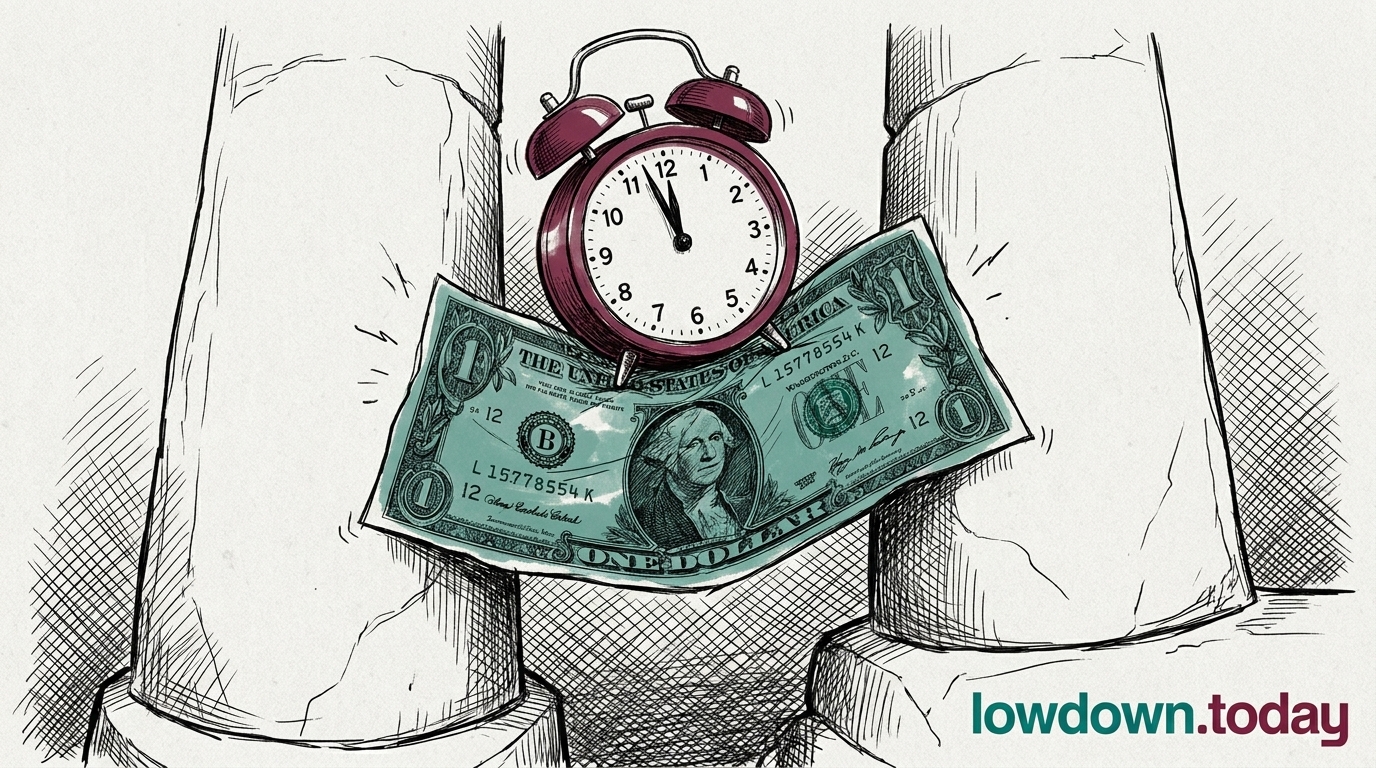
GL-U expiry is the first economic cliff the ceasefire must clear.

OFAC (Office of Foreign Assets Control) General License U expires on 19 April with no Treasury renewal signal issued. GL-U was the first broad US authorisation of Iranian-origin crude since sanctions began . Its expiry was built into the instrument; the question is whether the ceasefire creates political pressure for renewal. Treasury's silence so far is ambiguous: it may reflect deliberate leverage (renewable on demand) or indifference (the ceasefire will collapse before it matters).

GL-U lapses on 19 April; ceasefire ends 22 April. Tanker operators face a three-day window of legal exposure where the cargo is recriminalised but the political situation remains in flux. The 325 tankers stranded inside the Gulf would face simultaneous maritime and sanctions legal jeopardy. Insurers will not cover that exposure without formal renewal.

Renewal would signal US flexibility on sanctions and support the ceasefire's economic architecture. Non-renewal would force tanker operators to choose between legal exposure and abandoning cargo, three days before the political deadline that was supposed to resolve everything.

Deep Analysis

In plain English

There is a legal permit called General License U that lets ships carry Iranian oil without breaking US sanctions law. It expires in nine days. 325 oil tankers are stuck waiting to know if they can deliver their cargo legally. No one in the US government has said whether they will renew it. If they do not, those ships' oil becomes illegal to sell — three days before the ceasefire itself is even supposed to end.

Deep Analysis
Root Causes

GL-U exists because the ceasefire announcement created an immediate legal problem: 325 tankers loaded with Iranian crude before the ceasefire were suddenly in transit without legal authorisation. Treasury issued GL-U as a temporary fix, not a permanent policy shift.

Its 30-day life span was built in; renewal requires a positive decision that the ceasefire has been extended or formalised. The silence signals no such decision has been made.

What could happen next?
  • Risk

    GL-U non-renewal recriminalises 325 stranded tankers' cargoes three days before the ceasefire ends, creating simultaneous maritime and sanctions legal jeopardy that insurers will not cover.

  • Consequence

    Treasury's decision on GL-U is the first concrete economic signal of the ceasefire's viability — renewal signals flexibility, lapse signals maximum pressure is unchanged.

First Reported In

Update #64 · Islamabad talks open already cracked

Washington Post· 10 Apr 2026
Read original
Different Perspectives
Turkey (Shakarab consideration)
Ankara serves as one of two Western-adjacent Iran back-channels while Turkish national Gholamreza Khani Shakarab faces imminent execution on espionage charges in Iran. President Erdogan cannot deflect the domestic political crisis that a Turkish execution would trigger, which would force suspension of the mediating role.
Germany (Bundestag gap)
Belgium, Germany, Australia, and France committed Hormuz coalition hardware on 18 May. Germany's Bundestag authorisation for the coalition deployment remains pending, creating a constitutional gap between the commitment announced and the parliamentary mandate required to operationalise it.
IEA and oil market analysts
The IEA's $106 May Brent projection met the market in one session on 20 May as Brent fell 5.16% on diplomatic optimism. Goldman Sachs and Morgan Stanley's two-layer premium framework holds: the kinetic component compressed; the structural insurance component tied to Lloyd's ROE remains unresolved.
Hengaw
Hengaw
Documented the dual Kurdish execution at Naqadeh on 21 May, the two Iraqi-national espionage executions on 20 May, and Gholamreza Khani Shakarab's imminent execution risk. The 24-hour cluster covers two executions at one facility, the first foreign-national espionage executions, and a Turkish national whose death would suspend Ankara's mediation.
Lloyd's of London
Lloyd's of London
Hull rates stand at 110-125% of vessel value on the secondary market; the Joint War Committee has conditioned cover reopening on written ROE from the coalition or PGSA. The Majlis rial bill makes any compliant ROE structurally impossible to draft while the PGSA's yuan portal remains its operational mechanism.
United Kingdom and France (Northwood coalition)
The 26-nation coalition paper requires Lloyd's to see written rules of engagement before Hormuz war-risk cover reopens. The Majlis rial bill adds a second governance incompatibility on top of the unpublished PGSA fee schedule; coalition ROE cannot mention rial without conceding Iranian sovereignty over the strait.