Skip to content
You can now search across every topic, entity and event.What's new
European Tech Sovereignty
18JUN

Russia loses 179 soldiers per square km

2 min read
09:28UTC

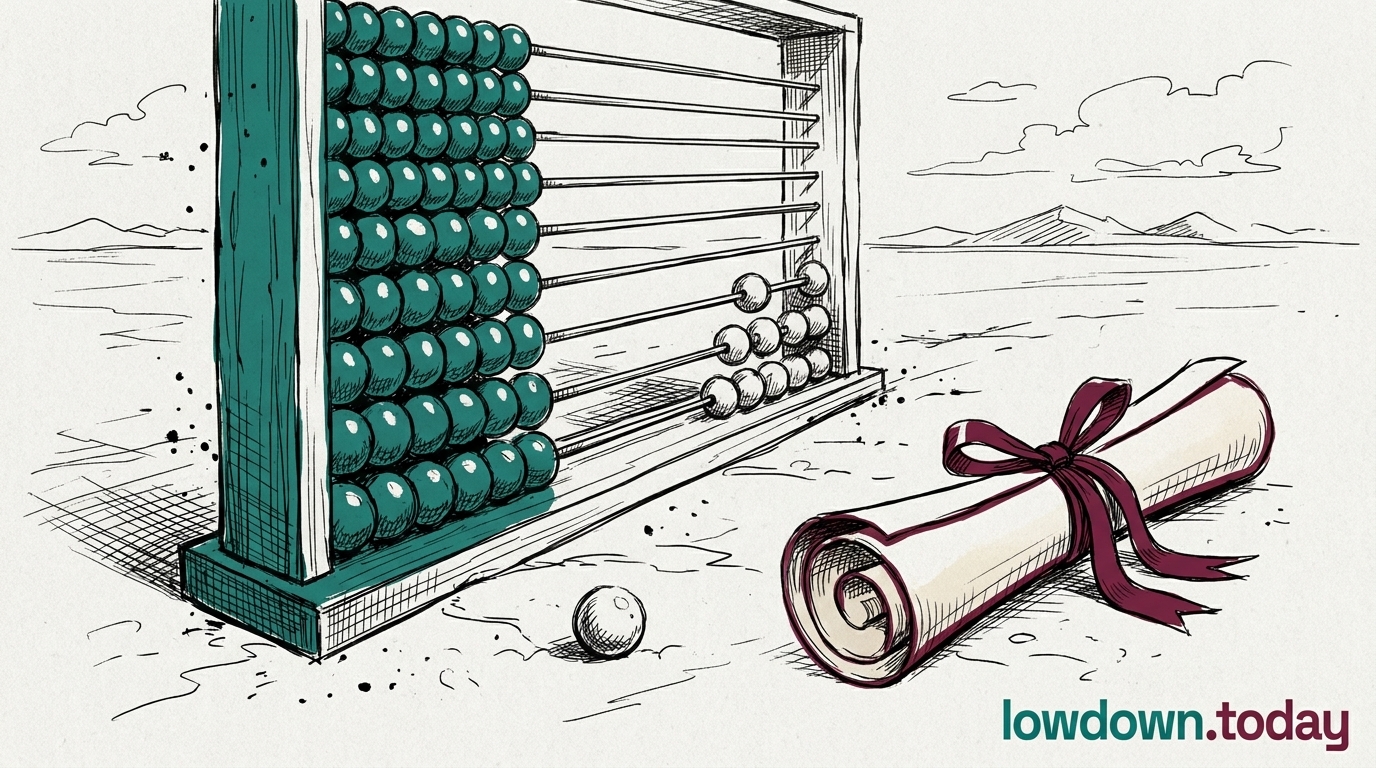
Mykhailo Fedorov calculated that Russian forces were suffering 179 losses per square kilometre of advance in 2026, nearly three times the 67 per sq km in 2025. Mediazona's running database recorded verified dates of death for 202,000 Russian soldiers as of 22 May.

TechnologyDeveloping
Key takeaway

Russia is paying three soldiers per kilometre for every one it paid in 2025, while simultaneously losing ground.

Mykhailo Fedorov, Ukraine's Minister of Digital Transformation, calculated that Russian forces are suffering 179 losses per square kilometre of advance in 2026, against 67 in the same window of 2025. The defence budget of 13.5 trillion rubles was set when advance rates were five times higher; Russia is now paying 2.7 times more in personnel per unit of territory than the budget contemplated.

Mediazona offers the most reliable open-source count, tracking named deaths through obituaries, social media and probate records. Its 202,000 figure is verified individual cases with dates. The Probate Registry statistical extrapolation, published 9 May, puts total male deaths aged 18-59 through end-2025 at 352,000 .

The gap between 202,000 confirmed and 352,000 statistical reflects how effectively Russia's casualty suppression works. Compensation systems pay families without requiring public registration, so they are incentivised not to publicise deaths. Mediazona treats its 202,000 figure as a floor that the true toll exceeds, not a ceiling.

At 179 losses per sq km, Russia would need to advance roughly 6 sq km a day to sustain its 2025 casualty rate per unit of time. The 100 sq mi loss over four weeks means it is moving the other way.


Deep Analysis

In plain English

In 2025, Russia lost roughly 67 soldiers for every square kilometre of Ukrainian territory it captured. In 2026, that figure has risen to 179 soldiers per square kilometre, nearly three times as many. And unlike in 2025, Russia is now losing ground rather than gaining it. An independent Russian media outlet working from obituaries and public records has confirmed the dates of death for 202,000 Russian soldiers. A separate statistical study puts the real total of Russian men killed since the invasion started through end-2025 at around 352,000. These numbers explain why Russia is turning to its most advanced weapons: the conventional ground war is becoming too expensive in lives and money to sustain.

What could happen next?
  • Consequence

    Russia's defence budget, set at 2025 attrition assumptions, is structurally underfunded for 2026 casualty consumption rates.

First Reported In

Update #18 · Oreshnik doubles as Russia's front collapses

Al Jazeera· 1 Jun 2026
Read original
Causes and effects
This Event
Russia loses 179 soldiers per square km
Tripled per-kilometre attrition is the fiscal and operational mechanism behind Russia's front-line collapse; the defence budget was calibrated on 2025 advance rates and cannot sustain 2026 casualty consumption per unit of territory.
Different Perspectives
Germany (Bundeskartellamt)
Germany's Bundeskartellamt declined to open antitrust proceedings against SAP, the company disclosed on 30 July, in the same fortnight the Commission's EUR 890m DMA fine against Google approached its 21 September compliance deadline. A German software champion cleared domestic scrutiny while an American platform faces enforcement, in the same regulatory season.
United States (USTR)
Washington's Section 301 investigation into EU digital enforcement, opened 24 July, had produced no Federal Register docket as of 4 August, even as Dell and 1,008 Nvidia GB200 NVL4 accelerators sit inside the EU's own sovereignty-branded MeluXina-AI build. The absent docket and the American hardware inside a European sovereignty project pull the same relationship in opposite directions.
UK government
UK government
The UK's Sovereign AI vehicle took a nine-figure equity stake in chip startup OLIX on 30 July, its fifth deal since April, while the Cabinet Office's 27 July fact sheet named no accounting officer for the GBP 1.1bn AI Hardware Plan. Whitehall is buying equity rather than capacity, inside a department mid-rename to Business, Innovation, Science and Trade.
Luxembourg government
Luxembourg is covering half of the newly disclosed EUR 80m contract value for MeluXina-AI, EuroHPC's Grand Duchy build, with Dell Technologies confirmed as supplying 1,008 Nvidia GB200 NVL4 accelerators, a hardware detail absent from the earlier project description. The disclosure means Luxembourg's national co-funding buys a facility built on American silicon under a European ownership badge.
European Commission
European Commission
The Commission activated its Article 101 fining power on 2 August while the Article 70 register it must keep current still showed a 26 September 2025 footer and blank rows for Denmark, Finland and Hungary. It issued no comment, though Article 70 puts the publication duty on Brussels, not member states.
China's Ministry of Commerce
Spokesperson He Yadong said on 16 July that Beijing and the Netherlands should let firms settle the Nexperia dispute through consultation, after a Dutch ministerial visit to Beijing. The conciliatory tone contrasts with the confrontational US trade response to the same fortnight's DMA enforcement.



