Skip to content
You can now search across every topic, entity and event.What's new
European Tech Sovereignty
7MAY

Three accounts of one Doha room

2 min read
10:13UTC

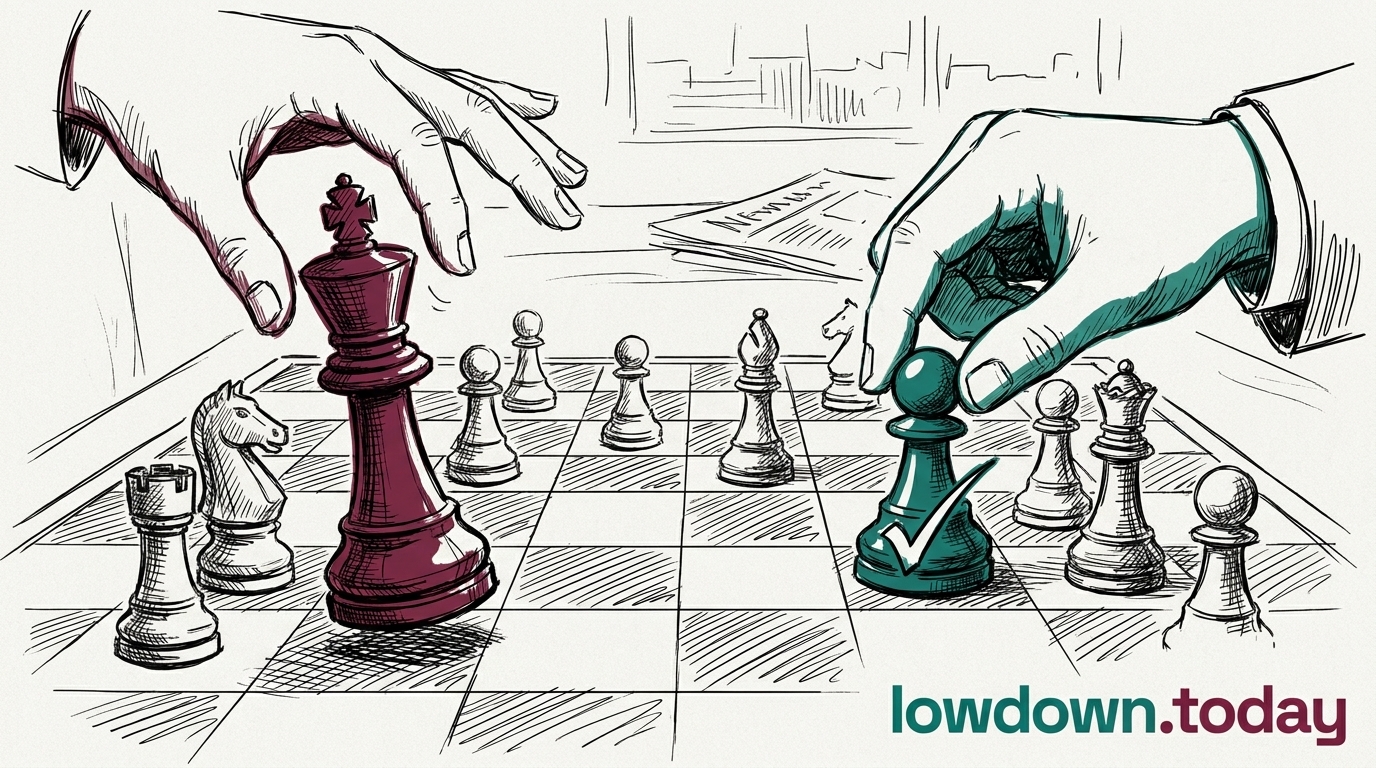
Trump called the Doha talks positive and said Iran requested them; Baghaei said Tehran will not meet the Americans at any level; Qatar said Witkoff and Kushner met mediators, not Iranians.

TechnologyDeveloping
Key takeaway

Three governments gave three accounts of one Doha round, and nothing signed exists to settle which is true.

On 1 July, Washington, Tehran and Doha gave three irreconcilable accounts of the same negotiation in Qatar's capital. Donald Trump said Iran had "requested a meeting", and a senior US official told Bloomberg the technical talks were "positive and progressing" 1. Iran's foreign ministry spokesman Esmaeil Baghaei said the opposite: Tehran "will not have any negotiation meetings at any level with the American side in the coming days", and its delegation "has nothing to do with" the US visit 2.

Deputy foreign minister Kazem Gharibabadi called reports of technical working-group talks "not confirmed". Qatar backed neither version. Spokesman Majed al-Ansari said US envoys Steve Witkoff and Jared Kushner were meeting Qatari mediators, not Iranian officials 3. The two had flown in after the 29 June verbal halt in the fighting , and Iran had already fixed its posture, skipping the 28 June session and sending officials only to observe .

The $6 billion in frozen Iranian assets runs the same way. Masoud Pezeshkian claimed on 29 June that the funds, held in Qatar, would return to Tehran 4. Qatar and the United States contradicted him within a day: the money stays frozen and would move only "according to the advancement of negotiations" 56. A president announces a transfer its custodian says has not happened, over a meeting the counterparty denies attending.

Deep Analysis

In plain English

Three governments are describing the same meeting in Doha, Qatar, on 1 July, and telling three different stories about it. A senior US official called the talks 'positive and progressing'. Iran's foreign ministry spokesman, Esmaeil Baqaei, said Iran won't meet US officials at all in the coming days. Qatar, which is hosting and mediating, said the two American envoys, Steve Witkoff and Jared Kushner, only met the go-between mediators, not Iranian officials directly. The $6 billion mentioned is money Iran wants released from frozen accounts in Qatar. Doha says Iran only gets it if the wider talks keep moving. None of this is unusual for this kind of indirect diplomacy: each government can describe a closed-door session however it wants, because there is no shared, public record of what was actually said in the room.

Deep Analysis
Root Causes

The Islamabad MOU, signed 16 June, set up a shuttle format with Qatari and Pakistani mediators but did not require a joint communique after each round. Washington, Tehran and Doha are each free to brief their own press without contradicting a shared record.

Baqaei's flat denial also serves a domestic purpose. Iran's clerical establishment issued fresh statements the same day questioning whether the deal covers the Supreme Leader's demands, so a public 'no negotiations' line insulates Pezeshkian's team from an accusation of caving while the technical contact continues underneath it.

What could happen next?
  • Meaning

    Qatar's confirmation that Witkoff and Kushner met only the mediators, not Iranian officials directly, shows the US and Iran remain in indirect contact 15 days after the Islamabad MOU, with no upgrade to face-to-face talks.

  • Risk

    Baqaei's public 'not at any level' line gives Tehran's hardliners a talking point that could make any later concession look like a reversal, raising the domestic cost of compromise in the next round.

First Reported In

Update #142 · Doha: three stories, no signed paper

Al Jazeera· 1 Jul 2026
Read original
Different Perspectives
United States (Google/Alphabet)
Alphabet lost its final Android appeal on 2 July with no further court to hear it, a result its Computer and Communications Industry Association allies frame as precedent, not deterrence, since the €4.1bn fine changed nothing about Google's Play Store terms across eight years of litigation.
UK Department for Science, Innovation and Technology
DSIT opened its £96m second Sovereign AI wave on 3 July, switching from April's equity stakes to fixed-price contracts because Britain has no domestic hyperscaler or Bpifrance-style lender to fund capacity another way. It is betting on buying outcomes it controls alone rather than joining an EU-wide framework.
German federal government
Berlin backed both German deliverables this week, Infineon's fab and Aleph Alpha's merger, but is finding one far harder to close than the other. It wants enforceable protective rights inside Cohere's cap table before the merger closes, a legal instrument the Bundeskartellamt has no filing to review yet.
European Commission
European Commission
The Commission banked a clean CJEU win on the eight-year Android case on 2 July, removing Google's last comparator argument before President von der Leyen rules on the far larger DMA self-preferencing fine due 27 July. Brussels treats Infineon's early Dresden delivery as proof the Chips Act mechanism works, at the node Europe already led.
Bruegel (EU industry sceptics)
Bruegel economist Mario Mariniello argued the EU sovereignty package mimics US and Chinese strategy while EU cloud providers hold roughly 15% of their home market; using nationality as a proxy for security without fixing the underlying capital and energy gaps that drive the dependency creates €86bn of migration cost without the security benefit it is sold as delivering.
France
France
France published a joint sovereignty definition with Germany at VivaTech and mobilised €13bn under Tibi Phase 3, placing SAP's partnership with Mistral as the working proof that a German enterprise-software giant running a French sovereign model inside public administration is what digital sovereignty looks like in practice.
