Skip to content
You can now search across every topic, entity and event.What's new
European Tech Sovereignty
7MAY

Khamenei backs deal, in language of leaving

3 min read
10:13UTC

Mojtaba Khamenei endorsed the US-Iran MOU in his first written message on 18 June, then branded the enemy's demands excessive and handed the deal's outcome to President Pezeshkian.

TechnologyDeveloping
Key takeaway

Permission to negotiate arrived in the language of permission to leave.

Mojtaba Khamenei broke a written silence on Thursday 18 June, the day after the signing, with his first message to the nation since taking office 1. Unseen in public since 8 March and reachable only by sealed courier, Iran's Supreme Leader endorsed the US-Iran memorandum and stripped it of ideological weight in the same breath.

Future talks with the doshman, the enemy, "do not mean accepting its views", he wrote, and Iran will not yield to zeyadeh-khahi, excess demands. The original Farsi runs harder than the English summaries carried. Doshman is a formal designation in Iranian state discourse, not a turn of phrase, and its use signals that the negotiation is tolerated, not embraced.

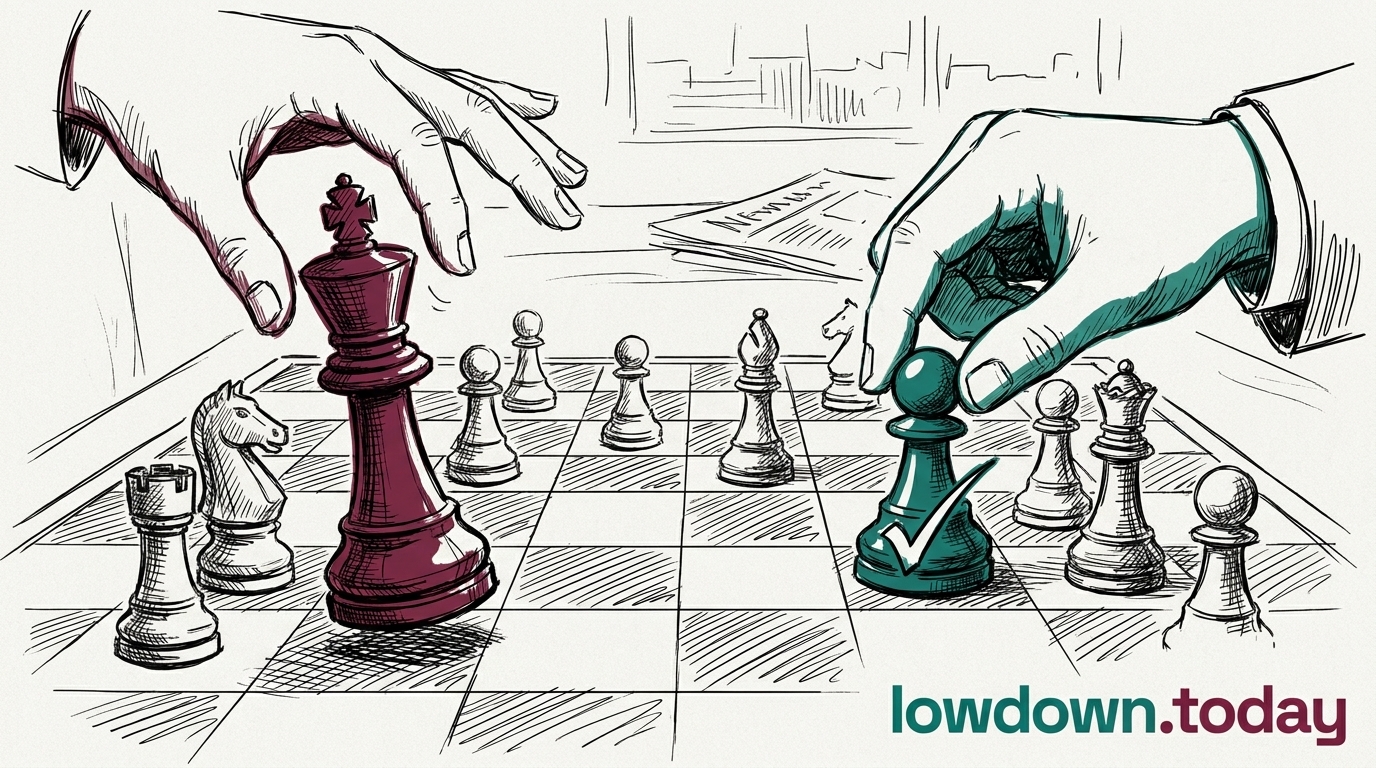
Khamenei delegated accountability for the deal to President Masoud Pezeshkian, keeping his own name off the outcome. This is the leader his negotiators had told Washington approved the framework at the highest level . His authority rests on the Revolutionary Guard Corps rather than the clergy, and a written endorsement that brands the enemy's asks excessive is the cheapest way to satisfy hardliners while keeping the talks nominally alive. The same actor who approved the framework now frames its enforcement as overreach. The endorsement reads as permission to negotiate that doubles as permission to walk.

Deep Analysis

In plain English

Iran's Supreme Leader is the most powerful person in the country, above even the elected president. After the peace deal was signed, Mojtaba Khamenei published a message on 18 June backing it. But his backing came with important conditions. Khamenei used the Farsi word for enemy to describe the US and said that talking to the enemy does not mean agreeing with it. He placed all responsibility for how the deal turns out on President Masoud Pezeshkian. Under the Iranian constitution, this means Pezeshkian carries the political cost if the deal fails, and Khamenei remains insulated. No previous Supreme Leader had used this liability-transfer formula for a major diplomatic agreement.

Deep Analysis
Root Causes

The liability-transfer structure reflects the circumstances of Mojtaba Khamenei's appointment. Named Supreme Leader under IRGC pressure following his father's death on 28 February 2026, he has no independent religious authority base and communicates only through handwritten messages. His legitimacy rests on IRGC support, which means he cannot afford to own a deal the IRGC's Ahmad Vahidi opposes.

In Iranian state discourse, designating the US as doshman (enemy) rather than a softer term signals that negotiations carry no moral weight of reconciliation. Khamenei used the doshman label to signal to the IRGC hardline base that he was permitting the talks without validating them ideologically. This framing pre-empted IRGC criticism: Nahavian and the Paydari Front had already publicly opposed the MOU before Khamenei's statement arrived.

Pezeshkian formally accepted accountability for MOU outcomes on 18 June, mirroring the IRGC's own framing that Iran was negotiating from a position of strength. Pezeshkian must now deliver an outcome satisfying both that framing and US minimum demands, positions that may be structurally incompatible.

Escalation

Khamenei's liability-transfer posture reduces the risk of immediate MOU collapse (he has endorsed it) while increasing the risk of Phase 2 collapse (he has pre-classified US nuclear demands as excessive). The 60-day window for final agreement now runs against a Supreme Leader who has built himself a credible exit from any deal that touches the nuclear programme.

What could happen next?
  • Risk

    Khamenei's pre-classification of full IAEA access and stockpile transfer as excessive demands creates a structural collision with the MOU's stated nuclear obligations, making Phase 2 nuclear talks likely to fail on day one if the US presents those as minimum requirements.

    Short term · Assessed
  • Consequence

    Pezeshkian now carries political accountability for MOU outcomes he cannot deliver without IRGC consent, placing Iran's reform faction in an impossible position during Phase 2.

    Medium term · Assessed
  • Meaning

    The doshman framing in the statement is the first public use of that designation in a formal Supreme Leader communique since the war began, signalling that the MOU has not changed Tehran's ideological posture toward Washington.

    Immediate · Assessed
First Reported In

Update #132 · Trump lifted the blockade, not the strait

Sputnik Farsi / Times of Israel· 19 Jun 2026
Read original
Different Perspectives
United States (Google/Alphabet)
Alphabet lost its final Android appeal on 2 July with no further court to hear it, a result its Computer and Communications Industry Association allies frame as precedent, not deterrence, since the €4.1bn fine changed nothing about Google's Play Store terms across eight years of litigation.
UK Department for Science, Innovation and Technology
DSIT opened its £96m second Sovereign AI wave on 3 July, switching from April's equity stakes to fixed-price contracts because Britain has no domestic hyperscaler or Bpifrance-style lender to fund capacity another way. It is betting on buying outcomes it controls alone rather than joining an EU-wide framework.
German federal government
Berlin backed both German deliverables this week, Infineon's fab and Aleph Alpha's merger, but is finding one far harder to close than the other. It wants enforceable protective rights inside Cohere's cap table before the merger closes, a legal instrument the Bundeskartellamt has no filing to review yet.
European Commission
European Commission
The Commission banked a clean CJEU win on the eight-year Android case on 2 July, removing Google's last comparator argument before President von der Leyen rules on the far larger DMA self-preferencing fine due 27 July. Brussels treats Infineon's early Dresden delivery as proof the Chips Act mechanism works, at the node Europe already led.
Bruegel (EU industry sceptics)
Bruegel economist Mario Mariniello argued the EU sovereignty package mimics US and Chinese strategy while EU cloud providers hold roughly 15% of their home market; using nationality as a proxy for security without fixing the underlying capital and energy gaps that drive the dependency creates €86bn of migration cost without the security benefit it is sold as delivering.
France
France
France published a joint sovereignty definition with Germany at VivaTech and mobilised €13bn under Tibi Phase 3, placing SAP's partnership with Mistral as the working proof that a German enterprise-software giant running a French sovereign model inside public administration is what digital sovereignty looks like in practice.
