Skip to content
You can now search across every topic, entity and event.What's new
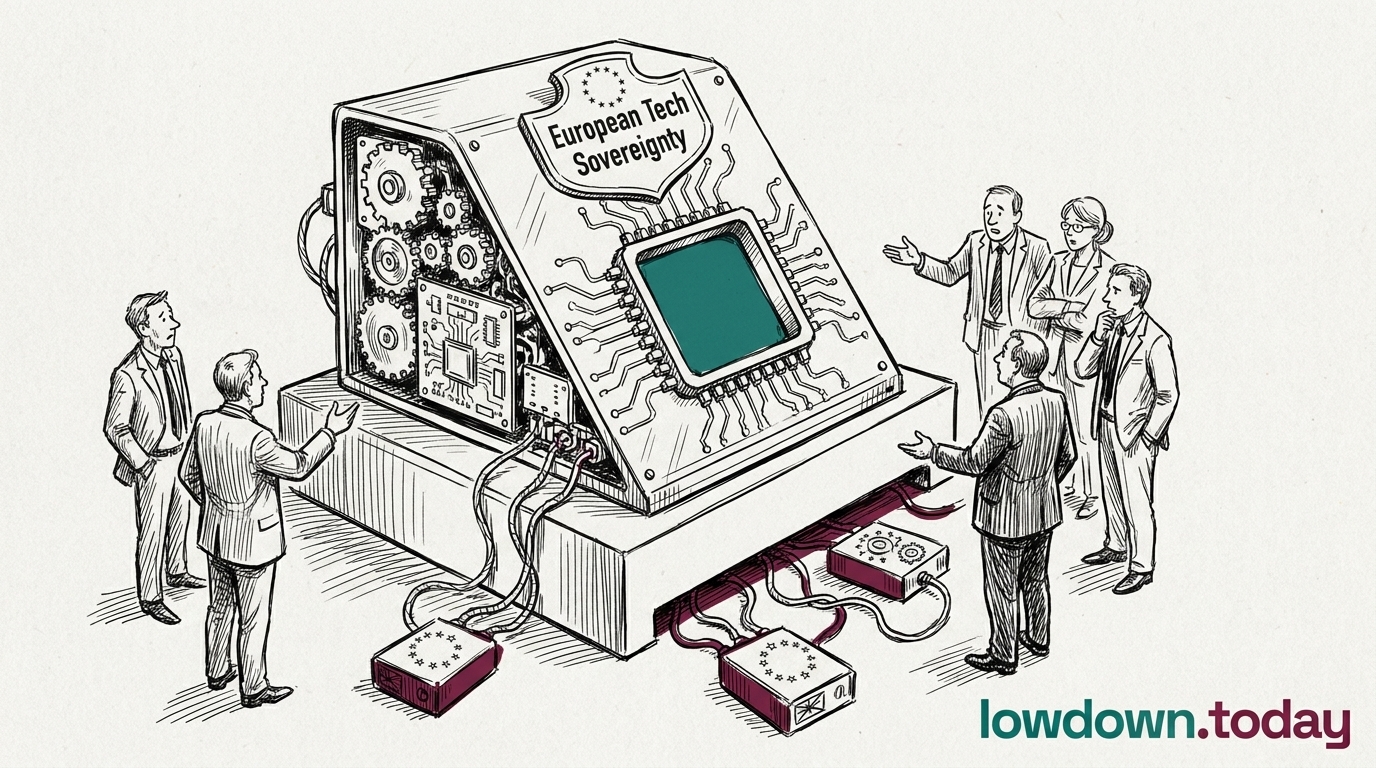
European Tech Sovereignty
23APR

Iran rejects US plan, sets five terms

2 min read
09:21UTC

Tehran's five conditions amount to a demand for unconditional victory; the gap with Washington's 15-point plan is structural, not tactical.

TechnologyAssessed
Key takeaway

Neither side's peace terms overlap, making diplomatic resolution impossible without one side fundamentally changing its war aims.

Abbas Araghchi, Iran's Foreign Minister, dismissed Washington's 15-point ceasefire plan as "extremely maximalist and unreasonable" on Tuesday 1. Hours later, Tehran published five counter-conditions through Press TV: a complete halt to US and Israeli attacks, war reparations, international recognition of Iran's sovereignty over the Strait of Hormuz, protection of Hezbollah and allied militias in Iraq, and fulfilment of pre-war Geneva demands. Araghchi told state media: "At present, our policy is the continuation of resistance" 2.

The 15-point plan reached Tehran via Pakistan . Israel's Channel 12 reported its contents: dismantling Iran's nuclear programme, limiting its ballistic missile arsenal, abandoning regional proxy networks, and conditionally reopening Hormuz 3. Donald Trump said Washington is "very close to meeting the core objectives of the operation."

Iran's counter demands formal sovereignty over the strait where the Islamic Revolutionary Guard Corps (IRGC) already runs a $2 million per-vessel toll system . Washington asks Tehran to surrender its nuclear capacity. Tehran asks Washington to recognise its authority over the waterway that carries one-fifth of the world's oil.

Iran insists on Vice President Vance as sole interlocutor , rejecting both Steve Witkoff and Jared Kushner 4. The Trump administration says all four officials are authorised. Neither side has agreed on who sits at the table.

Deep Analysis

In plain English

Iran and the US have each published their wish list for ending the war. Iran wants the US to recognise its right to control the shipping lane that carries a fifth of the world's oil. The US wants Iran to give up its nuclear programme and its militias. If you listed both sides' demands, not a single item would appear on both lists.

Deep Analysis
Root Causes

Neither side entered the war with a theory of acceptable peace.

Escalation

Escalating. Both sides' published positions are maximalist. Military preparations advance faster than diplomacy.

What could happen next?
  • Consequence

    Islamabad talks may collapse before starting if neither side concedes on format

  • Risk

    Oil markets pricing non-existent diplomacy; correction upward likely

First Reported In

Update #48 · Iran rejects ceasefire; Kharg fortified

Middle East Eye· 26 Mar 2026
Read original
Different Perspectives
United States (Google/Alphabet)
Alphabet lost its final Android appeal on 2 July with no further court to hear it, a result its Computer and Communications Industry Association allies frame as precedent, not deterrence, since the €4.1bn fine changed nothing about Google's Play Store terms across eight years of litigation.
UK Department for Science, Innovation and Technology
DSIT opened its £96m second Sovereign AI wave on 3 July, switching from April's equity stakes to fixed-price contracts because Britain has no domestic hyperscaler or Bpifrance-style lender to fund capacity another way. It is betting on buying outcomes it controls alone rather than joining an EU-wide framework.
German federal government
Berlin backed both German deliverables this week, Infineon's fab and Aleph Alpha's merger, but is finding one far harder to close than the other. It wants enforceable protective rights inside Cohere's cap table before the merger closes, a legal instrument the Bundeskartellamt has no filing to review yet.
European Commission
European Commission
The Commission banked a clean CJEU win on the eight-year Android case on 2 July, removing Google's last comparator argument before President von der Leyen rules on the far larger DMA self-preferencing fine due 27 July. Brussels treats Infineon's early Dresden delivery as proof the Chips Act mechanism works, at the node Europe already led.
Bruegel (EU industry sceptics)
Bruegel economist Mario Mariniello argued the EU sovereignty package mimics US and Chinese strategy while EU cloud providers hold roughly 15% of their home market; using nationality as a proxy for security without fixing the underlying capital and energy gaps that drive the dependency creates €86bn of migration cost without the security benefit it is sold as delivering.
France
France
France published a joint sovereignty definition with Germany at VivaTech and mobilised €13bn under Tibi Phase 3, placing SAP's partnership with Mistral as the working proof that a German enterprise-software giant running a French sovereign model inside public administration is what digital sovereignty looks like in practice.
