Skip to content
You can now search across every topic, entity and event.What's new
European Tech Sovereignty
8SEP

Brent bounces; ship insurers stay put

4 min read
15:06UTC

Brent crude rose 1.63% to $98.83 on Tuesday 26 May as the Bandar Abbas strike put a risk premium back into oil, while Lloyd's of London left its Hormuz war-risk designation unchanged.

TechnologyDeveloping
Key takeaway

Oil futures traded the talk; ship insurers held out for the signed paper that does not yet exist.

Brent Crude, the benchmark that prices roughly two-thirds of internationally traded oil, rose 1.63% to $98.83 a barrel on Tuesday 26 May, reversing part of Monday's slide below $100 1. Deal optimism had stripped a risk premium out of the price; the strike on Iran's naval base put some of it back. A week earlier Brent had touched a conflict high of $112.10 , so the bounce sits well below the war's peak even as it undoes part of Monday's fall .

Lloyd's of London, the specialist insurance market founded in 1688, moved the other way, or rather did not move at all. Its Joint Hull Committee held the Hormuz war-risk designation unchanged, with cover priced at $10-14m a voyage. The split runs on plumbing, not sentiment. Futures traders reprice on a headline within minutes, because a contract settles in cash and carries no obligation to inspect the strait. A war-risk de-listing is bound by reinsurance treaty terms that hard-code the trigger: a UN Security Council resolution or a government certification letter.

A verbal understanding does not clear that bar. So insurers price the absence of signed paper while futures price the presence of talk, and the spread between them is the cleanest live reading of how thin the deal optimism really is. Until an instrument exists, tanker owners keep paying the premium whatever the screen says, and Gulf producers see no relief on the cost of moving their own crude.

The practical effect reaches past the trading desk. Petrol prices stay volatile while Brent ranges either side of $98, and shipping costs that feed into the price of imported goods stay elevated for as long as the war-risk designation holds. The market is trading a deal that, on the insurers' reading, has not yet been written down anywhere.


Deep Analysis

In plain English

The price of oil (Brent crude) rose 1.63% on 26 May to $98.83 a barrel, partly because US forces bombed an Iranian naval base the day before, which traders took as a sign the conflict was getting worse again. At the same time, Lloyd's of London, the world's oldest and most important maritime insurance market, refused to change its ruling that the Strait of Hormuz is a "war-risk zone". This designation forces any Western shipping company sending a tanker through the strait to pay an extra $10-14 million per voyage in insurance costs. The interesting split is this: oil traders moved the price in minutes because they reacted to the news. Lloyd's would not budge because their rules require a signed government document, like a United Nations resolution or a letter from a government certifying the conflict is over. No such document exists, because the US has signed no formal agreements on this conflict at all.

Deep Analysis
Root Causes

The futures-insurance split has one mechanical cause: the two markets use different evidence standards. Futures traders price on probability distributions drawn from public information, Trump's Truth Social posts, Rubio's timeline shifts, the Doha talks continuing despite the Bandar Abbas strike. Lloyd's Joint Hull Committee needs documented evidence of a formal governance change: a signed agreement, a government certification, or a UNSC resolution. None of those documents exists for Hormuz.

The White House produced zero signed Iran executive instruments across the entire conflict through 25 May 2026. Every US operational announcement came via Truth Social posts, which no insurance regulator treats as a qualified government instrument. Until a sitting US official signs a certification letter addressed to Lloyd's, the Committee cannot act, and no such letter has been drafted.

What could happen next?
  • Consequence

    The futures-insurance split means oil price relief from any verbal deal announcement will be partial and temporary until Lloyd's receives a qualifying government instrument.

    Short term · Assessed
  • Risk

    If a mine or IRGC action hits a vessel at Hormuz before the Joint Hull Committee acts, war-risk premiums reprice sharply higher and could push Brent toward the $112 conflict high.

    Immediate · Assessed
  • Meaning

    The Lloyd's mechanism functionally means a Trump Truth Social post announcing a deal cannot lower insurance costs for Western carriers, only a signed executive instrument or UNSC resolution can do that.

    Medium term · Assessed
First Reported In

Update #108 · US strikes Bandar Abbas as deal talk stalls

Trading Economics· 26 May 2026
Read original
Causes and effects
This Event
Brent bounces; ship insurers stay put
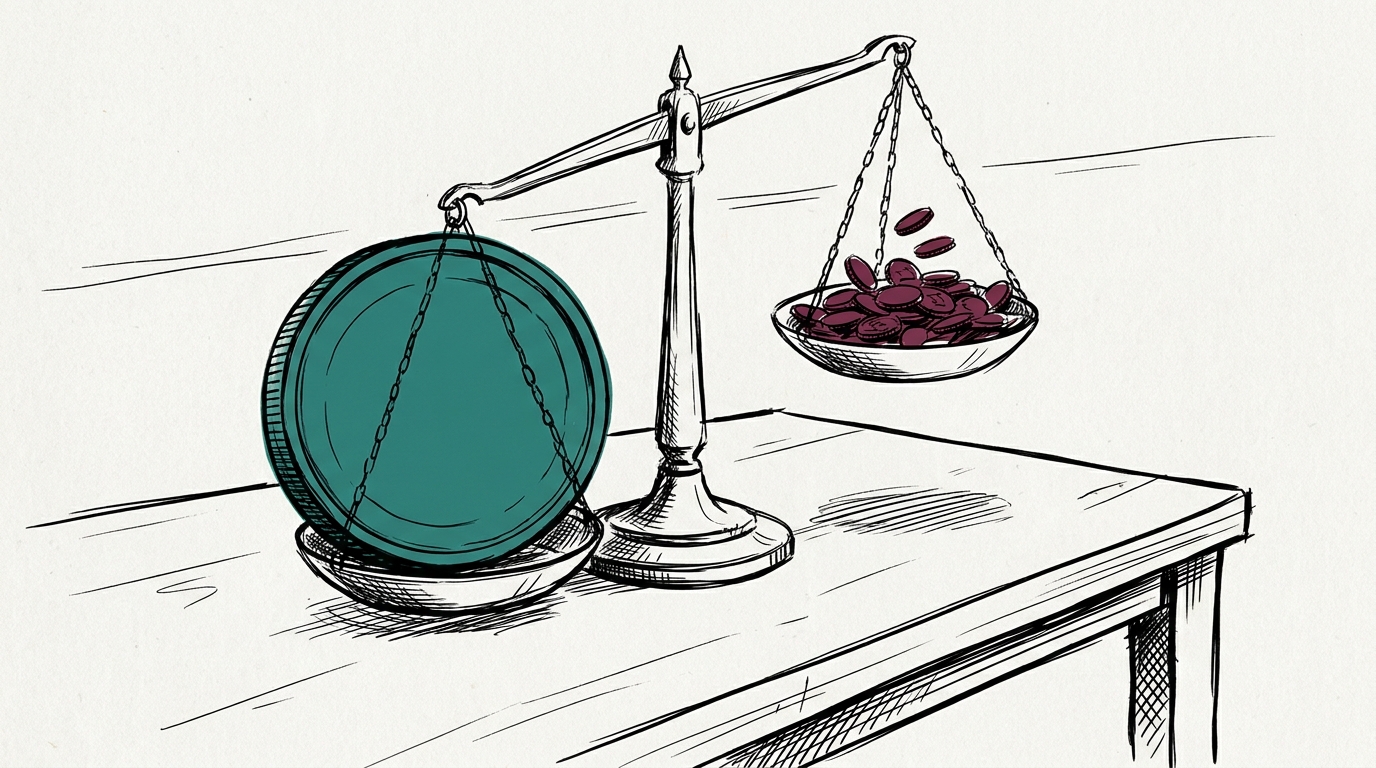
The gap between a futures market that repriced within minutes and an insurance market that did not move at all measures exactly how much deal optimism is backed by paper rather than talk.
Different Perspectives
Poland
Poland
Poland leads a self-announced AI Gigafactory consortium with a EUR 100 million phase-one commitment, matched by Czechia and joined by Hungary at EUR 25 million. EuroHPC has confirmed no consortium for the call closing 12 November, so the bloc exists only in national announcements so far.
UK Government (DCMS)
Secretary of State Lisa Nandy told the Commons on 3 September she has inherited the sovereign AI brief from Liz Kendall, but gave no assessment, figure or date on frontier-model access. It is the first public claim of ownership since DSIT's abolition, without the substance the committee asked for.
ASML
ASML
ASML CEO Christophe Fouquet credited Intel Foundry, not a European fab, with shipping the first high-volume logic product made on High-NA EUV, the tool only ASML builds. Europe holds the chokepoint tool; the company that spent it into volume production first is American.
Luxembourg
Luxembourg
Luxembourg joined Mistral's Series D as a new investor on 8 September, the same government that co-funds EuroHPC's MeluXina-AI supercomputer. One small member state now funds the sovereign compute Mistral may need and holds equity in the company using it.
Samsung Electronics
Samsung Electronics
Samsung led Mistral's Series D on 8 September and the same day expanded its ASML collaboration on next-generation lithography. One Korean company now sits atop Europe's largest AI funding round and inside its most sensitive chip-tooling relationship.
Mistral AI
Mistral AI
Mistral closed a EUR 3 billion Series D above a EUR 21 billion valuation on 8 September, with Samsung leading and Luxembourg joining as a new state investor. The company markets itself as Europe's non-American AI option even as the round's lead capital comes from South Korea and two US private-equity firms.