
Skip to content
You can now search across every topic, entity and event.What's new
European Tech Sovereignty
26JUL

The €890m fine that cost more than it collects

4 min read
10:21UTC

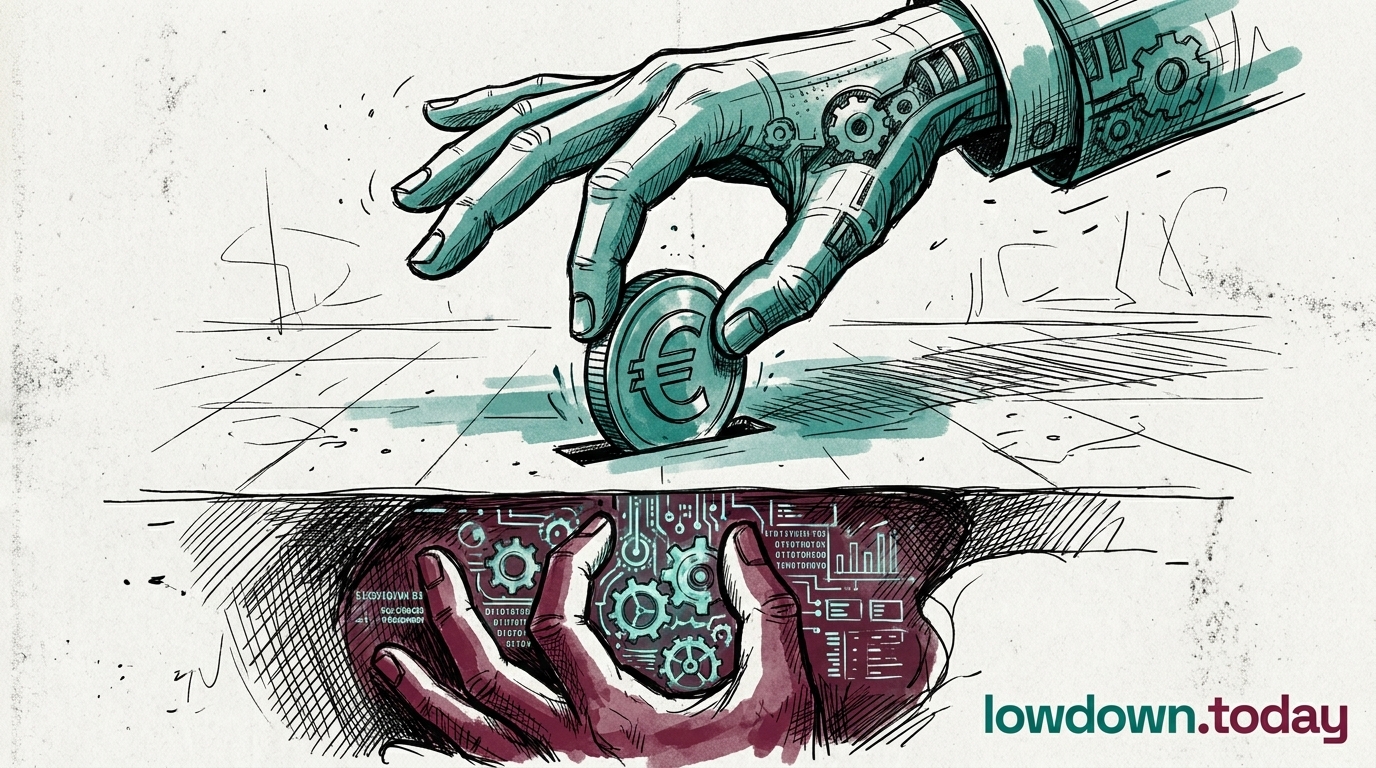
Brussels fined Google 890 million euros on 23 July for self-preferencing and Play Store steering rules. Seven days earlier it had quietly ordered Google to hand rivals its Android hooks and its search ranking data. Washington opened a trade investigation within 24 hours, and critics on both flanks called the penalty too small to matter.

Key takeaway

Brussels moved capability to European rivals using existing competition law, then paid for it in a Section 301 trade probe.

This briefing mapped
Regulatory
Diplomatic
Domestic
Economic
Infrastructure

Brussels sat on the Google file for months while von der Leyen held it personally, then issued the decision four days early. Within 24 hours Washington opened a trade investigation into Europe.

Sources profile:This story draws on neutral-leaning sources from Belgium and United States
BelgiumUnited States

The European Commission fined Google €890 million on 23 July for breaking Digital Markets Act rules. It set €460 million for favouring its own shopping and travel results in Search, and €430 million for blocking cheaper deals on the Play Store. Google has 60 days to comply.

The fine had sat unsigned on Ursula von der Leyen's desk for months. Donald Trump ordered a tariff probe into EU tech rules the next day. 

Seven days before the fine, the Commission took something Google cannot settle with a payment: interoperability with 11 Android features, and anonymised Search ranking data for rival engines from January 2027.

Sources profile:This story draws on mixed-leaning sources from Belgium and United States
BelgiumUnited States

The European Commission ordered Google on 16 July to open 11 Android features to rival AI providers for free. It must also share anonymised Search ranking data with competing search engines from January 2027. Ecosia says the change could take it from answering two-thirds of queries to all of them.

The order landed a week before The Commission's separate €890 million fine under the same Digital Markets Act file. 

Trump accused Brussels of "ROBBING" American technology firms and promised a "substantial TARIFF", a day after his trade representative said the Google decision had created massive uncertainty for US exports.

Sources profile:This story draws on mixed-leaning sources from France and United States
FranceUnited States
LeftRight
Sources:Euronews·CNBC

Thirteen days after MPs reported that Britain lacks any coherent framework for sovereign technology, the department that would have written one was abolished and its functions divided in three.

Sources profile:This story draws on neutral-leaning sources

Europe's flagship model company would be capitalised by Korean industrial money and Nordic funds rather than by any Commission instrument built for the purpose. The round had not closed.

Sources profile:This story draws on centre-leaning sources from United Kingdom
United Kingdom
LeftRight

Warsaw would score public technology tenders on architecture control, rights over AI model weights and vendor lock-in. No EU instrument names model weights at all.

Donald Tusk's government proposed a mandatory sovereignty test on 21 July for Polish public contracts. Technology deals above 5 million zloty and infrastructure above 15 million zloty would be scored on architecture control, AI model-weight rights, and vendor lock-in.

The test names AI model weights explicitly, something the EU's own Cloud and AI Development Act, adopted 3 June, does not cover. 

Sources:Forbes

The EU's joint supercomputing undertaking contracted an Italian systems integrator to build an AI-optimised machine in Luxembourg.

Sources profile:This story draws on neutral-leaning sources
Sources:HPCwire

The French IT group put a cloud platform designed and engineered inside the EU on open-source components in front of government, defence and healthcare buyers.

Sources profile:This story draws on neutral-leaning sources

French IT firm Atos launched Atos Sovereign Cloud on 23 July. The platform is built in the EU on open-source components, aimed at government, defence and healthcare buyers who need data kept on European-controlled infrastructure.

The launch adds a fifth named provider to a European sovereign-cloud field. The Commission's own €180 million framework already picked four winners in April, none of them Atos

Sources:Atos

The tender for a quantum computer in Luxembourg is worth up to €11.95m, split equally between EuroHPC and the Luxembourg government.

Sources profile:This story draws on neutral-leaning sources

EuroHPC opened procurement worth up to €11.95 million on 23 July for MeluXina-Q, a quantum computer in Luxembourg. The cost splits equally between EuroHPC and the Luxembourg government.

This is a tender, not a signed contract. It sits alongside the same day's MeluXina-AI announcement, part of Luxembourg's growing role as a EuroHPC hosting site. 

China's commerce ministry said Beijing and The Hague should create conditions for the firms to settle through consultation, nine days after a Dutch ministerial visit to the Chinese capital.

Sources profile:This story draws predominantly on China state media, with sources from China
China

China's Ministry of Commerce said on 16 July that Beijing and the Netherlands should let firms settle the Nexperia dispute through consultation. The statement followed a Dutch ministerial visit to Beijing on 7 July. Nexperia is a Dutch-based chipmaker owned by China's Wingtech, whose Dutch operations the Netherlands froze under the 1952 Goods Availability Act.

Spokesperson He Yadong's language, calling for consultation rather than demanding reversal, is notably softer than Beijing's usual posture on forced technology transfers. 

Sources:Xinhua

A forced-labour duty of 10 to 12.5 per cent took effect across roughly 60 economies, naming the European Union solely for weak enforcement of import rules. It has nothing to do with the digital file.

Sources profile:This story draws on neutral-leaning sources

A separate US Section 301 tariff of 10 to 12.5% aimed at forced labour in supply chains took effect on roughly 60 economies on 24 July. It named the EU for weak enforcement of its own forced-labour import rules. The move landed the same day as Trump's tech-focused Section 301 order.

Two Section 301 actions hit Brussels inside 24 hours. That gives Washington two live tariff levers against the EU at once. 

Closing comments

Rising on the trade axis, static on the industrial one. Trump's Section 301 order is a firmer step than earlier threats and arrives days before the EU AI Act's GPAI enforcement powers, which carry fines up to 3% of global turnover, activate on 2 August 2026, adding a second US-EU friction point alongside the 24 July forced-labour tariff of 10-12.5%. The mechanism to watch is whether the Section 301 investigation produces a named tariff list before Google's 21 September compliance deadline; a list naming non-tech EU exports would show Washington broadening the dispute rather than negotiating it.

Different Perspectives
European Commission
European Commission
Teresa Ribera and Henna Virkkunen announced the €890m fine on 23 July, saying products should succeed on merit, not platform ownership; four days earlier a separate Article 6(7) order compelled Android interoperability. The Commission expects both to hold on appeal after the Court of Justice upheld its earlier €4.1bn Android fine on 2 July.
Ecosia
Ecosia
Ecosia said the 16 July FRAND ranking-data order would take it from answering two-thirds of queries to all of them once the obligation activates in January 2027. The Berlin-based challenger has not called the enforcement package adequate, only workable if Google complies rather than appeals.
United States administration
Donald Trump ordered a Section 301 investigation into EU digital-enforcement practices on 24 July, a day after USTR's Jamieson Greer said the Google fine created massive uncertainty for US exports, noting Google's cumulative EU fines already exceed 2 per cent of the bloc's budget.
Poland (Tusk government)
Donald Tusk's government proposed a mandatory sovereignty test on 21 July for state technology contracts above 5 million zloty, scoring bids on AI model-weight rights and vendor lock-in rather than waiting for an EU-wide procurement rule. The threshold targets a 20-30 per cent domestic-alternative share.
Samsung Electronics
Samsung Electronics
Samsung entered talks reported 22 July to invest up to €1 billion in Mistral AI, part of a round valuing the French lab at roughly €20 billion alongside EQT, Novo Holdings and Santander. The Korean conglomerate, not an EU financing instrument, is positioned to anchor Europe's flagship AI lab.
China's Ministry of Commerce
Spokesperson He Yadong said on 16 July that Beijing and the Netherlands should let firms settle the Nexperia dispute through consultation, after a Dutch ministerial visit to Beijing. The conciliatory tone contrasts with the confrontational US trade response to the same fortnight's DMA enforcement.