Skip to content
You can now search across every topic, entity and event.What's new
European Oil Markets
18JUN

EU freezes $44 Russia oil cap 12 months

2 min read
12:45UTC

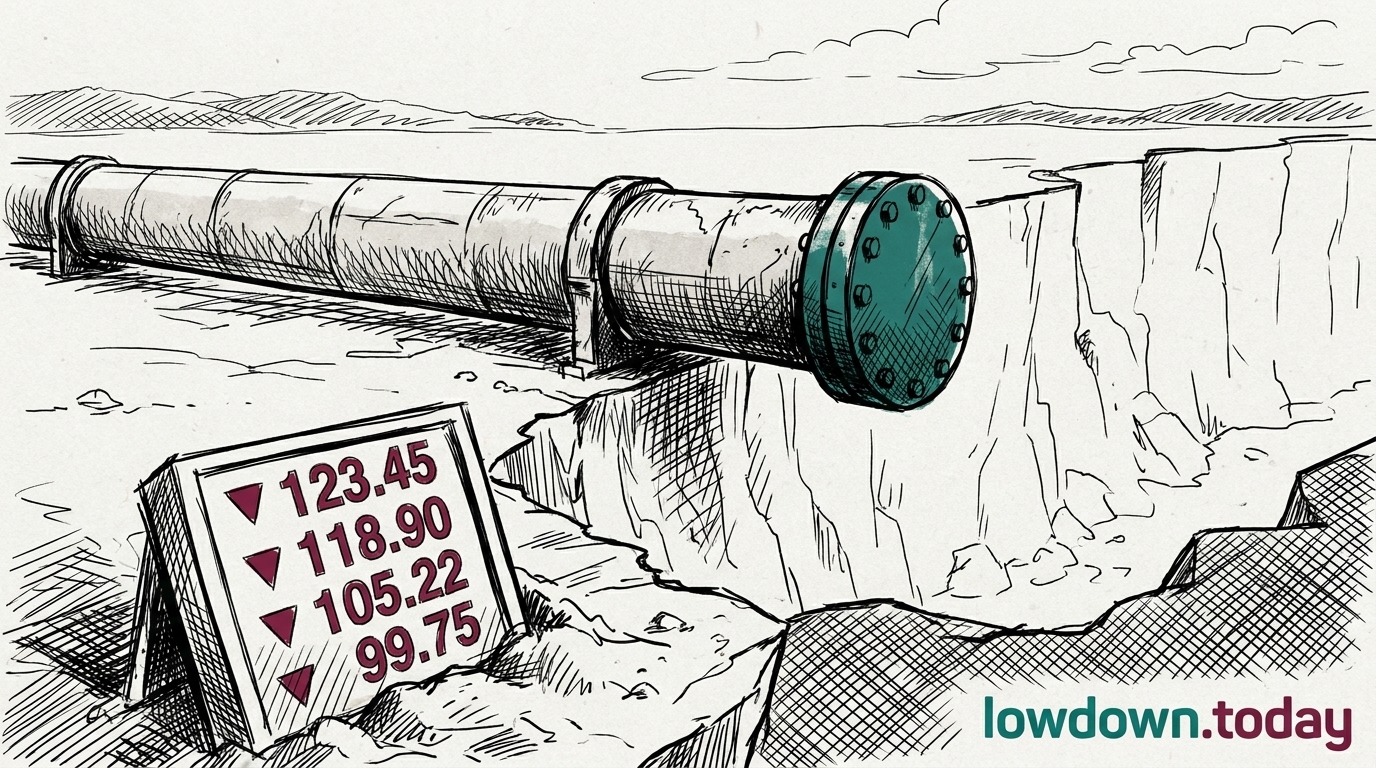
The EU adopted its 21st sanctions package on 23 July, freezing the $44 Russia oil cap for a full year and listing shadow-fleet support vessels for the first time.

EconomicDeveloping
Key takeaway

The year-long freeze keeps the Russian crude cap $14 below where the pricing formula would have drifted.

The European Union adopted its 21st sanctions package on 23 July by written procedure, one day before the one-week freeze of the $44 Russia oil price cap was due to lapse 1. The cap now holds for a full 12 months. It is the G7 and EU ceiling that bars Western shipping, insurance and finance from Russian crude sold above the line. An EU diplomat said the pricing formula would otherwise have let the ceiling drift toward $58, so the freeze holds roughly $14 of enforcement pressure on Russian barrels that the mechanism would have released.

The package lists around 250 entities, bars 32 Russian banks from cross-border transactions with EU banks, and adds more than 40 shadow-fleet vessels. For the first time the listings target ships that service the shadow fleet rather than the tankers alone, extending enforcement from the cargo to the support chain that keeps it moving. It cleared only after three failed COREPER votes on 13, 15 and 22 July , COREPER being the committee of member-state ambassadors that prepares Council decisions.

Greece dropped its veto after securing a renewable one-year exemption to keep carrying pre-2022 Russian liquefied natural gas contracts to third countries, with no new contracts allowed. Austria blocked fresh EU restrictions on Raiffeisen Bank's Russia operations. The Urals discount the cap targets has held Russian crude below Moscow's $59 budget floor through July , so the freeze arrives with the mechanism already biting on export revenue.


Deep Analysis

In plain English

The Russia oil price cap is a rule, agreed by the EU, G7 and allied countries, that blocks Western shipping and insurance firms from handling Russian crude sold above $44 a barrel. The idea is to let Russia keep exporting oil, so global supply does not collapse, while limiting how much money it earns per barrel. The EU's 21st sanctions package, adopted 23 July, keeps that $44 limit in place for another 12 months instead of letting it rise automatically. It also blacklists around 250 people and companies, bars 32 more Russian banks from cross-border transactions, and for the first time lists more than 40 support vessels, beyond the tankers themselves, that keep Russia's so-called shadow fleet running. This matters because EU sanctions need every member state to agree. The package only passed after Greece dropped its objection in exchange for an exemption letting it keep re-exporting Russian LNG for another year.

Deep Analysis
Root Causes

The price cap only works where G7 and EU firms control the insurance, shipping and finance a cargo needs, which is why shadow-fleet vessels with non-Western hull cover can carry Russian crude above $44 without breaching the mechanism as written. Freezing the cap at $44 for 12 months, rather than letting the automatic formula lift it toward $58, keeps that legal ceiling low even though enforcement against the shadow fleet remains the binding constraint.

The package cleared only after Coreper's third attempt in nine days, on 13, 15 and 22 July, because EU sanctions require unanimity and six states, Greece, Germany, France, Italy, Austria and Portugal, were each blocking it over unrelated national conditions rather than disputing the cap itself.

What could happen next?
  • Consequence

    The freeze denies Moscow a legal widening of the cap toward roughly $58 a barrel even though shadow-fleet insurance workarounds remain the larger enforcement gap.

First Reported In

Update #19 · Second chokepoint doubles Med freight

Kyiv Independent· 23 Jul 2026
Read original
Different Perspectives
Gulf oil producer
Gulf oil producer
Secured OPEC's confirmed 188,000 b/d September increment with the next meeting set for 6 September, but the Secretariat's own 2 August release says nothing about the fourth quarter. Output guidance beyond September remains undisclosed even as delegate sourcing keeps filling that gap.
Money manager positioned in WTI
Added 21,402 lots to a 108,307 net long in NYMEX WTI in the week to 28 July, against just 1,485 added to Brent's 15,740, a roughly fourteen-to-one split. Conviction sits in the American benchmark even as the European diesel story sets the record.
Indian refiner buying Urals
Bought Russian crude at a discount that narrowed to $1-2 a barrel in the week to 29 July from over $10, as Hormuz risk pushed it toward Urals. If that risk eases with the strike now called off, the discount it is currently enjoying could re-widen just as fast.
Russian diesel exporter
Novak tied any lifting of the diesel export ban, due to lapse 31 July, to an unspecified market recovery with no date, and pushed the gasoline ban to end-2026. An open-ended constraint suits an exporter benefiting from the record European crack it feeds.
War-risk underwriter
Withdrew war-risk cover for Saudi-linked hulls on 24 July and has not reinstated it, holding Bab el-Mandeb tanker transits near 7.5 a day. A cancelled strike does not by itself trigger the committee review needed to re-accept the class.
Northwest European refiner
Sources only 17% of diesel imports from Saudi Red Sea ports against the Mediterranean's 24%, so the ARA crack at $85.86 trails the Med print by $5.81. Lower Red Sea exposure is cushioning it against the rerouting cost, not eliminating it.



