Skip to content
You can now search across every topic, entity and event.What's new
European Oil Markets
15JUN

Ukraine's strikes move to the Azov

2 min read
11:33UTC

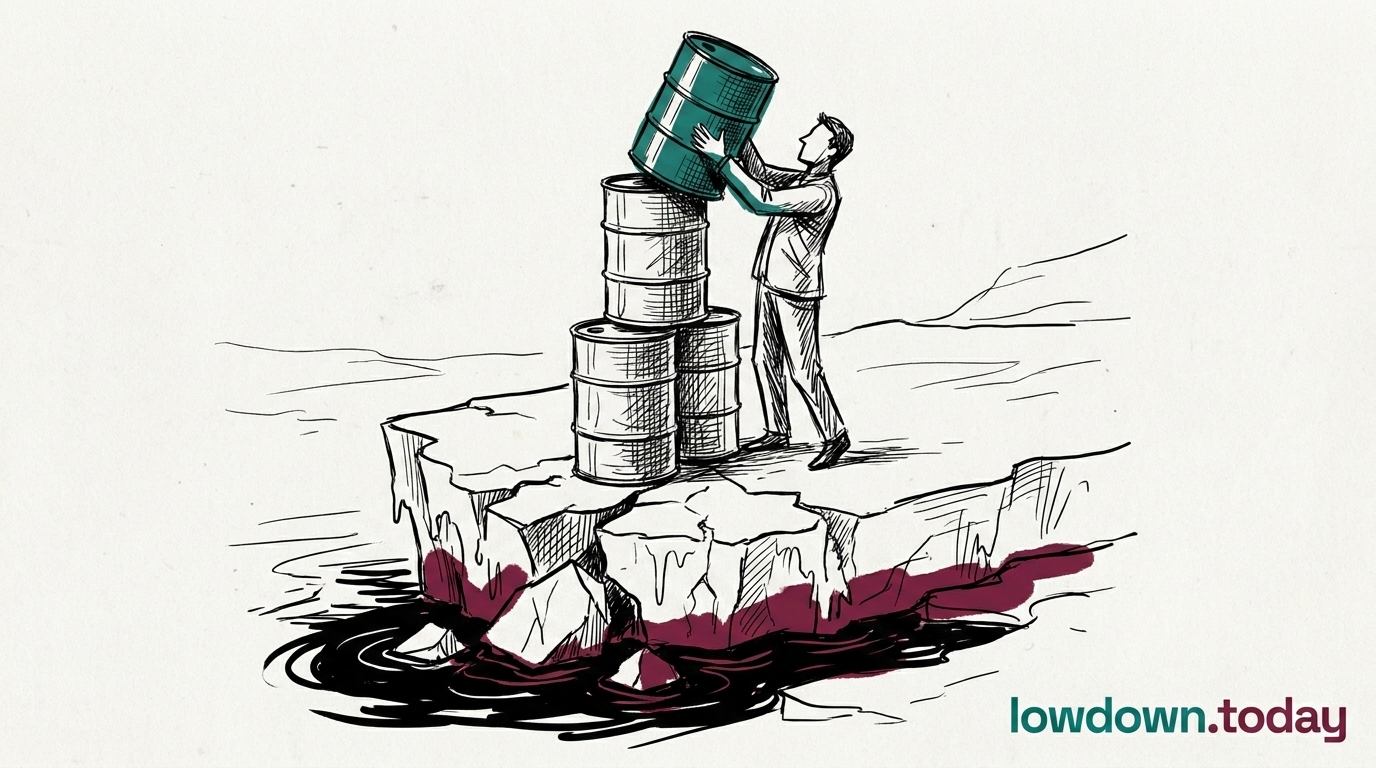
Ukraine's drones shifted from Russian refineries to fuel tankers in the Sea of Azov, cutting vessel traffic there by a possible 55% between 30 June and 11 July.

EconomicDeveloping
Key takeaway

Ukraine's strike campaign moved to Sea of Azov fuel tankers, cutting traffic there by a possible 55%.

Ukraine's long-range strike campaign shifted in the first fortnight of July from static refineries to the seaborne tankers carrying fuel across the Sea of Azov, the Institute for the Study of War (ISW) reported 1. Automatic identification system tracking from Starboard Maritime Intelligence, a commercial firm that monitors ship movements, recorded a possible 55% drop in Azov traffic between 30 June and 11 July 2.

Through June the campaign had reached deep inside Russia: the Kapotnya refinery near Moscow , the Tyumen plant two thousand kilometres from the border in Siberia , and airbase hangars at Saky on 1 July . Targeting the tankers changes the class of target from fixed installations to moving cargo, and it reaches the fuel at the point it leaves the country.

The tanker campaign works through logistics rather than firepower. Strike the vessels and the fuel cannot sail, so it backs up at the terminals the domestic market also draws on, pushing Russian pump prices higher 3. The diesel export ban exists in part to hold that backup inside Russia's borders.


Deep Analysis

In plain English

Ukraine has been bombing Russian oil refineries for months. Now it has widened the campaign to hit the ships that carry Russian fuel across the Sea of Azov, the inland sea between the two countries. A commercial tracking firm called Starboard Maritime Intelligence, which follows ship movements by radio signal, recorded roughly half as many vessels crossing the Azov between 30 June and 11 July as before. This matters because even fuel that survives the refinery still has to reach a buyer by ship. Targeting the tankers themselves, alongside the plants that make the fuel, closes off one more route Russia has been using to keep exports moving.

Deep Analysis
Root Causes

Refineries are fixed, defended, and can be patched or partially restarted; ocean-going tankers moving through the Sea of Azov's narrow approaches have far less air-defence cover and cannot be dispersed once under way, which makes them a softer target once Ukraine's strike range and targeting data allow it.

The economic incentive compounds this: the fuel crunch behind Russia's own diesel export ban tightens what refined product is even available to ship, so every remaining cargo becomes a higher-value target for the strike campaign to interdict.

Escalation

Direction: expanding target set from land-based refineries to seaborne logistics, a widening rather than a de-escalation of the strike campaign. Evidence: the 55% AIS traffic decline follows earlier June refinery strikes on Kapotnya and Tyumen, suggesting a deliberate broadening rather than a one-off incident.

What could happen next?
  • Consequence

    Vessel operators may increasingly go dark on AIS transponders to avoid becoming targets, which would make future traffic-decline figures harder to interpret as damage versus evasion.

First Reported In

Update #23 · Moscow rations diesel as US cover lapses

Institute for the Study of War / Critical Threats Project· 13 Jul 2026
Read original
Different Perspectives
Sanctions compliance officer reviewing a Lukoil International GmbH bid
OFAC's amended FAQ 1224 gives a compliance desk its first published standard: full severance from Lukoil and a US-jurisdiction blocked account for sale proceeds. The conditions name neither ISAB nor Italy, so a Priolo Gargallo-linked bid answers a different question than a Neftochim Burgas or Petrotel Ploiesti one.
Managed-money funds on Brent Last Day
CFTC data for the week to 21 July showed managed money flipping 74,400 contracts to a net long of 15,665 against 1,410 short on the Brent Last Day contract, code 06765T. A fund that held that short through July has now covered it, and the spent short base raises the bar for the next leg higher.
Saudi crude exporters
Saudi-linked tanker transits through Bab el-Mandeb fell to about 7.5 a day after the 24 July underwriting withdrawal, pushing more barrels onto the longer route round the Cape or through the Yanbu terminal. Every diverted barrel ties up a ship for longer, and a fleet that turns slower charges more.
Tanker owners on the Bab el-Mandeb route
Lloyd's-market syndicates withdrew war-risk cover from Saudi-linked hulls on 24 July, leaving owners of that class of vessel to sail Bab el-Mandeb uninsured or not at all. Tanker transits on the route fell to roughly 7.5 a day, and cover, once withdrawn, does not return on a shipowner's timetable.
Eni
Eni
Eni's board approved second-quarter results on 29 July, swinging refining EBIT to a EUR0.08bn profit from a year-earlier loss even as group profit doubled, and named Red Sea freight cost as a cap on that improvement. A refiner absorbing higher shipping costs on Saudi-linked crude while its numbers improve treats the freight line as a drag, not a crisis.
Asian buyers (India, Japan, China, South Korea)
Asian refiners are absorbing 62% of Yanbu's 3.75m b/d flow, the bulk of Saudi Arabia's rerouted crude now clearing east rather than into the Atlantic basin. That destination split leaves Asian buyers more exposed to any single Yanbu-specific disruption than under the kingdom's normal multi-terminal export pattern.



