Skip to content
You can now search across every topic, entity and event.What's new
European Oil Markets
11JUN

Google fined €890m four days before EU deadline

3 min read
08:58UTC

Brussels sat on the Google file for months while von der Leyen held it personally, then issued the decision four days early. Within 24 hours Washington opened a trade investigation into Europe.

EconomicAssessed
Key takeaway

Google has until 21 September to change Search rankings and Play steering, or pay daily penalties.

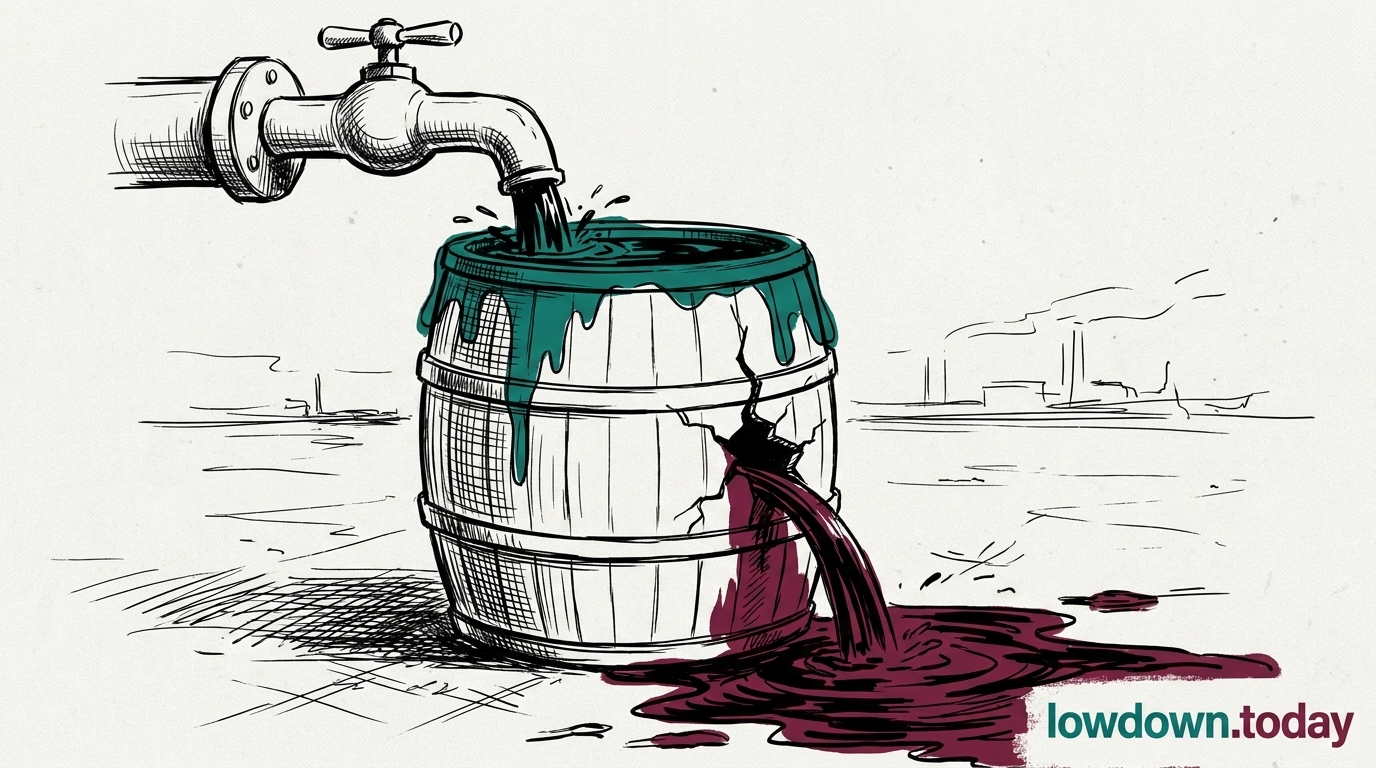
The European Commission fined Google €890 million on Thursday 23 July for two breaches of the Digital Markets Act (DMA), the EU law governing the large platform gatekeepers Brussels designates as controlling access between businesses and their customers.1 The penalty splits into €460 million for pushing Google's own shopping, hotel, transport and sports services up Google Search rankings, and €430 million for stopping Google Play developers from telling users where to buy the same thing more cheaply. Both breaches sit under DMA Article 6(5).

Brussels had held the file for months, with Commission President Ursula von der Leyen keeping it personally , and had confirmed back in May that a self-preferencing penalty of roughly this order was in preparation . The decision then landed four days before The Commission's own 27 July deadline, at a moment when the EU was still negotiating trade terms with Washington. Nobody in Brussels or Mountain View was surprised by the number; the calendar was the choice.

Teresa Ribera, The Commission's competition chief, framed it in market terms: "The best products should succeed because they're better, not because they're owned by the company running the search engine."2 Henna Virkkunen, who holds the tech sovereignty portfolio, named the harm more precisely: "We found that Google harms businesses offering similar services, such as shopping or sports, by not granting them the same level of prominence on Google Search."3 Kent Walker, Google's president of global affairs, replied that "this implementation of the DMA continues to break everyday products", and the company is weighing an appeal.4

The compliance clock runs 60 days from 23 July and closes on 21 September. Miss it and Google faces periodic penalties of up to 5 per cent of average daily worldwide turnover, which in practice means rebuilding how Search displays comparison results and how Play handles outbound payment links, or paying every day it does not. Set against roughly €8.25bn in EU antitrust penalties Google has already absorbed from the pre-DMA era, among them the €4.1bn Android fine the Court of Justice confirmed on 2 July after eight years of litigation , a sum this size buys compliance from nobody. Alexandra Geese, a German Green member of the European Parliament (MEP), put it as arithmetic: "modest sanctions will not deter a company of Google's size from repeating the conduct".5


Deep Analysis

In plain English

The European Commission is the EU's executive body, roughly its government. It just fined Google €890 million (about £765 million) for two separate things: showing its own shopping and travel listings above competitors' in search results, and stopping app developers on the Play Store from telling customers they could buy the same thing cheaper elsewhere. Both breach the Digital Markets Act, an EU law that treats a handful of giant tech platforms differently from ordinary companies because their size lets them squeeze out rivals. Google has 60 days, until 21 September, to change how Search and Play work in the EU or face further penalties.

Deep Analysis
Root Causes

Google's self-preferencing advantage rests on a default-position mechanic: with roughly 90% of EU search share, ranking its own shopping and travel results above rivals compounds traffic advantages long before any enforcement decision lands, because most users never scroll past what the algorithm surfaces first.

The timing has a political layer separate from the legal one. Commission sources confirmed in May that the completed fine sat unsigned on von der Leyen's desk , and it stayed unsigned through the 25 June EU-US tariff deal that excluded digital taxes , issuing only after that deal closed and days before the 24 July US trade determination it was reportedly timed to dodge.

What could happen next?
  • Consequence

    Google must alter Search ranking and Play Store steering rules across all 27 member states by 21 September 2026 or face further Article 30 escalation.

    Immediate · Assessed
  • Risk

    A further Article 6(5) finding for the same conduct would expose Google to fines of up to 20% of global turnover under the DMA's repeat-infringement ladder.

    Medium term · Reported
  • Precedent

    The fine sets the enforcement floor for the pending Article 6(7) search-data FRAND obligation taking effect January 2027, the next stacked instrument in the same file.

    Short term · Reported
First Reported In

Update #13 · The €890m fine that cost more than it collects

European Commission· 26 Jul 2026
Read original
Different Perspectives
US money managers (CFTC-tracked)
US money managers had trimmed WTI net long positioning into July's rally, doubting the Hormuz premium would hold without freight or war-risk confirmation, and the crude stock build reported for the week to 17 July gives that scepticism a fundamentals basis. The 25 July CFTC data will show whether Brent's move above $100 changed their calculus.
Asian distillate buyers (Singapore)
Singapore's distillate holders kept retaining middle-distillate barrels as the East-West arbitrage window narrowed further this week, a pattern that sharpened as Fujairah light distillates hit a record low. Cargoes are being held rather than released west into the tightening Mediterranean market.
Bulgaria
Bulgaria
Bulgaria secured the removal of Lukoil founder Vagit Alekperov and Patriarch Kirill from the 21st package, with President Rumen Radev calling a personal listing 'shooting ourselves in the foot'. Sofia is protecting its position in Lukoil's EUR 3bn compensation claim over the 2023 Neftohim Burgas nationalisation.
Russia
Russia
Russia loses the roughly $14 a barrel of legal headroom the price-cap formula would have released toward $58, even as Urals continues trading below Moscow's $59 budget floor. The shadow-fleet insurance workaround that lets sanctioned crude clear above $44 in practice remains untouched by the freeze itself.
European Union
European Union
The EU adopted its 21st sanctions package on 23 July, freezing the $44 Russia oil cap for 12 months rather than letting the formula drift it toward $58, and listed shadow-fleet support vessels for the first time. The package cleared only after three failed Coreper votes.
Marine war-risk underwriters (Lloyd's-linked syndicates)
War-risk syndicates lifted southern Red Sea hull premiums 150% to about 0.75% of hull value after the 20 July blockade declaration, still a seventh of the roughly 5% Hormuz band. Underwriters reset on realised loss, not declared threat, so the 23 July Encelia and Layla strikes set up the next re-mark.



