Skip to content
Briefings are running a touch slower this week while we rebuild the foundations.See roadmap
European Oil Markets
11JUN

Brent sub-$95 prices a different market

3 min read
08:58UTC

Brent fell below $95 in the 28-29 May window on reports of a US-Iran ceasefire extension, with WTI near $92-93 and Brent-WTI compressed to roughly $2-3.

EconomicDeveloping
Key takeaway

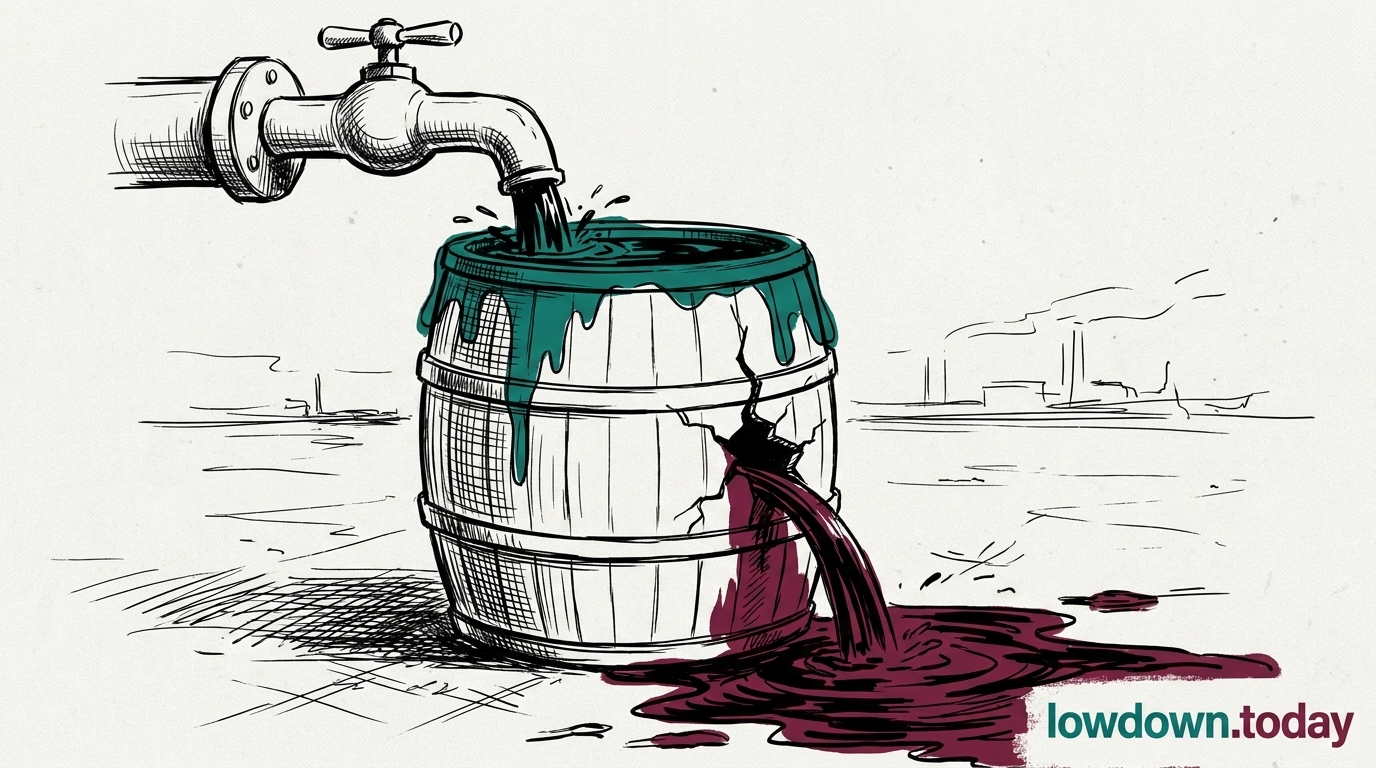
The screen prices the Iran ceasefire while the cracks price a physical shortage; the two are now reading different markets.

Brent fell below $95 in the 28-29 May window on reports of a US-Iran ceasefire extension awaiting Trump's sign-off, with WTI near $92-93 and the Brent-WTI spread compressed to roughly $2-3 1. The $14 move itself was the 26 May story ; the new element is that the screen kept leaking on ceasefire headlines while OFAC loaded GL 131F and the Iran SDN action underneath it on the same day.

The flat price and the light-sweet spread are unwinding the Hormuz risk premium. The product cracks are not, because they price barrels that are physically short rather than a war-risk option . The two are now reading different markets: the screen prices ceasefire optionality, the cracks price the inventory deficit, and a desk can be long the crack and short the flat-price premium without contradiction.

Saudi Arabia is expected to cut the July Arab Light OSP to Asia for a second straight month, per Reuters, with the official sheet due circa 1-5 June and not yet published 2. If the Asia cut lands, Asian refiners keep their Russian and Iranian discounts and more Gulf sour competes into Europe, which would press Med sour differentials and the Urals discount lower. Aramco has not published, so the cut belongs in the watch column as an expectation, not a print.


Deep Analysis

In plain English

Brent crude is the global benchmark price for oil, used as a reference for most crude sold outside North America. WTI (West Texas Intermediate) is the US benchmark. Normally Brent trades $3-5 per barrel above WTI because of quality and transport differences. This week, Brent fell below $95 and the gap between Brent and WTI compressed to only $2-3, its narrowest since 2020. The price fell because news reports suggested a ceasefire between the US and Iran might be extended, which would mean Iranian oil could eventually return to global markets and ease supply. But the physical market for diesel and other refined products tells a different story: stocks at European storage hubs just hit a 12-year low, meaning there is not enough product to go around. So the screen price (what traders pay for future oil) and the real-world price (what refiners pay for products) are moving in opposite directions, which usually does not last.

What could happen next?
  • Risk

    Brent-WTI at $2-3/bbl is below the structural transport-cost differential; if Cushing-to-Gulf pipeline economics reassert, WTI reprices up or Brent reprices down to restore the spread, adding volatility to both benchmarks.

    Immediate · Assessed
  • Consequence

    A crack-to-flat-price ratio above 55% on a $95 Brent base historically precedes either demand destruction in diesel (reducing the draw rate) or a flat-price recovery as refiner purchasing drives crude demand; either resolves the current divergence.

    Short term · Assessed
  • Opportunity

    The divergence between the falling flat price and the firm crack creates an opportunity to enter long crack spreads: buy product forward, sell crude, and capture the basis if physical shortage forces flat-price recovery.

    Immediate · Suggested
First Reported In

Update #3 · OFAC loads a June squeeze the screen ignores

EIA· 29 May 2026
Read original
Different Perspectives
European Commission / EU energy regulators
The EU 21st sanctions package, announced 26 May, targets shadow-fleet tankers and banks but has not accelerated a resolution of the ISAB ownership question. A 27 June GL 131F lapse without OFAC issuing a transaction licence creates a supply-security problem for Med products that Brussels cannot solve unilaterally.
China state refiners
Chinese seaborne crude imports remain at a decade-low 6.78mbd as of May, with negative refining margins keeping state refiners on domestic stocks. Iranian Light moved to a discount to Brent, confirming the EFS compression reflects a demand hole rather than a reopened supply route.
Saudi Arabia / OPEC+ chair
Saudi Arabia ratified the third consecutive 188kbd July hike on 7 June at a Brent print over $10 below its $108-111 fiscal breakeven. Actual output runs near 70% of pre-conflict levels, so the quota increase is a signalling move rather than a physical-supply addition.
CFTC-tracked Brent managed-money desks
Managed-money Brent net position printed -57,280 contracts for the week to 2 June, a 109,000-contract swing into short from the prior +52,000 long; the book is crowded short into $8.43/bbl backwardation with a flat price that has already round-tripped to $92.69.
Med Aframax freight market
TD19 Med Aframax held near the WS228 level logged on 6 June with no new Ceyhan cargo confirmation arriving to soften it. The freight bid is pricing continued Med supply tightness, not a resolved backstop.
Italy / ISAB / Golden Power review
Energy minister signalled conditional Golden Power approval for Ludoil's ISAB acquisition on 4 June, clearing Rome's foreign-investment gate. An OFAC transaction licence has not followed, leaving the 320kbd Priolo Gargallo refinery inside the sanctions perimeter as 27 June approaches.