Skip to content
You can now search across every topic, entity and event.What's new
European Oil Markets
8JUN

Russia bans gasoline exports to July

2 min read
10:46UTC

Moscow imposed a four-month gasoline export ban after Baltic port damage forced the Kirishi refinery offline and threatened four more facilities processing 55 million tonnes annually.

EconomicDeveloping
Key takeaway

Russia's gasoline export ban through July confirms Baltic port damage has crippled its refining supply chain.

Russia banned all gasoline exports from 1 April through 31 July 2026 after Ust-Luga halted fuel oil and gasoline intake on 25 March. The Kirishi refinery (KINEF), responsible for 6.6% of Russia's total oil refining, ceased operations 1. Three more refineries, in Yaroslavl (YANOS), Moscow, and Ryazan, face the same problem: fuel oil comprises 18 to 35% of their output, has negligible domestic demand, and now has nowhere to export.

A refinery specialist told Reuters that stockpiles would fill "within days," forcing cuts "to minimum levels and then potentially shut units." The four facilities process a combined 55 million tonnes of crude annually. The ban was framed publicly as a response to Iran-war price volatility. The actual trigger is that the export infrastructure carrying refined products out of northwest Russia no longer functions.

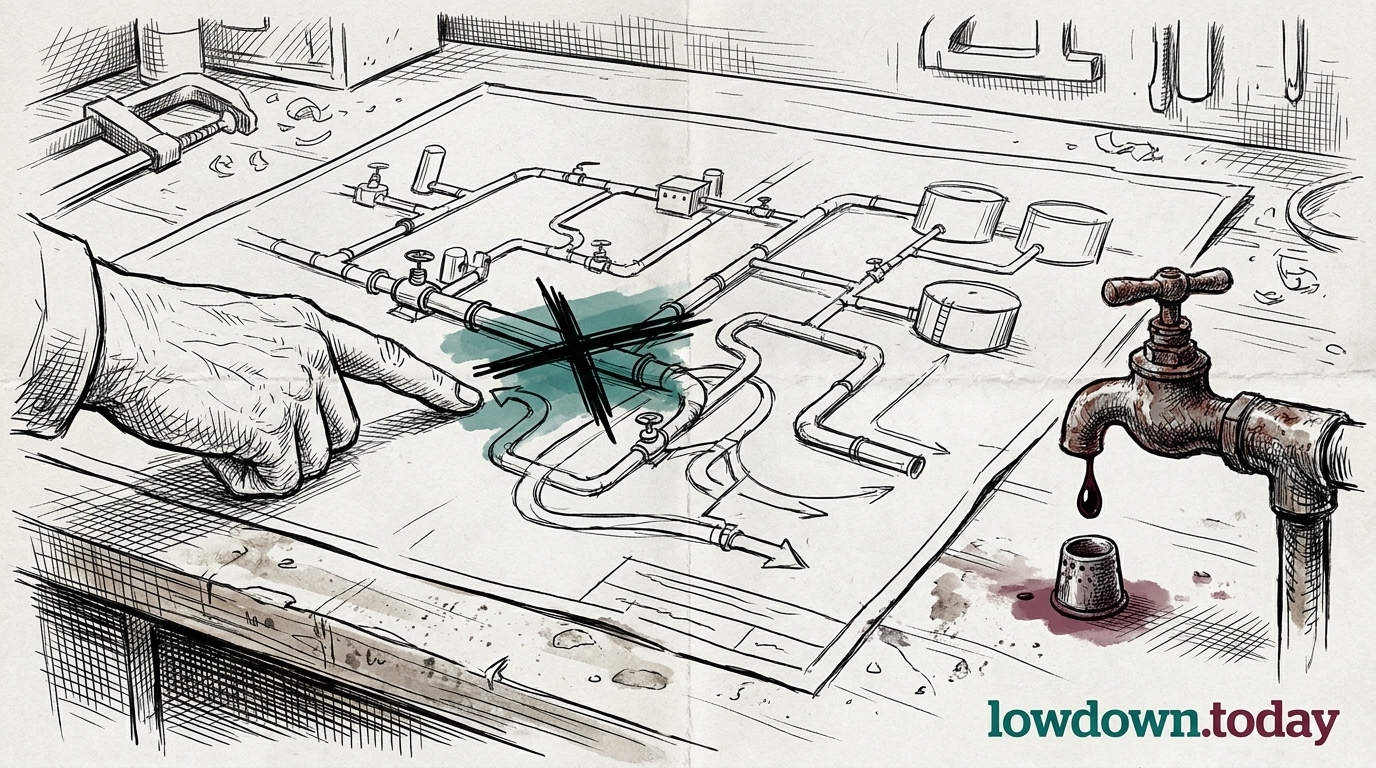
The earlier Ukrainian strikes on the Labinsk oil depot and the Afipsky refinery targeted storage and processing. The Baltic campaign strikes at the chokepoint where refined product meets ocean shipping. Russia now faces the spring and summer driving season with its largest export-facing refineries offline or throttled.


Deep Analysis

In plain English

Oil refineries turn crude oil into usable products: petrol, diesel, and fuel oil. Russian refineries near the Baltic ports produce large amounts of fuel oil, which they export since Russia doesn't burn much of it domestically. With the Baltic ports shut, the refineries have nowhere to send the fuel oil. Storage tanks fill up within days, forcing the refinery to slow or stop entirely. The Kirishi refinery, which handles 6.6% of all Russian oil refining, has already gone offline. Russia banned all petrol exports for four months. This is partly to protect domestic supply, but it also signals that the Baltic ports will not be fixed quickly, and that the damage to refining operations is serious.

Deep Analysis
Root Causes

The immediate cause is the physical blockage of fuel oil export pathways. Fuel oil, which comprises 18-35% of the output at the affected refineries, has no significant domestic market in Russia and must be exported. With Ust-Luga halted, the product accumulates in tanks until refineries must slow or stop production.

The structural cause is Russia's refinery geography. Soviet-era refining capacity was built in northwest Russia to serve European export markets. Post-2022 rerouting moved crude buyers to Asia, but the refinery locations and export infrastructure were not changed. Ukraine's strikes exploit this geographic mismatch.

What could happen next?
  • Consequence

    Russia's domestic fuel price stability depends on maintaining refinery output. If the four threatened facilities reduce to minimum operations, Russia faces summer fuel shortages in regions far from alternative supply.

  • Risk

    If the refinery cascade shutdown reaches the Moscow and Ryazan facilities, Russia faces politically sensitive domestic fuel shortages close to the capital.

First Reported In

Update #9 · Ukraine halves Russia's Baltic oil exports

Moscow Times / Reuters· 1 Apr 2026
Read original
Different Perspectives
US money managers (CFTC-tracked)
US money managers had trimmed WTI net long positioning into July's rally, doubting the Hormuz premium would hold without freight or war-risk confirmation, and the crude stock build reported for the week to 17 July gives that scepticism a fundamentals basis. The 25 July CFTC data will show whether Brent's move above $100 changed their calculus.
Asian distillate buyers (Singapore)
Singapore's distillate holders kept retaining middle-distillate barrels as the East-West arbitrage window narrowed further this week, a pattern that sharpened as Fujairah light distillates hit a record low. Cargoes are being held rather than released west into the tightening Mediterranean market.
Bulgaria
Bulgaria
Bulgaria secured the removal of Lukoil founder Vagit Alekperov and Patriarch Kirill from the 21st package, with President Rumen Radev calling a personal listing 'shooting ourselves in the foot'. Sofia is protecting its position in Lukoil's EUR 3bn compensation claim over the 2023 Neftohim Burgas nationalisation.
Russia
Russia
Russia loses the roughly $14 a barrel of legal headroom the price-cap formula would have released toward $58, even as Urals continues trading below Moscow's $59 budget floor. The shadow-fleet insurance workaround that lets sanctioned crude clear above $44 in practice remains untouched by the freeze itself.
European Union
European Union
The EU adopted its 21st sanctions package on 23 July, freezing the $44 Russia oil cap for 12 months rather than letting the formula drift it toward $58, and listed shadow-fleet support vessels for the first time. The package cleared only after three failed Coreper votes.
Marine war-risk underwriters (Lloyd's-linked syndicates)
War-risk syndicates lifted southern Red Sea hull premiums 150% to about 0.75% of hull value after the 20 July blockade declaration, still a seventh of the roughly 5% Hormuz band. Underwriters reset on realised loss, not declared threat, so the 23 July Encelia and Layla strikes set up the next re-mark.