Skip to content
You can now search across every topic, entity and event.What's new
European Oil Markets
4JUN

Qatar says the $6bn never left

2 min read
10:20UTC

Qatar's Foreign Ministry said the $6bn tranche of Iranian funds it holds has not moved, directly contradicting President Masoud Pezeshkian's 29 June claim that the money was returning to Tehran.

EconomicDeveloping
Key takeaway

Qatar says Iran's $6bn remains frozen, spendable only on food and medicine through a US-supervised account.

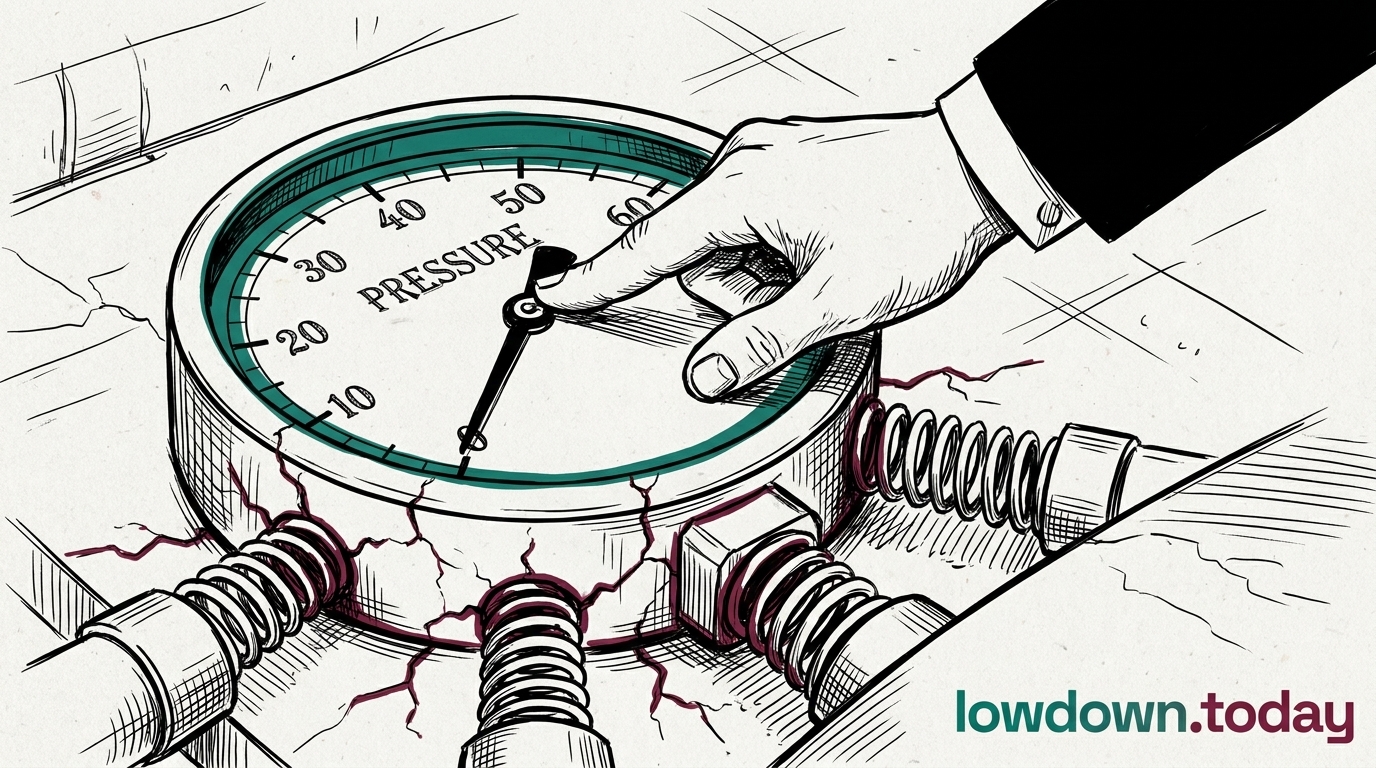
Qatar's Foreign Ministry said on 3 July that the $6bn tranche of Iranian funds it holds remains frozen, directly contradicting President Masoud Pezeshkian, who claimed on 29 June that the money was returning to Tehran without US conditions 1. Any release depends on a US-Qatar-Iran mechanism, restricted to food and medicine, that has not been finalised.

The escrow unlocks only against approved humanitarian invoices, so even a signed deal would not put cash in Tehran's hands. It would let Iran draw down against wheat and medicine purchases run through a US-supervised account. Pezeshkian described a return of sovereign money; Doha described a spending line for food.

The account mirrors a 2023 arrangement in which $6bn of Iranian oil money sat in Qatar for humanitarian purchases before being refrozen, and the same food-and-medicine ringfence Washington set on the disputed $12bn tranche last week . Same custodian, same ledger, same reversibility. A president announcing a return of funds structured this way is describing an invoice line, not a transfer, which is the distinction Doha's rebuttal makes public. Pezeshkian's announcement is the second Iranian claim of a win this week that the paperwork does not support.


Deep Analysis

In plain English

Qatar has been holding billions of dollars of Iranian money that international sanctions froze. On 29 June, Iran's President Masoud Pezeshkian told the Iranian public that $6bn of that money was finally coming home, with no conditions attached. Qatar's Foreign Ministry said on 3 July that Pezeshkian's version is wrong. The $6bn is still frozen exactly where it was before. Qatar cannot release the funds without permission from the US Treasury, which has not been given, so Iran's president appears to have promised his own people something no one had actually agreed to.

Deep Analysis
Root Causes

Qatar's central bank holds the funds under US secondary-sanctions exposure, not Iranian ownership terms. Any release without an explicit Treasury licence risks Doha's own banks losing correspondent relationships with American institutions, a far larger cost to Qatar than the diplomatic friction of contradicting Pezeshkian.

That constraint has not changed since Qatar first confirmed in April that any release requires Treasury approval it has not granted. Pezeshkian has no authority over that process either. As a civilian president with no command role over the IRGC or the nuclear file, his public statements on sanctions relief are aimed at Iranian audiences rather than at commitments Washington or Doha are bound by.

First Reported In

Update #145 · Iran's heir skips the funeral built for him

Iran International· 4 Jul 2026
Read original
Causes and effects
This Event
Qatar says the $6bn never left
Qatar's rebuttal shows the $6bn is a US-supervised humanitarian spending line, not the returning sovereign cash Pezeshkian described to a domestic audience.
Different Perspectives
Kuwait
Kuwait
Kuwait absorbed the Iranian strike that knocked generating units offline at a combined power-and-desalination plant on 17 July, the event that finally moved freight and insurance in lockstep with Brent. The strike hit essential civilian infrastructure, not a trading desk's benchmark.
Asian buyers (Singapore)
Singapore's middle distillates rose 12% month-to-date to 8.91m barrels and fuel oil passed 19m barrels on a 105% net-import surge, buyers retaining barrels as the East-West arbitrage window narrows. Cargoes are being stockpiled ahead of further Hormuz-driven freight repricing rather than released west.
Austria (Coreper holdout)
Vienna is blocking the same package over roughly EUR 2bn of frozen Russian assets earmarked for Raiffeisen, a domestic banking dispute with no connection to the oil cap racing toward its 23 July expiry. The linkage forces the whole package to wait on a bilateral compensation fight.
Greece (Coreper holdout)
Athens is holding the 21st sanctions package at the 22 July Coreper vote over Russian LNG re-export rights, a condition unrelated to the oil price cap itself, leaving the $44.10 freeze one day from expiry without a deal. Greece's own tanker registry gives it a direct stake in how any shadow-fleet measures are drafted.
Marine underwriters (Gulf war-risk)
Hull war-risk cover for Hormuz transits widened to a 3-10% band on 17 July with 5% the emerging norm, up from a 3-4% baseline set in late June, the first repricing in six weeks to track a flat-price move rather than lag it. Cover resets on actuarial evidence of loss, not on diplomatic or price signals.
Money managers (CFTC-tracked)
The CFTC's week-to-14-July snapshot, released 17 July, showed WTI managed-money net long collapsing 69% to 19,783 contracts and a standalone 60,141-contract net short on Brent Last Day (NYMEX). Both readings predate the Kuwait strike and the 20 July escalation, so any covering since is not yet visible in public data.