Skip to content
You can now search across every topic, entity and event.What's new
European Oil Markets
4JUN

Oil prices a Hormuz reopening that has not happened

4 min read
10:20UTC

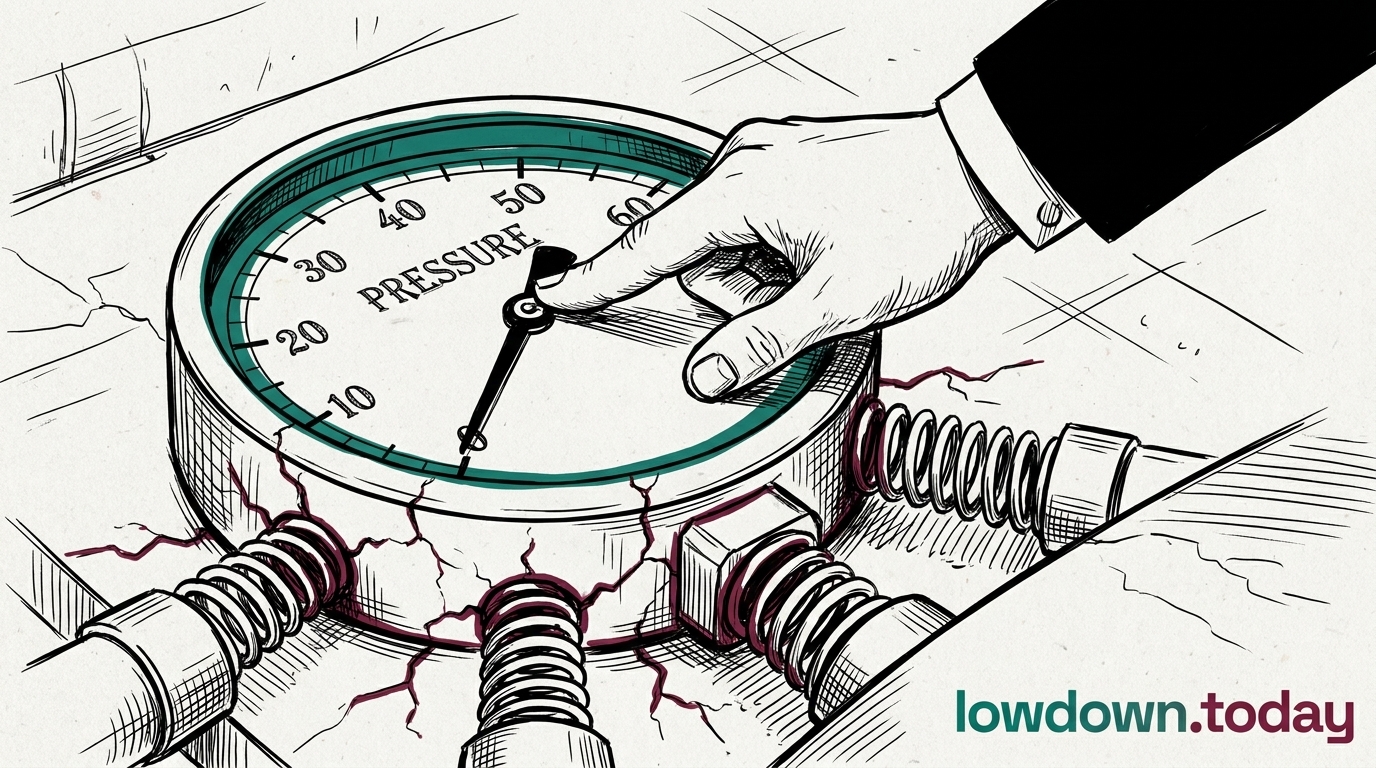
Brent crude fell to about $77.22 on 18 June, a pre-war level, while not one tanker resumed transit, insurers kept the strait excluded and the mines stayed live. The market is reading the signature; the water disagrees.

EconomicDeveloping
Key takeaway

Brent is pricing a reopening that no insurer, mine crew or transit log has yet confirmed on the water.

Brent Crude, the benchmark that sets the price of roughly two-thirds of internationally traded oil, fell to about $77.22 on 18 June, down 6.9 per cent from $82.98 and back to a level last seen before the war 1. Traders treated the signed Islamabad Memorandum of Understanding (MoU) as a completed reopening of the Strait of Hormuz. Not one tanker resumed transit.

The physical strait tells a different story from the screen. No Protection and Indemnity (P&I) club, the mutual insurers that cover roughly 90 per cent of ocean-going tonnage, has lifted its Hormuz war-risk exclusion; premiums sit at four to twenty times pre-war levels, and transits run near 6 per cent of baseline . Mine-clearance crews are still working uncleared waters: an IRGC vessel issued a radio warning to a US warship during that work on signing day. None of that has reached the insurance market that decides whether a hull moves.

Brent had touched $87.33 only days earlier and slipped below $90 when the ceasefire first looked probable ; the slide now prices an operational resumption rather than a rising probability of one. If the OFAC waiver never lands, or the 60-day toll-free window lapses into a fee, the gap between paper and water closes upward. Brent at $77 runs several weeks ahead of any operational change in the strait itself.


Deep Analysis

In plain English

Financial markets and physical ships operate on different clocks. Traders in London can reprice oil within seconds of reading a news headline. A tanker captain deciding whether to sail through the Strait of Hormuz needs to know the mines have been cleared, that his insurance still covers him, and that an armed vessel will not stop him halfway through. On 18 June, Brent fell 6.9% to $77.22 as traders priced the deal as a completed reopening. Yet BIMCO, the world's largest shipowner association, confirmed no P&I club had lifted its war-risk exclusion. CENTCOM's two carrier groups continued redirecting vessels. Iranian-laid mines remained uncleared. Zero commercial tankers completed a Hormuz transit that day. The price moved; the strait did not.

What could happen next?
  • Risk

    If no commercial tanker completes a Hormuz transit by 25 June, Brent is likely to rebound toward $82 to $84 as traders recognise the physical-to-paper gap.

    Immediate · Assessed
  • Consequence

    Saudi Arabia's four idle supergiant fields , representing 2 to 2.5 million barrels per day of capacity , will not restart until owners confirm Hormuz is operationally clear, because VLCC loading at Safaniya and Ras Tanura exits via the strait.

    Short term · Assessed
  • Opportunity

    The first commercial VLCC completing a Hormuz transit under P&I cover would be the most significant operational market signal since the conflict began, likely accelerating the Brent decline by a further $3 to $5.

    Short term · Reported
First Reported In

Update #131 · Iran deal's first death tests the text

CNBC· 18 Jun 2026
Read original
Different Perspectives
Kuwait
Kuwait
Kuwait absorbed the Iranian strike that knocked generating units offline at a combined power-and-desalination plant on 17 July, the event that finally moved freight and insurance in lockstep with Brent. The strike hit essential civilian infrastructure, not a trading desk's benchmark.
Asian buyers (Singapore)
Singapore's middle distillates rose 12% month-to-date to 8.91m barrels and fuel oil passed 19m barrels on a 105% net-import surge, buyers retaining barrels as the East-West arbitrage window narrows. Cargoes are being stockpiled ahead of further Hormuz-driven freight repricing rather than released west.
Austria (Coreper holdout)
Vienna is blocking the same package over roughly EUR 2bn of frozen Russian assets earmarked for Raiffeisen, a domestic banking dispute with no connection to the oil cap racing toward its 23 July expiry. The linkage forces the whole package to wait on a bilateral compensation fight.
Greece (Coreper holdout)
Athens is holding the 21st sanctions package at the 22 July Coreper vote over Russian LNG re-export rights, a condition unrelated to the oil price cap itself, leaving the $44.10 freeze one day from expiry without a deal. Greece's own tanker registry gives it a direct stake in how any shadow-fleet measures are drafted.
Marine underwriters (Gulf war-risk)
Hull war-risk cover for Hormuz transits widened to a 3-10% band on 17 July with 5% the emerging norm, up from a 3-4% baseline set in late June, the first repricing in six weeks to track a flat-price move rather than lag it. Cover resets on actuarial evidence of loss, not on diplomatic or price signals.
Money managers (CFTC-tracked)
The CFTC's week-to-14-July snapshot, released 17 July, showed WTI managed-money net long collapsing 69% to 19,783 contracts and a standalone 60,141-contract net short on Brent Last Day (NYMEX). Both readings predate the Kuwait strike and the 20 July escalation, so any covering since is not yet visible in public data.