Skip to content
You can now search across every topic, entity and event.What's new
European Oil Markets
4JUN

China condemns the blockade it uses

3 min read
10:20UTC

Lowdown Newsroom

EconomicDeveloping
Key takeaway

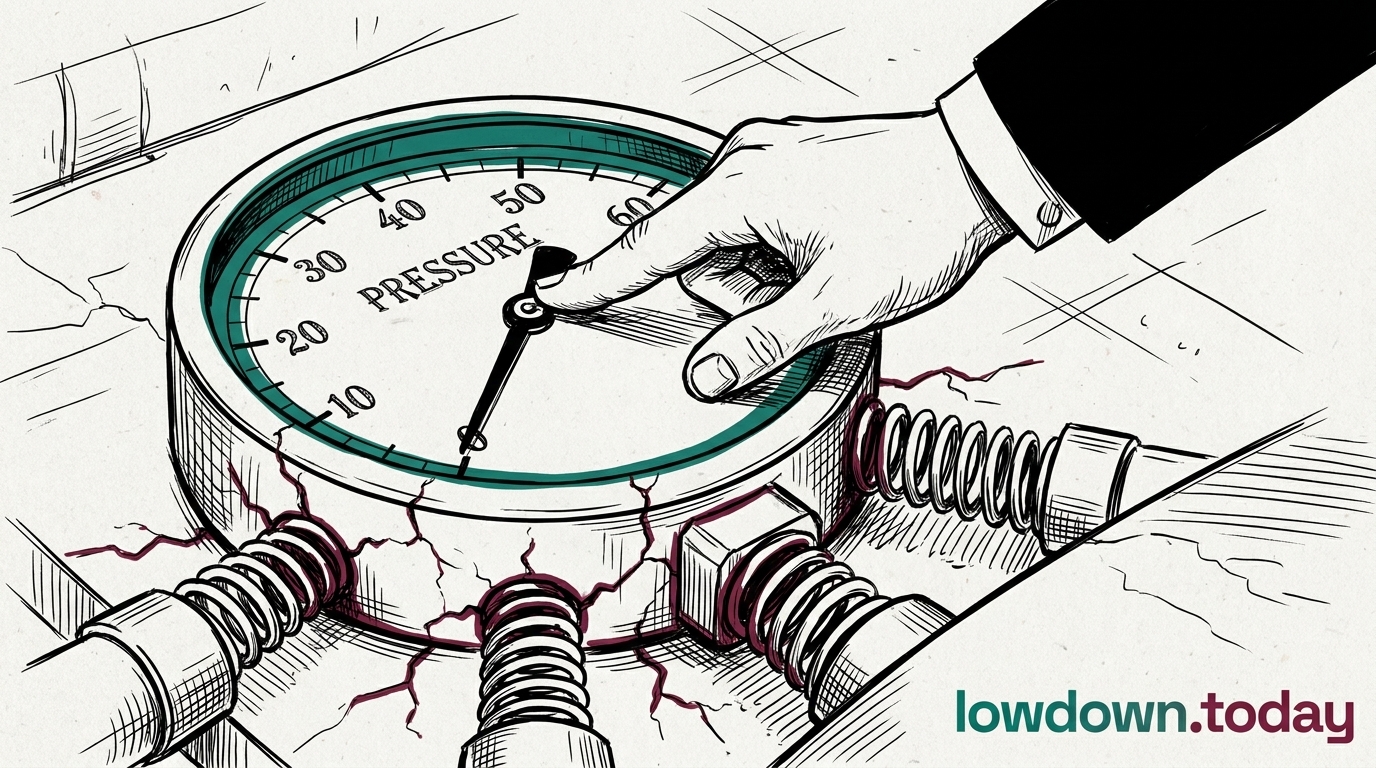
Beijing protests the blockade in public and uses it in private, and the carve-out keeps both true.

Guo Jiakun, spokesman for the Chinese Foreign Ministry, called the US blockade 'dangerous and irresponsible' on Monday and said it 'will only exacerbate tensions and undermine the already fragile ceasefire agreement.' A second statement the following day repeated the language. Beijing, Guo said, would 'make efforts to help restore peace and stability.' Between the two statements, the Chinese-owned, US-sanctioned tankers Rich Starry and Elpis transited the strait of Hormuz under CENTCOM's non-Iranian-port carve-out without incident. China has filed no formal sanctions challenge.

Beijing's annual oil imports from Iran are roughly a sixth of total crude purchases, the volume that would have given a formal legal challenge both motive and standing. The diplomatic protest and the commercial transit are the same event from different angles. Beijing is arguing against the blockade in public while its tankers use the operational order's gaps in private. The rhetorical register is escalating; the operational register is not. China's leverage sits in what moves, not what is said.

The dual posture is stable only while the carve-out holds. If CENTCOM widens its operational order to include non-Iranian-port traffic, Beijing's quiet mode ends. A formal Chinese challenge at that point would move from press briefing to UN procedural filing and would test the blockade's legality in a way the unsigned presidential posture cannot defend. The same ambiguity that currently lets Chinese crude cross freely is the ambiguity that keeps Beijing's response below the threshold that would force a reckoning over the Pacific. Both sides benefit from the fog, for now.


Deep Analysis

In plain English

China's government publicly called the US blockade 'dangerous and irresponsible' two days running. Across the same two days, two Chinese-owned tankers that the US had already sanctioned for carrying Iranian oil sailed straight through the Strait of Hormuz; because the US military's written order only blocked ships going to Iranian ports, not all Chinese-owned ships. So China is doing two things at once: complaining loudly about the blockade in public, while quietly using the gap the US military left open to keep buying discounted Iranian oil. This is not contradictory from Beijing's perspective; protesting the principle while exploiting the practice is a consistent Chinese foreign policy approach. The tanker transits are the more important signal: they demonstrate that US secondary sanctions, without matching naval enforcement, have no coercive weight over Chinese commercial operations.

Deep Analysis
Root Causes

The structural condition enabling China's dual-register response is CENTCOM's non-Iranian-port carve-out, which was written precisely to avoid triggering Chinese-flag-state incidents. CENTCOM's lawyers understood that boarding a PLA-connected tanker in international waters without a presidential directive or UNSC mandate would create a bilateral incident with no legal defence. By excluding non-Iranian-port traffic, CENTCOM preserved the status quo on China while appearing to execute a blockade.

China's structural incentive is straightforward: Iranian oil at a discount provides roughly 15 per cent of its total crude imports. The dark-fleet architecture Beijing developed since 2022; sanctioned vessels operating outside Western insurance and financial systems; was specifically designed to absorb this kind of commercial environment. The blockade's carve-out is an accidental gift to a supply chain China has been building for four years.

What could happen next?
  • Consequence

    CENTCOM's non-Iranian-port carve-out creates a structural exception for China's dark-fleet operations that cannot be closed without a presidential directive Beijing would contest as an act of economic warfare

    Immediate · 0.85
  • Risk

    If CENTCOM widens its operational order to include non-Iranian-port sanctioned traffic, China's response calculus shifts from quiet protest to potential countermeasures against US commercial interests

    Short term · 0.65
  • Precedent

    China's demonstrated ability to transit US-sanctioned vessels through a US-enforced blockade establishes a template for future secondary-sanctions evasion via dark-fleet architecture in any theatre

    Long term · 0.8
First Reported In

Update #69 · Cooper joins the instrument gap

Chinese Foreign Ministry· 15 Apr 2026
Read original
Causes and effects
This Event
China condemns the blockade it uses
Beijing's rhetorical escalation is running in the opposite direction from its operational posture, because the carve-out CENTCOM wrote lets Chinese tankers transit without any commercial cost to contesting it.
Different Perspectives
Kuwait
Kuwait
Kuwait absorbed the Iranian strike that knocked generating units offline at a combined power-and-desalination plant on 17 July, the event that finally moved freight and insurance in lockstep with Brent. The strike hit essential civilian infrastructure, not a trading desk's benchmark.
Asian buyers (Singapore)
Singapore's middle distillates rose 12% month-to-date to 8.91m barrels and fuel oil passed 19m barrels on a 105% net-import surge, buyers retaining barrels as the East-West arbitrage window narrows. Cargoes are being stockpiled ahead of further Hormuz-driven freight repricing rather than released west.
Austria (Coreper holdout)
Vienna is blocking the same package over roughly EUR 2bn of frozen Russian assets earmarked for Raiffeisen, a domestic banking dispute with no connection to the oil cap racing toward its 23 July expiry. The linkage forces the whole package to wait on a bilateral compensation fight.
Greece (Coreper holdout)
Athens is holding the 21st sanctions package at the 22 July Coreper vote over Russian LNG re-export rights, a condition unrelated to the oil price cap itself, leaving the $44.10 freeze one day from expiry without a deal. Greece's own tanker registry gives it a direct stake in how any shadow-fleet measures are drafted.
Marine underwriters (Gulf war-risk)
Hull war-risk cover for Hormuz transits widened to a 3-10% band on 17 July with 5% the emerging norm, up from a 3-4% baseline set in late June, the first repricing in six weeks to track a flat-price move rather than lag it. Cover resets on actuarial evidence of loss, not on diplomatic or price signals.
Money managers (CFTC-tracked)
The CFTC's week-to-14-July snapshot, released 17 July, showed WTI managed-money net long collapsing 69% to 19,783 contracts and a standalone 60,141-contract net short on Brent Last Day (NYMEX). Both readings predate the Kuwait strike and the 20 July escalation, so any covering since is not yet visible in public data.