Skip to content
You can now search across every topic, entity and event.What's new
European Oil Markets
4JUN

660 drones in a single night

2 min read
10:20UTC

Russian air defences reported intercepting at least 660 drones overnight on 26 June, among the heaviest barrages of the war, as the strike campaign took a third of Russian refining offline.

EconomicDeveloping
Key takeaway

One-third of Russian refining is offline, and the heaviest drone nights compound the damage faster than repairs.

Russian air defences reported intercepting at least 660 drones in a single overnight barrage on 26 June, among the heaviest of the war 1. The figure comes from Russian interception counts rather than independent verification, and Ukraine did not publish a launch total.

The barrage is one night in a campaign that, by its own accounting, has taken roughly one-third of Russian refining capacity, about 2.14 million barrels a day, offline 2. The Gazprom Neft refinery at Kapotnya, around 40% of Moscow's supply, has been down since an 18 June strike and is not expected back until 2027 . Volodymyr Zelenskyy put the drones' reach at 3,000 km inside Russia on 21 June , past the air-defence belt that shields Moscow.

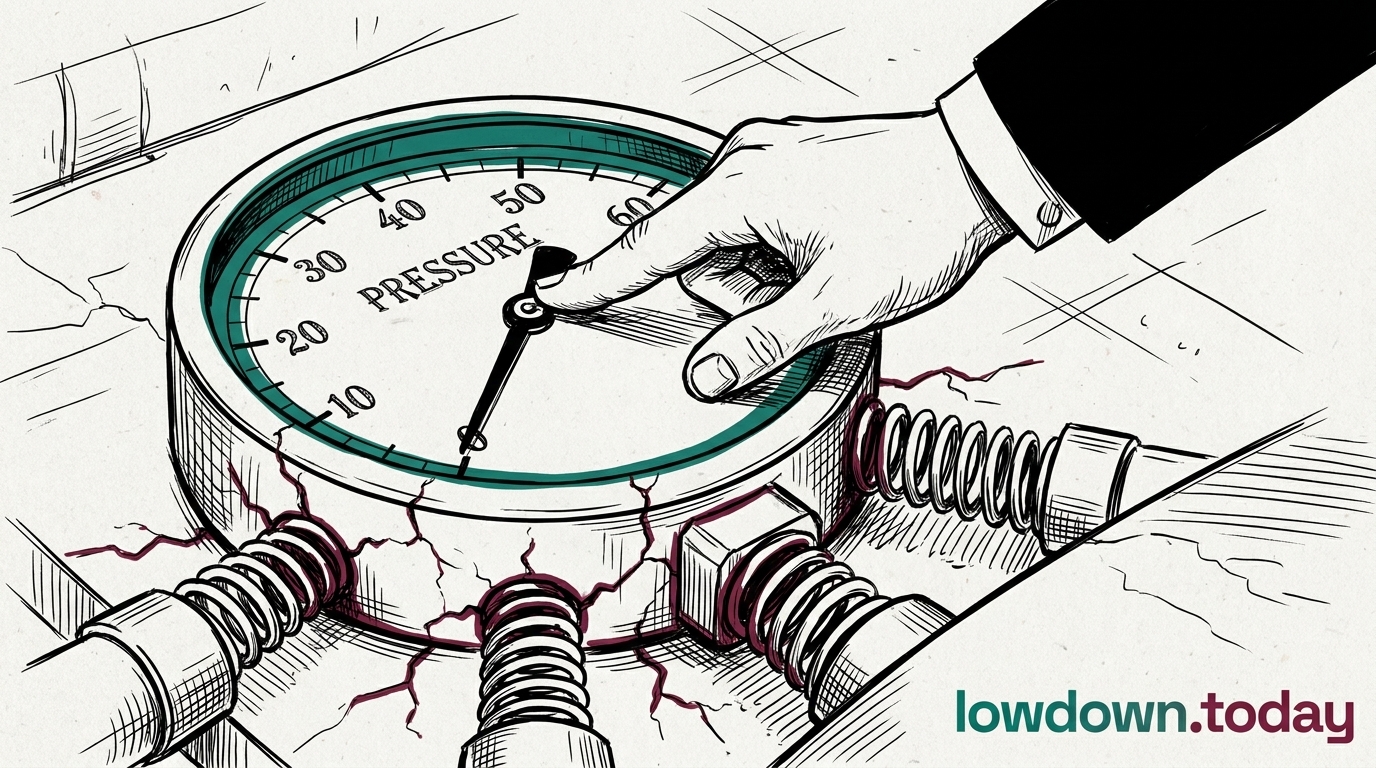
Each refinery strike removes throughput Russia cannot quickly replace, which is how a drone campaign becomes a fuel crisis. The heaviest nights, like 26 June, compound the damage faster than repair crews can offset it, and the drones' reach now puts even Siberian plants inside the map. That is why the pressure surfaced at Putin's desk rather than staying at the pumps.


Deep Analysis

In plain English

Russia's air defence systems, radar, missile batteries and fighter jets, shot down at least 660 Ukrainian drones in one night on 26 June, one of the largest single-night totals of the war. Even a high shoot-down rate is expensive: each missile Russia fires to knock out a cheap drone costs far more than the drone itself, so nights like this drain Russian stockpiles faster than the headline number suggests.

Deep Analysis
Root Causes

Each Russian interceptor missile costs many times more than the Shahed-type drones it destroys, so even a 90%-plus intercept rate is a losing trade if sustained over months rather than one night.

Redeploying air-defence batteries to protect the capital region has also thinned coverage elsewhere, a gap Ukraine's confirmed 3,000km drone range is now positioned to exploit further into Russian territory.

What could happen next?
  • Consequence

    Sustaining hundreds of intercepts a night is depleting Russia's interceptor stockpile faster than production and imports can plausibly replace it.

  • Opportunity

    For Ukraine, forcing high-cost intercepts even without penetrating strikes still degrades Russian air-defence economics over time.

First Reported In

Update #22 · Belarus relays go dark on Kyiv's deadline

Meduza· 2 Jul 2026
Read original
Different Perspectives
Kuwait
Kuwait
Kuwait absorbed the Iranian strike that knocked generating units offline at a combined power-and-desalination plant on 17 July, the event that finally moved freight and insurance in lockstep with Brent. The strike hit essential civilian infrastructure, not a trading desk's benchmark.
Asian buyers (Singapore)
Singapore's middle distillates rose 12% month-to-date to 8.91m barrels and fuel oil passed 19m barrels on a 105% net-import surge, buyers retaining barrels as the East-West arbitrage window narrows. Cargoes are being stockpiled ahead of further Hormuz-driven freight repricing rather than released west.
Austria (Coreper holdout)
Vienna is blocking the same package over roughly EUR 2bn of frozen Russian assets earmarked for Raiffeisen, a domestic banking dispute with no connection to the oil cap racing toward its 23 July expiry. The linkage forces the whole package to wait on a bilateral compensation fight.
Greece (Coreper holdout)
Athens is holding the 21st sanctions package at the 22 July Coreper vote over Russian LNG re-export rights, a condition unrelated to the oil price cap itself, leaving the $44.10 freeze one day from expiry without a deal. Greece's own tanker registry gives it a direct stake in how any shadow-fleet measures are drafted.
Marine underwriters (Gulf war-risk)
Hull war-risk cover for Hormuz transits widened to a 3-10% band on 17 July with 5% the emerging norm, up from a 3-4% baseline set in late June, the first repricing in six weeks to track a flat-price move rather than lag it. Cover resets on actuarial evidence of loss, not on diplomatic or price signals.
Money managers (CFTC-tracked)
The CFTC's week-to-14-July snapshot, released 17 July, showed WTI managed-money net long collapsing 69% to 19,783 contracts and a standalone 60,141-contract net short on Brent Last Day (NYMEX). Both readings predate the Kuwait strike and the 20 July escalation, so any covering since is not yet visible in public data.