Skip to content
You can now search across every topic, entity and event.What's new
European Oil Markets
31JUL

Iran counters Oman with a lane demand

2 min read
09:33UTC

Kazem Gharibabadi answered Muscat's voluntary-fee proposal by asking that Iran control its own territorial lane and part of the opposite one.

EconomicDeveloping
Key takeaway

A voluntary fee and a controlled lane are not two prices for the same arrangement.

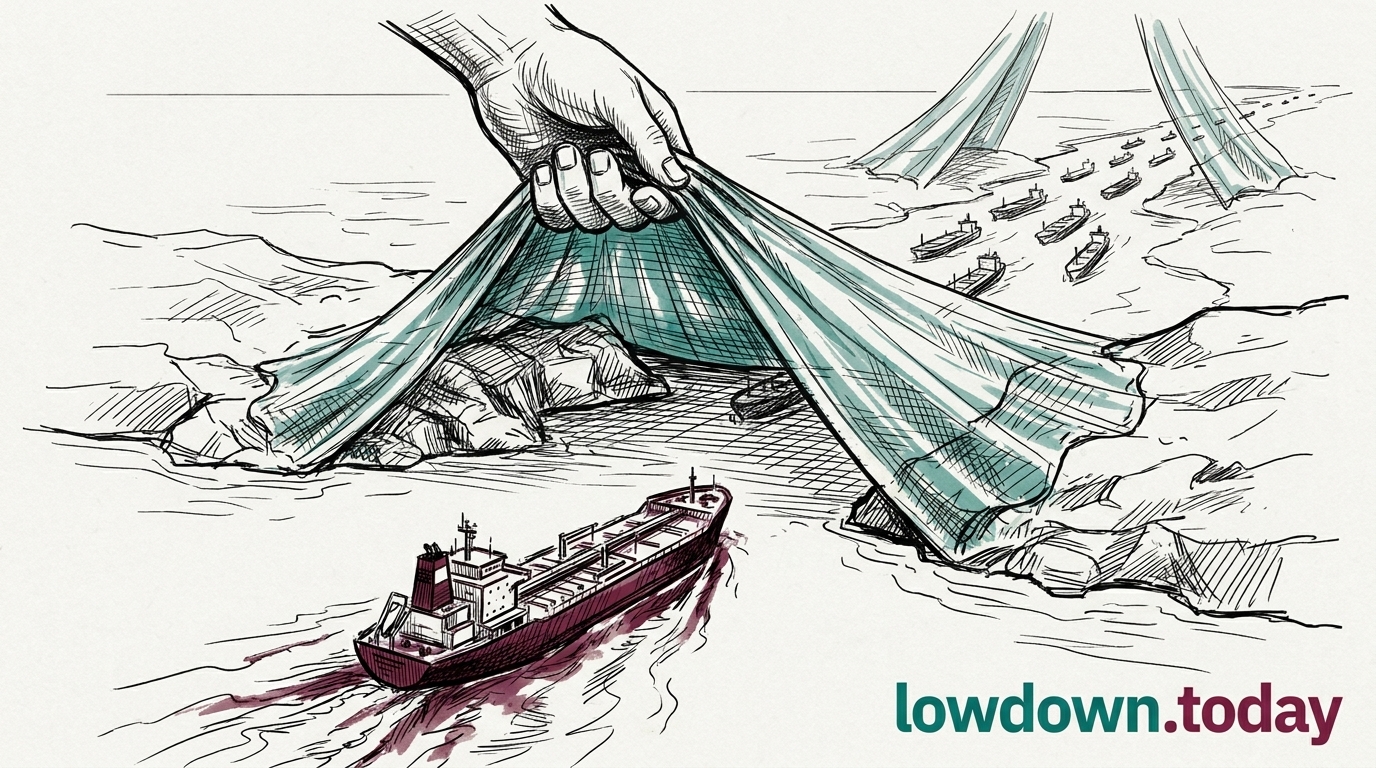
Iran's deputy foreign minister Kazem Gharibabadi countered Oman's Hormuz proposal by asking that Iran control its own territorial lane plus part of the opposite one 1. Muscat had put forward a voluntary-fee mechanism modelled on the arrangement in the Malacca and Singapore Straits, where shipowners contribute to navigation aids and rescue services and face no penalty for declining . Iran's foreign ministry spokesman Esmaeil Baghaei said on Monday 27 July that recent discussions had been "exclusively with Oman", and that "we have no negotiations with the United States at present" 2.

the strait is roughly 21 nautical miles across at its narrowest, and its shipping lanes run in two directions: inbound traffic hugs the Omani side, outbound traffic the Iranian side, both under the transit-passage regime that applies to international straits. Gharibabadi's request would place both lanes wholly or partly under Iranian control, which is why the gap between the two proposals is not one of price.

A voluntary contribution assumes an international waterway that no state may condition. A controlled lane assumes a sovereign one whose owner may set terms. Tehran has held the second position throughout the war, and no mediator's draft has yet found language that lets both governments sign the same paragraph.

What the exchange does show is that the negotiating table has shrunk to two littoral states in the same week the shooting reached a fourth and fifth country. Neither Baghaei's denial nor the American account of deep conversations with Tehran settles what is actually passing through Muscat, and the Islamic Republic's domestic politics require that any engagement with Washington look imposed rather than sought.


Deep Analysis

In plain English

Oman suggested a plan where ships would pay a small voluntary fee to help fund safety patrols through the Strait of Hormuz, the narrow waterway between Iran and Oman that a large share of the world's oil passes through. Iran's deputy foreign minister, Kazem Gharibabadi, rejected that idea and instead said Iran should control its own side of the strait plus part of the other side too. This is a much bigger demand than Oman's plan, since it would give Iran authority over shipping lanes it does not currently control.

Deep Analysis
Root Causes

Iran's demand rests on treating the Strait of Hormuz's international transit-passage regime, established under the UN Convention on the Law of the Sea, as negotiable, even though Iran never ratified that convention and instead relies on its own 2024 domestic maritime law to assert jurisdiction over the corridor.

Oman's voluntary-fee model depends on all littoral and user states accepting a shared, non-exclusive mechanism; Iran's counter-demand for control of part of the opposite lane removes the voluntary character Oman built the proposal around, making the two positions structurally incompatible rather than a gap that a compromise fee schedule could bridge.

Escalation

Direction: hardening. Gharibabadi's demand goes further than Araghchi's earlier claim to Hormuz oversight , moving from asserting authority over Iran's own lane to claiming part of the opposite one as well.

What could happen next?
  • Risk

    Iran's demand for the opposite lane could make Oman's voluntary-fee proposal unworkable, since the mechanism assumes no single state controls both lanes.

  • Precedent

    If Iran secures partial control of the opposite lane, other littoral states in contested straits could cite the precedent to press similar claims.

First Reported In

Update #164 · The pause ends, and the map moves west

Trading Economics· 31 Jul 2026
Read original
Different Perspectives
Sanctions compliance officer reviewing a Lukoil International GmbH bid
OFAC's amended FAQ 1224 gives a compliance desk its first published standard: full severance from Lukoil and a US-jurisdiction blocked account for sale proceeds. The conditions name neither ISAB nor Italy, so a Priolo Gargallo-linked bid answers a different question than a Neftochim Burgas or Petrotel Ploiesti one.
Managed-money funds on Brent Last Day
CFTC data for the week to 21 July showed managed money flipping 74,400 contracts to a net long of 15,665 against 1,410 short on the Brent Last Day contract, code 06765T. A fund that held that short through July has now covered it, and the spent short base raises the bar for the next leg higher.
Saudi crude exporters
Saudi-linked tanker transits through Bab el-Mandeb fell to about 7.5 a day after the 24 July underwriting withdrawal, pushing more barrels onto the longer route round the Cape or through the Yanbu terminal. Every diverted barrel ties up a ship for longer, and a fleet that turns slower charges more.
Tanker owners on the Bab el-Mandeb route
Lloyd's-market syndicates withdrew war-risk cover from Saudi-linked hulls on 24 July, leaving owners of that class of vessel to sail Bab el-Mandeb uninsured or not at all. Tanker transits on the route fell to roughly 7.5 a day, and cover, once withdrawn, does not return on a shipowner's timetable.
Eni
Eni
Eni's board approved second-quarter results on 29 July, swinging refining EBIT to a EUR0.08bn profit from a year-earlier loss even as group profit doubled, and named Red Sea freight cost as a cap on that improvement. A refiner absorbing higher shipping costs on Saudi-linked crude while its numbers improve treats the freight line as a drag, not a crisis.
Asian buyers (India, Japan, China, South Korea)
Asian refiners are absorbing 62% of Yanbu's 3.75m b/d flow, the bulk of Saudi Arabia's rerouted crude now clearing east rather than into the Atlantic basin. That destination split leaves Asian buyers more exposed to any single Yanbu-specific disruption than under the kingdom's normal multi-terminal export pattern.



