Skip to content
You can now search across every topic, entity and event.What's new
European Oil Markets
23JUL

EU moves to freeze the $44 cap

3 min read
19:27UTC

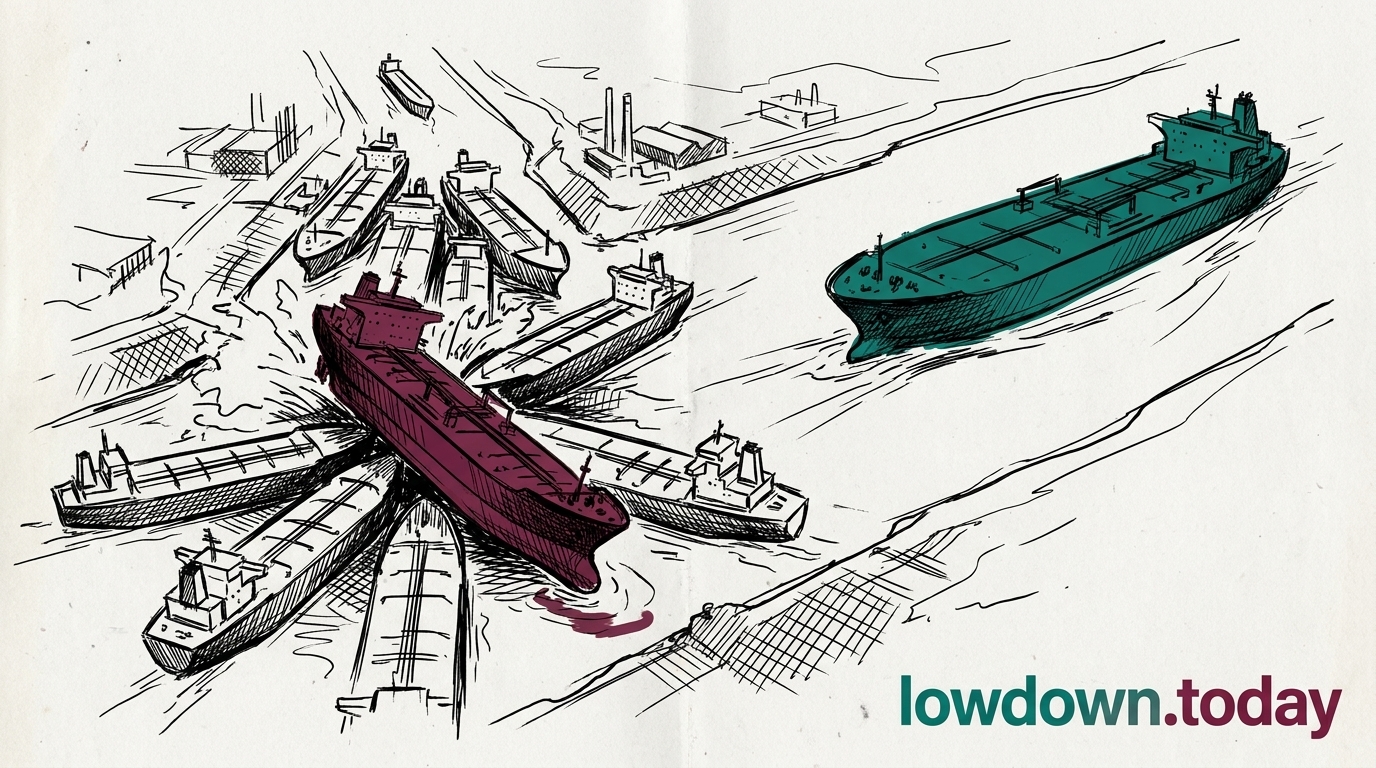
The European Commission moved to freeze the $44.10 Russia oil price cap to January 2027, killing the 15 July formula review that would have auto-lifted the ceiling toward roughly $75.

EconomicDeveloping
Key takeaway

Brussels moved to freeze the Russia oil cap before a July review would have auto-lifted it toward $75.

The European Commission, the EU's executive body, moved to freeze the $44.10 G7 price cap on Russian crude until January 2027, pausing the adjustment mechanism and killing the 15 July formula review that would have auto-lifted the ceiling toward roughly $75 1. The cap is the legal limit on what buyers can pay for Russian seaborne crude and still access Western shipping and insurance. The 15 June mini-package of 34 individuals and 47 entities is adopted; the freeze itself is sourced to Baker McKenzie synthesis, with no adopted Council legal text as of 18 June.

On a falling-Brent formula, the 15 July review would have lifted the $44.10 ceiling toward $75, restoring Russian earnings just as the GL 134C vessel-services lapse cut compliant-terms placement, so the freeze and the review were set to collide. The two clocks pulling opposite ways into Evian were flagged last week . Pausing the mechanism keeps both squeezes live at once rather than letting one undo the other.

Malta and Greece, both major shipowning states, continue to block the full maritime-services ban that would extend coverage to Western shipping services, leaving the 21st package partial. A freeze that adopts before 15 July locks the revenue constraint; a Malta-Greece stall past that date converts the cap into a decorative mechanism as the reference price collapses, with the Urals discount given more room to widen if the cap holds while Brent falls.


Deep Analysis

In plain English

The G7 countries and the EU set a maximum price at which they allow Western companies to provide shipping services to tankers carrying Russian oil: currently $44.10 per barrel. The idea is that if Russian oil can only be sold at that low price using Western services, Russia earns less money to fund the war. Every few months there was supposed to be a review: if the market price was close to the cap, the cap would be raised so it kept biting. The EU has now decided to pause that review until January 2027, keeping the $44.10 cap in place regardless of where oil prices go. This is intended to put maximum financial pressure on Russia. The catch is that Russia has found ways to sell oil at higher prices without using Western shipping services, so whether the cap actually constrains Russian earnings depends on how tightly the shipping services part is enforced, and two EU countries are blocking that.

Deep Analysis
Root Causes

The 15 July formula auto-lift would have restored Russian export revenue at precisely the moment the GL 134C lapse tightened Western vessel services on Russian crude.

The Commission's decision to freeze the cap reflects the G7 Evian alignment: Trump's 'soon we'll be able to' signal on Russia oil sanctions tightening, combined with Hormuz partial normalisation reducing the West's need for Russian crude at any price, created the political window for the Commission to abandon the formula-based adjustment in favour of a flat freeze.

Malta and Greece's blocking of the maritime-services ban reflects a structural economic constraint: Malta operates the world's largest ship registry (~17% of global merchant fleet by gross tonnage), and Greece controls roughly 20% of global merchant tonnage. Both countries' shipping sectors would face direct revenue loss from a ban on providing services to Russian-crude tankers, including vessels nominally flagged to non-EU registries but owned by Piraeus or Valletta-connected operators.

First Reported In

Update #9 · Russia cliff landed while screens sold Iran

Baker McKenzie· 18 Jun 2026
Read original
Different Perspectives
US money managers (CFTC-tracked)
US money managers had trimmed WTI net long positioning into July's rally, doubting the Hormuz premium would hold without freight or war-risk confirmation, and the crude stock build reported for the week to 17 July gives that scepticism a fundamentals basis. The 25 July CFTC data will show whether Brent's move above $100 changed their calculus.
Asian distillate buyers (Singapore)
Singapore's distillate holders kept retaining middle-distillate barrels as the East-West arbitrage window narrowed further this week, a pattern that sharpened as Fujairah light distillates hit a record low. Cargoes are being held rather than released west into the tightening Mediterranean market.
Bulgaria
Bulgaria
Bulgaria secured the removal of Lukoil founder Vagit Alekperov and Patriarch Kirill from the 21st package, with President Rumen Radev calling a personal listing 'shooting ourselves in the foot'. Sofia is protecting its position in Lukoil's EUR 3bn compensation claim over the 2023 Neftohim Burgas nationalisation.
Russia
Russia
Russia loses the roughly $14 a barrel of legal headroom the price-cap formula would have released toward $58, even as Urals continues trading below Moscow's $59 budget floor. The shadow-fleet insurance workaround that lets sanctioned crude clear above $44 in practice remains untouched by the freeze itself.
European Union
European Union
The EU adopted its 21st sanctions package on 23 July, freezing the $44 Russia oil cap for 12 months rather than letting the formula drift it toward $58, and listed shadow-fleet support vessels for the first time. The package cleared only after three failed Coreper votes.
Marine war-risk underwriters (Lloyd's-linked syndicates)
War-risk syndicates lifted southern Red Sea hull premiums 150% to about 0.75% of hull value after the 20 July blockade declaration, still a seventh of the roughly 5% Hormuz band. Underwriters reset on realised loss, not declared threat, so the 23 July Encelia and Layla strikes set up the next re-mark.