Skip to content
You can now search across every topic, entity and event.What's new
European Oil Markets
16JUL

India brings the last dead sailor home

3 min read
09:39UTC

The remains of chief engineer Patnala Suresh reached Visakhapatnam on 19 June, completing the repatriation of three Indian crew killed by US fire, as Delhi summoned Washington's envoy twice without an apology.

EconomicDeveloping
Key takeaway

The blockade that killed three Indian sailors is gone; no US apology or inquiry followed.

The remains of chief engineer Patnala Suresh, 44, reached Visakhapatnam on Friday 19 June, completing the repatriation of all three Indian crew killed when US munitions struck the tanker MT Settebello on 10 June 1. Deck cadet Aditya Sharma and engine fitter Shivanand Chaurasiya had come home on 17 June; 21 of the ship's 24 crew survived the strike 2.

India's Ministry of External Affairs summoned the US Chargé d'Affaires Jason Meeks twice in a week 3, and Prime Minister Narendra Modi had raised the deaths with Trump directly at the G7 . Washington answered that blockade violations "will not be tolerated", offering no apology, opening no investigation, and signing no instrument of any kind. Delhi had repatriated the first two sailors only days earlier , and the original strike had already drawn a formal protest.

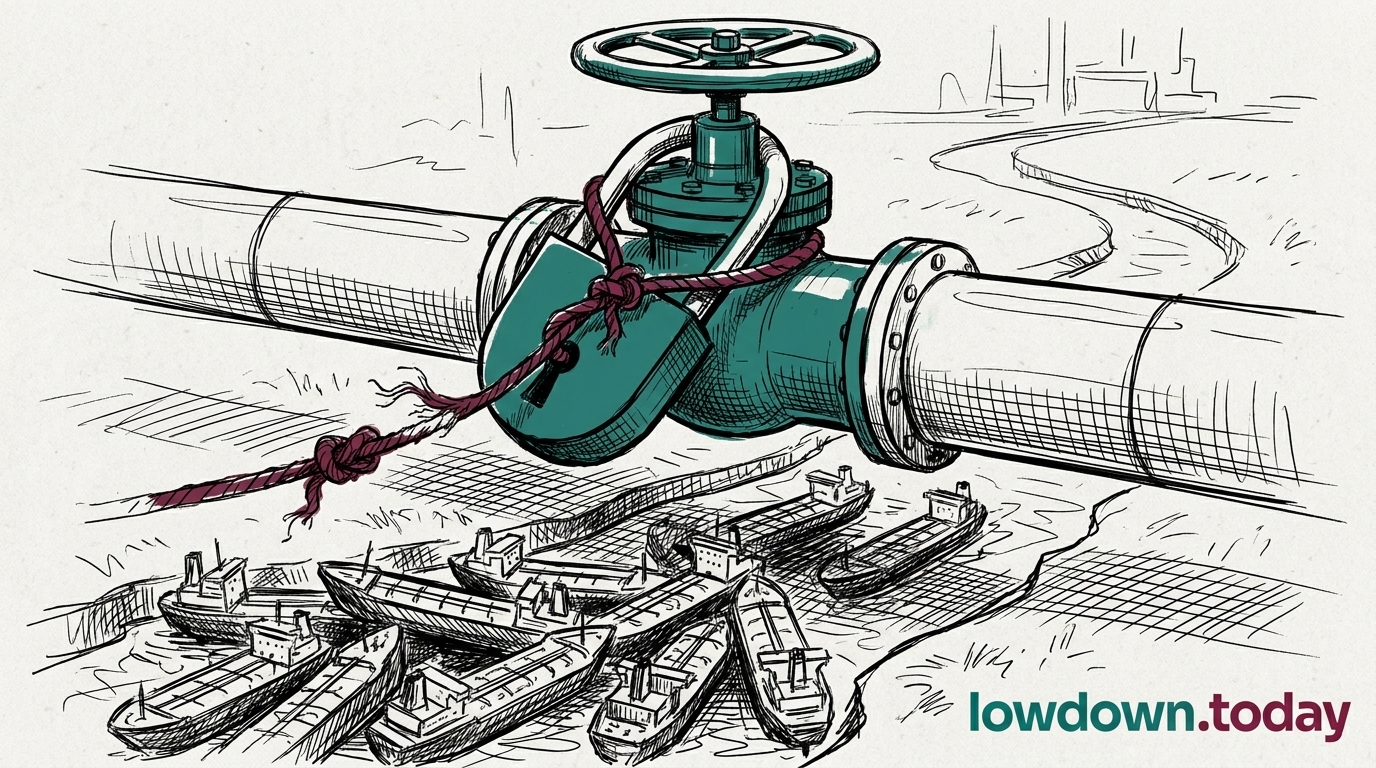
India was the largest non-belligerent economic casualty of the blockade, dependent on Hormuz for the bulk of its crude and liquefied petroleum gas. Its restraint, two summons and a G7 raise rather than a rupture, reflects strategic dependence on Washington and the constraints of the Quad partnership, not satisfaction. The blockade that killed the three men has now been lifted, and the deal that ended the enforcement made no provision for the civilians it killed.


Deep Analysis

In plain English

Three Indian sailors died when the US Navy struck the oil tanker MT Settebello on 10 June. The US Navy said the ship was defying blockade orders by heading toward Iranian ports, and fired precision munitions into its engine room. The remains of Patnala Suresh, the last of the three sailors, arrived in Visakhapatnam on 19 June. India's foreign ministry summoned the top US diplomat in New Delhi twice in a week. Washington responded that blockade violations would not be tolerated. Prime Minister Narendra Modi raised the deaths directly with Donald Trump at the G7 summit on 17 June and received no apology. As of 19 June, the US had issued no apology, opened no investigation, and signed no instrument addressing the deaths.

Deep Analysis
Root Causes

India's vulnerability on this issue has two structural roots. First, 90% of India's LPG and 55% of its crude transited Hormuz before the conflict . India cannot afford a sustained rupture with Washington while its energy security depends on Gulf access that the US Navy controls.

Second, India's non-alignment posture, which led it to abstain on UN Security Council resolutions condemning the blockade, constrained its ability to make the MT Settebello deaths a formal multilateral cause rather than a bilateral complaint.

The US's refusal to apologise reflects a structural calculation: accepting liability for blockade-enforcement casualties would undermine the legal basis of blockade enforcement itself. Any admission that the MT Settebello strike was wrongful would open liability claims for all nine disabled vessels and potentially the 139 redirected ships.

Escalation

The diplomatic trajectory is contained: India has not recalled its ambassador, has not joined any multilateral condemnation, and has not suspended bilateral cooperation. The constraint on escalation is India's energy dependence on Gulf access, which gives Washington structural leverage that limits how far New Delhi will push on the Settebello case.

What could happen next?
  • Consequence

    India summoned the US Chargé twice with no result, establishing that Washington will not issue an apology or investigation for maritime enforcement casualties regardless of ally pressure. This sets a precedent for how the US will handle future third-party civilian deaths in blockade operations.

  • Risk

    The absence of US accountability for the three Indian deaths may complicate the bilateral relationship during Phase 2 of the Iran negotiations, where India's cooperation on sanctions enforcement or energy realignment could be valuable to Washington.

First Reported In

Update #132 · Trump lifted the blockade, not the strait

ANI News· 19 Jun 2026
Read original
Different Perspectives
Indian refiners
Indian refiners
Indian refiners kept lifting discounted Urals as the India/Baltic price split widened past $9-10 a barrel, a gap that only grows as GL X1's Iranian wind-down cuts an alternative discounted grade off the market by 17 July. Cheaper Russian feedstock is being locked in while it lasts.
Chinese refiners
Chinese refiners
Chinese refiners gain leverage as the Urals-Brent discount widens, since Beijing's state buyers already source discounted Russian barrels near the fiscal floor unaffected by Western insurance costs. A wider discount, if it holds past 23 July, lets them lock in cheaper term contracts regardless of the cap's outcome.
US money managers (CFTC-tracked)
Managed money trimmed WTI net length into the rally, positioning that reflects doubt the Hormuz premium survives without freight or war-risk confirmation. The Brent-WTI spread widening almost entirely on the Brent leg supports that scepticism about a broad-based repricing.
OPEC+ (Saudi-led subgroup)
Saudi Arabia is defending market share through a fourth straight 188kbd August hike even as OPEC's own July MOMR cut 2026 demand growth for the fourth consecutive month. At a $108-111 fiscal breakeven, every added barrel costs Riyadh revenue it cannot recoup, so the hike reads as a positioning signal, not a demand bet.
Greek shipping registries
Greece, backed by Cyprus and Malta, is pushing a three-month cap-freeze compromise against the Commission's freeze to January 2027 ahead of the 23 July vote. Athens' and Valletta's combined tanker registrations mean a shorter review gives their insurers more frequent chances to reprice risk on Russian cargoes.
Russia (Deputy PM Alexander Novak)
Novak extended the diesel export restriction to producers on 8 July, the first producer-binding curb of the war, protecting the domestic pump price ahead of any refinery repair timeline. Urals still trades below Russia's $59 budget floor even as Brent gained, so the ban trades export revenue for fiscal stability at home.