Skip to content
You can now search across every topic, entity and event.What's new
European Oil Markets
13JUL

Six Democrats join Senate war-powers push

3 min read
10:34UTC

Senate Democrats added six new co-sponsors to the War Powers Resolution forced to a vote this week. Lisa Murkowski and Susan Collins have publicly criticised Trump's rhetoric without committing to cross the floor.

EconomicDeveloping
Key takeaway

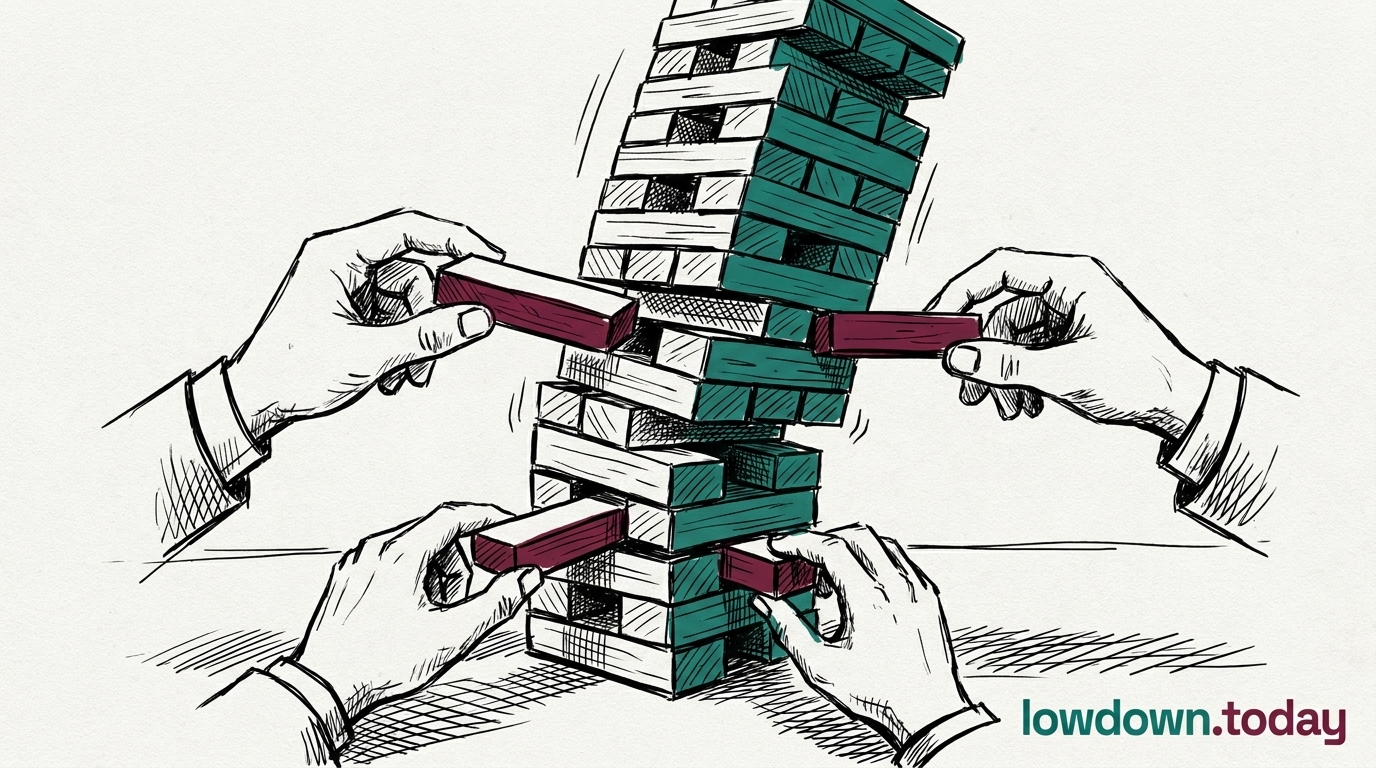
Six new sponsors force a Senate WPR vote into a deadline cluster lacking any signed presidential instrument.

Senate Democrats added six co-sponsors to the War Powers Resolution (WPR) forced to a vote in the week of 14 April: Jeff Merkley of Oregon, Kirsten Gillibrand of New York, Chris Van Hollen of Maryland, Mark Kelly of Arizona, Raphael Warnock of Georgia and Andy Kim of New Jersey 1. The resolution directs the withdrawal of US forces from hostilities with Iran absent a specific congressional authorisation. Lisa Murkowski of Alaska and Susan Collins of Maine have publicly criticised Trump's "annihilation" rhetoric without committing to cross the floor on the vote.

The previous three Senate WPR votes on the Iran campaign failed 47-53, with only Rand Paul of Kentucky crossing party lines. Adding six co-sponsors does not alter the arithmetic; it signals the floor vote this week is being treated as a public record rather than a procedural formality. The WPR's 60-day authorisation window expires around 29 April, and the clock is running against an executive action (the blockade, that was never filed as a signed document. The procedural complication is that with no presidential report on the books, the sponsors have had to force a standalone floor vote to create a record at all.

The Murkowski-Collins position is the variable. Both have on-record criticisms of Trump's war rhetoric. Neither has committed to a specific vote. The expanded sponsor list and the public criticisms do not produce a majority, but they produce the first record of a Republican Senate sub-caucus willing to be counted as critics before the vote lands rather than after. The ceasefire window closes 22 April, the GL-U sanctions licence lapses on the Saturday before the floor vote tracks the broader Treasury silence, and the WPR clock expires at the end of that same week.

For The Administration, the procedural weight is that a WPR vote this week creates a formal congressional instrument on the Iran operation at precisely the moment no presidential instrument exists. Whether the vote wins or loses, it is the only signed text on the record when the 29 April clock expires.


Deep Analysis

In plain English

The US Senate is set to vote this week on whether to require the president to stop the Iran military operation. This is called the War Powers Resolution, a law from 1973 that says Congress must approve any military action lasting more than 60 days. Six more senators have now backed the vote, bringing the number of supporters higher than before. Two Republican senators have publicly criticised the president's language about the war, though they have not said they will vote for the resolution. The problem is that even if the vote passes, it will be difficult to force the president to stop. The Senate would need a two-thirds majority to overcome a presidential veto, which is far more than the current level of support. The vote is more about creating a public record of dissent than about legally stopping the war. The extra complication is that the president has never filed the formal notification that is supposed to start the 60-day clock, so the legal mechanism the law was designed to use is not quite working as written.

What could happen next?
  • Precedent

    A Senate WPR resolution passing without a presidential report on record would create the first formal congressional instrument on this operation, establishing a paper trail even if the vote fails to compel withdrawal.

  • Risk

    If Murkowski and Collins vote for the resolution, the Republican Senate coalition fractures on war powers for the first time since the start of the Iran campaign, with implications for the GL-U lapse and the WPR clock expiry in the same week.

First Reported In

Update #68 · Sanctioned tankers slip the blockade

Fox News· 14 Apr 2026
Read original
Different Perspectives
Indian refiners
Indian refiners
Indian refiners kept lifting discounted Urals as the India/Baltic price split widened past $9-10 a barrel, a gap that only grows as GL X1's Iranian wind-down cuts an alternative discounted grade off the market by 17 July. Cheaper Russian feedstock is being locked in while it lasts.
Chinese refiners
Chinese refiners
Chinese refiners gain leverage as the Urals-Brent discount widens, since Beijing's state buyers already source discounted Russian barrels near the fiscal floor unaffected by Western insurance costs. A wider discount, if it holds past 23 July, lets them lock in cheaper term contracts regardless of the cap's outcome.
US money managers (CFTC-tracked)
Managed money trimmed WTI net length into the rally, positioning that reflects doubt the Hormuz premium survives without freight or war-risk confirmation. The Brent-WTI spread widening almost entirely on the Brent leg supports that scepticism about a broad-based repricing.
OPEC+ (Saudi-led subgroup)
Saudi Arabia is defending market share through a fourth straight 188kbd August hike even as OPEC's own July MOMR cut 2026 demand growth for the fourth consecutive month. At a $108-111 fiscal breakeven, every added barrel costs Riyadh revenue it cannot recoup, so the hike reads as a positioning signal, not a demand bet.
Greek shipping registries
Greece, backed by Cyprus and Malta, is pushing a three-month cap-freeze compromise against the Commission's freeze to January 2027 ahead of the 23 July vote. Athens' and Valletta's combined tanker registrations mean a shorter review gives their insurers more frequent chances to reprice risk on Russian cargoes.
Russia (Deputy PM Alexander Novak)
Novak extended the diesel export restriction to producers on 8 July, the first producer-binding curb of the war, protecting the domestic pump price ahead of any refinery repair timeline. Urals still trades below Russia's $59 budget floor even as Brent gained, so the ban trades export revenue for fiscal stability at home.