Skip to content
Welcome, thoughtbot's Giant Robots listeners!Start here
European Oil Markets
3JUL

Budget revenue rises as oil and gas receipts fall

1 min read
10:26UTC

Russia's Finance Ministry reported 25.93tn roubles of federal budget revenue for January to August, up 9.2% year on year. Oil and gas revenue fell 16.7% over the same period.

EconomicDeveloping
Key takeaway

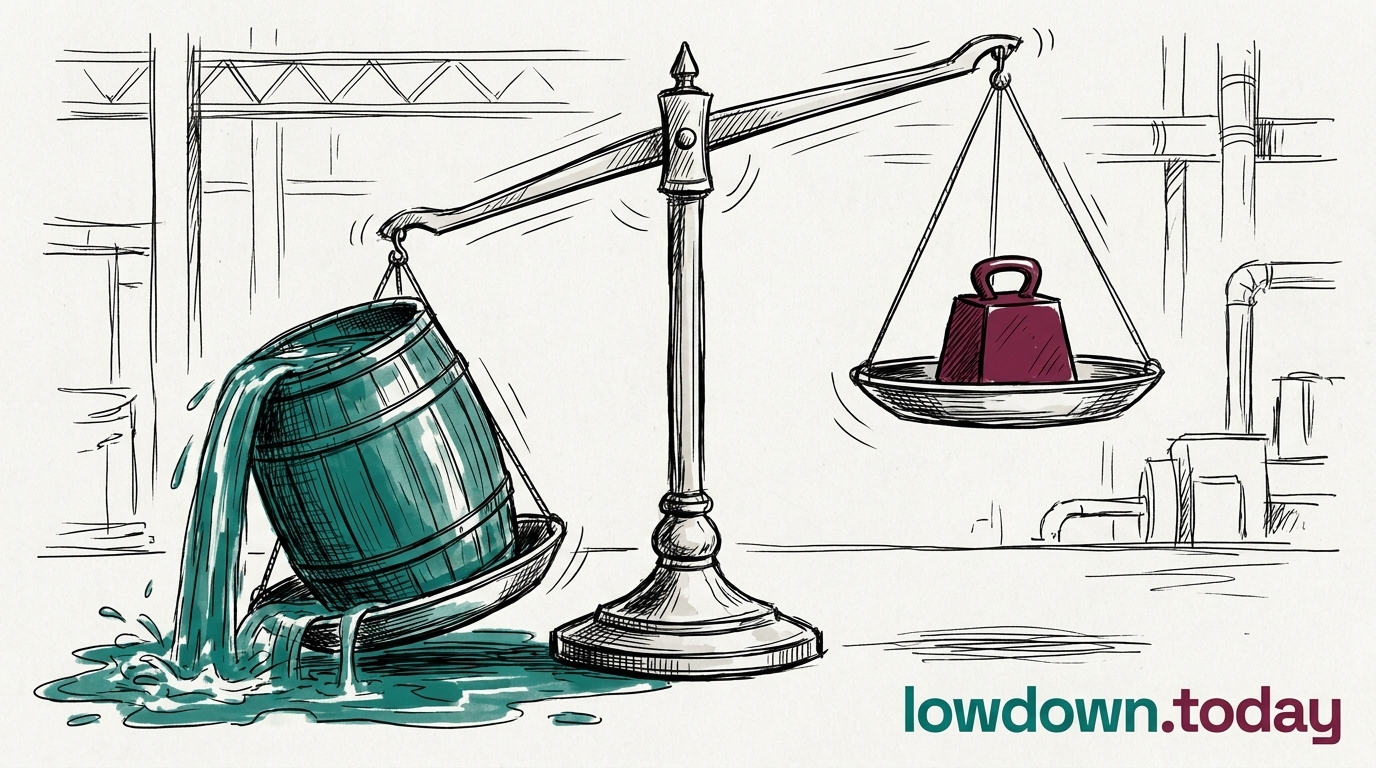
Budget revenue rose 9.2% on non-oil receipts while oil and gas income fell 16.7%.

Russia's Ministry of Finance reported federal budget revenue of 25.93tn roubles for January to August, up 9.2% year on year, with oil and gas revenue down 16.7% to roughly 5.02tn roubles. Non-oil-and-gas receipts rose 18.1% and carried the whole increase. The ministry said it is drawing on the National Wealth Fund, the sovereign reserve built from past oil windfalls, to hold the budget steady.

The deficit moved the other way. Anadolu Agency put the January to July federal deficit at 6.46tn roubles, more than 32% above a year earlier, against the 5.7tn roubles half-year figure Sberbank put on the record in July. Russia's largest lender said then that it can no longer buy government bonds, which leaves a deficit of that size to be financed by a banking system that has named its own limit. Russia posted a June budget surplus two months before that.

Import figures show where the refinery damage lands. Russia bought a record 172,000 tonnes of fuel in August, more than seven times the previous monthly high, including petrol refined in India from Russian crude and sold back. The Centre for Research on Energy and Clean Air separately estimates the Hormuz price spike handed Russia around €31bn in extra export revenue over six months, a windfall from a war Moscow never fought.


Deep Analysis

In plain English

Russia's government collected more money overall this year, but not from oil and gas, which is normally its biggest earner. Oil and gas income fell by nearly a sixth. The rest of the rise came from other taxes, and the government is dipping into its savings fund to cover a deficit that is a third bigger than last year.

First Reported In

Update #27 · Russia's rate hold names the fuel shortage

Centre for Research on Energy and Clean Air· 13 Sept 2026
Read original →
Causes and effects
This Event
Budget revenue rises as oil and gas receipts fall
The headline rise came entirely from non-oil receipts, up 18.1%, while the ministry drew on the National Wealth Fund to hold the budget steady. Ukraine's campaign is squeezing one revenue stream, not the whole budget.
Different Perspectives
Gulf oil producer
Gulf oil producer
Secured OPEC's confirmed 188,000 b/d September increment with the next meeting set for 6 September, but the Secretariat's own 2 August release says nothing about the fourth quarter. Output guidance beyond September remains undisclosed even as delegate sourcing keeps filling that gap.
Money manager positioned in WTI
Added 21,402 lots to a 108,307 net long in NYMEX WTI in the week to 28 July, against just 1,485 added to Brent's 15,740, a roughly fourteen-to-one split. Conviction sits in the American benchmark even as the European diesel story sets the record.
Indian refiner buying Urals
Bought Russian crude at a discount that narrowed to $1-2 a barrel in the week to 29 July from over $10, as Hormuz risk pushed it toward Urals. If that risk eases with the strike now called off, the discount it is currently enjoying could re-widen just as fast.
Russian diesel exporter
Novak tied any lifting of the diesel export ban, due to lapse 31 July, to an unspecified market recovery with no date, and pushed the gasoline ban to end-2026. An open-ended constraint suits an exporter benefiting from the record European crack it feeds.
War-risk underwriter
Withdrew war-risk cover for Saudi-linked hulls on 24 July and has not reinstated it, holding Bab el-Mandeb tanker transits near 7.5 a day. A cancelled strike does not by itself trigger the committee review needed to re-accept the class.
Northwest European refiner
Sources only 17% of diesel imports from Saudi Red Sea ports against the Mediterranean's 24%, so the ARA crack at $85.86 trails the Med print by $5.81. Lower Red Sea exposure is cushioning it against the rerouting cost, not eliminating it.

Written with AI from Lowdown's published reporting. Not individually reviewed by an editor. Editorial standards.