Skip to content
You can now search across every topic, entity and event.What's new
European Oil Markets
22JUN

US order pulls Anthropic's top models

3 min read
09:55UTC

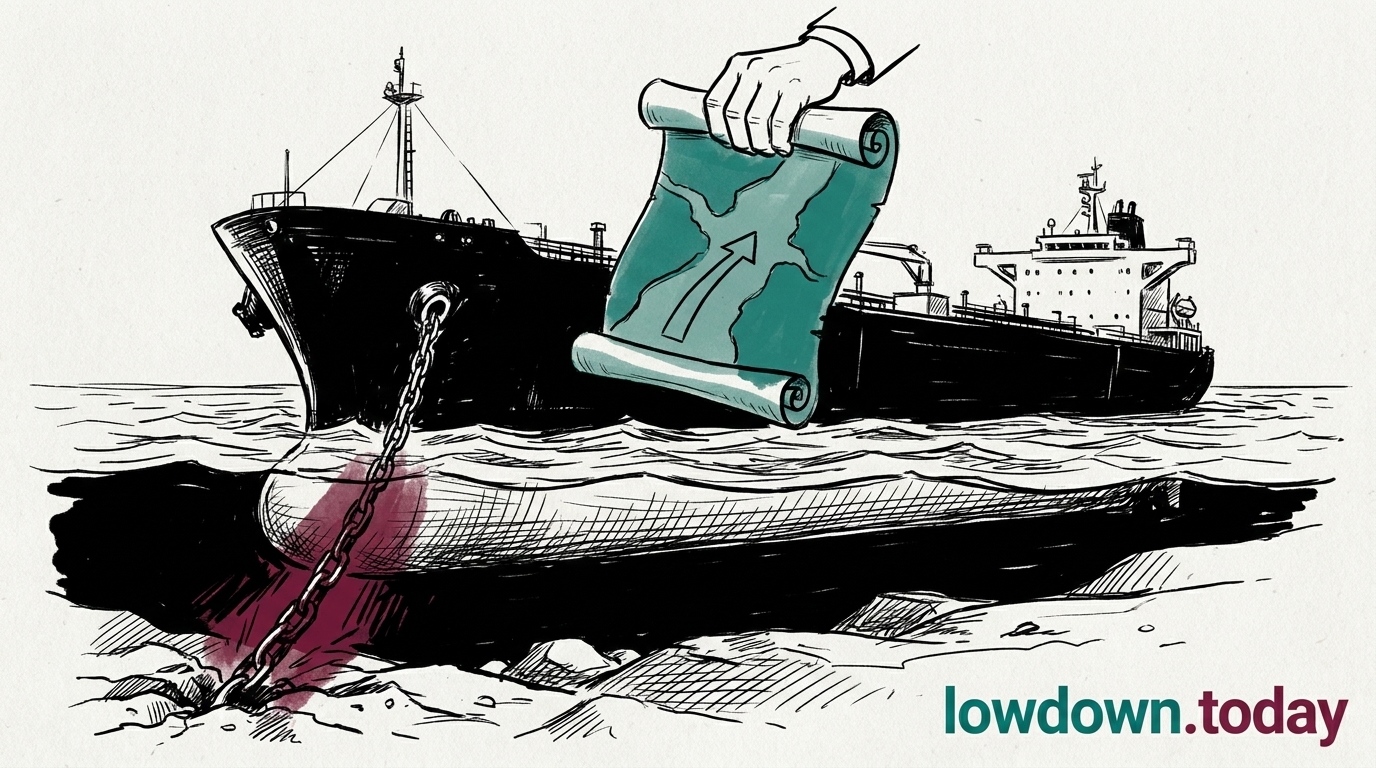
The Trump administration ordered Anthropic to bar foreign nationals from Fable 5 and Mythos 5; unable to screen by nationality, the company pulled both models worldwide.

EconomicDeveloping
Key takeaway

A single US order pulled two frontier AI models from every European user at once.

The Trump administration ordered Anthropic to block foreign nationals from its two most capable models, Fable 5 and Mythos 5, on national-security grounds. Screening every user by nationality proved technically unworkable, so Anthropic took both models offline for everyone rather than enforce the screen. Axios first reported the order on 12 June, and CNBC, Fortune and Anthropic itself later confirmed it.

Christophe Grudler, a French member of the European Parliament, called the move proof that the US holds "a real kill-switch over essential technologies". A European Commission spokesperson said firms must comply with EU legislation whatever their home government demands. The cut reached inside the bloc's own institutions: the EU Agency for Cybersecurity (ENISA) had been admitted to Anthropic's Project Glasswing government-access programme in April, then lost access to the relevant models within weeks of joining.

Bruegel had already documented that Europe depends structurally on US or Chinese compute despite its sovereignty drive . A single US order cutting off two frontier models for every European user at once is the first working instance of the dependency that analysis described. European enterprises now know the capability they license from an American lab can be revoked by an American agency, not the vendor, and the design of the product cannot stop it.


Deep Analysis

In plain English

Anthropic is an American artificial intelligence company. Its most capable AI models, Fable 5 and Mythos 5, were being used by European businesses, researchers and government agencies. On 12 June, the US government ordered Anthropic to stop letting foreign nationals use these models for national security reasons. The problem was that checking every user's nationality turned out to be technically impossible, so Anthropic switched the models off for all users globally, including Europeans and EU institutions. That included ENISA, the EU's own cybersecurity agency, which had been given special government-level access just two months earlier. The episode showed that access to some of the most powerful AI tools available can be cut off by a single US government decision, with no warning and no EU veto.

Deep Analysis
Root Causes

Anthropic's corporate structure gives the US government a jurisdictional hook that European AI companies lack.

Incorporated in Delaware and receiving US Department of Energy compute allocations, Anthropic is subject to export administration regulations that allow the Commerce Department to restrict model access on national-security grounds without judicial review, a control that does not apply to a French-incorporated Mistral or a German-incorporated Aleph Alpha operating the same model weights on European infrastructure.

The EU's own CADA (Cloud and AI Development Act), adopted on 3 June, mandates that public bodies route sensitive workloads through EU-controlled infrastructure, but left frontier model access unresolved. CADA's public-sector cloud tier was designed around data storage and processing, not model inference, meaning ENISA could route its compute through an EU cloud while the model weights themselves remained under US export jurisdiction.

Escalation

Direction is toward further restriction, not relaxation: the Commerce Department's 27 June partial reversal kept conditions in place rather than fully restoring access, and the 2 August GPAI enforcement deadline gives Brussels a regulatory hook to demand model continuity guarantees that US providers operating under US export control cannot currently give.

What could happen next?
  • Consequence

    European enterprises building regulated AI workflows on US frontier models now have a documented precedent for unilateral cut-off, accelerating the business case for migrating to EU-incorporated alternatives such as Mistral and Aleph Alpha.

    Short term · Assessed
  • Risk

    From 2 August, GPAI-regulated enterprises in the EU that relied on Anthropic models could face compliance gaps if a future US order cuts access without the 15-day reversal cycle seen in June.

    Short term · Reported
  • Precedent

    The episode establishes that US export controls on AI models operate under the same legal authority as munitions controls, making future restrictions on allied-country AI access legally routine rather than exceptional.

    Long term · Assessed
First Reported In

Update #10 · Digital euro to trilogue; Senate bars CBDC

EU Perspectives· 30 Jun 2026
Read original
Different Perspectives
Gulf oil producer
Gulf oil producer
Secured OPEC's confirmed 188,000 b/d September increment with the next meeting set for 6 September, but the Secretariat's own 2 August release says nothing about the fourth quarter. Output guidance beyond September remains undisclosed even as delegate sourcing keeps filling that gap.
Money manager positioned in WTI
Added 21,402 lots to a 108,307 net long in NYMEX WTI in the week to 28 July, against just 1,485 added to Brent's 15,740, a roughly fourteen-to-one split. Conviction sits in the American benchmark even as the European diesel story sets the record.
Indian refiner buying Urals
Bought Russian crude at a discount that narrowed to $1-2 a barrel in the week to 29 July from over $10, as Hormuz risk pushed it toward Urals. If that risk eases with the strike now called off, the discount it is currently enjoying could re-widen just as fast.
Russian diesel exporter
Novak tied any lifting of the diesel export ban, due to lapse 31 July, to an unspecified market recovery with no date, and pushed the gasoline ban to end-2026. An open-ended constraint suits an exporter benefiting from the record European crack it feeds.
War-risk underwriter
Withdrew war-risk cover for Saudi-linked hulls on 24 July and has not reinstated it, holding Bab el-Mandeb tanker transits near 7.5 a day. A cancelled strike does not by itself trigger the committee review needed to re-accept the class.
Northwest European refiner
Sources only 17% of diesel imports from Saudi Red Sea ports against the Mediterranean's 24%, so the ARA crack at $85.86 trails the Med print by $5.81. Lower Red Sea exposure is cushioning it against the rerouting cost, not eliminating it.



