Skip to content
You can now search across every topic, entity and event.What's new
European Oil Markets
22JUN

MPs name the UK's sovereignty gap

3 min read
09:55UTC

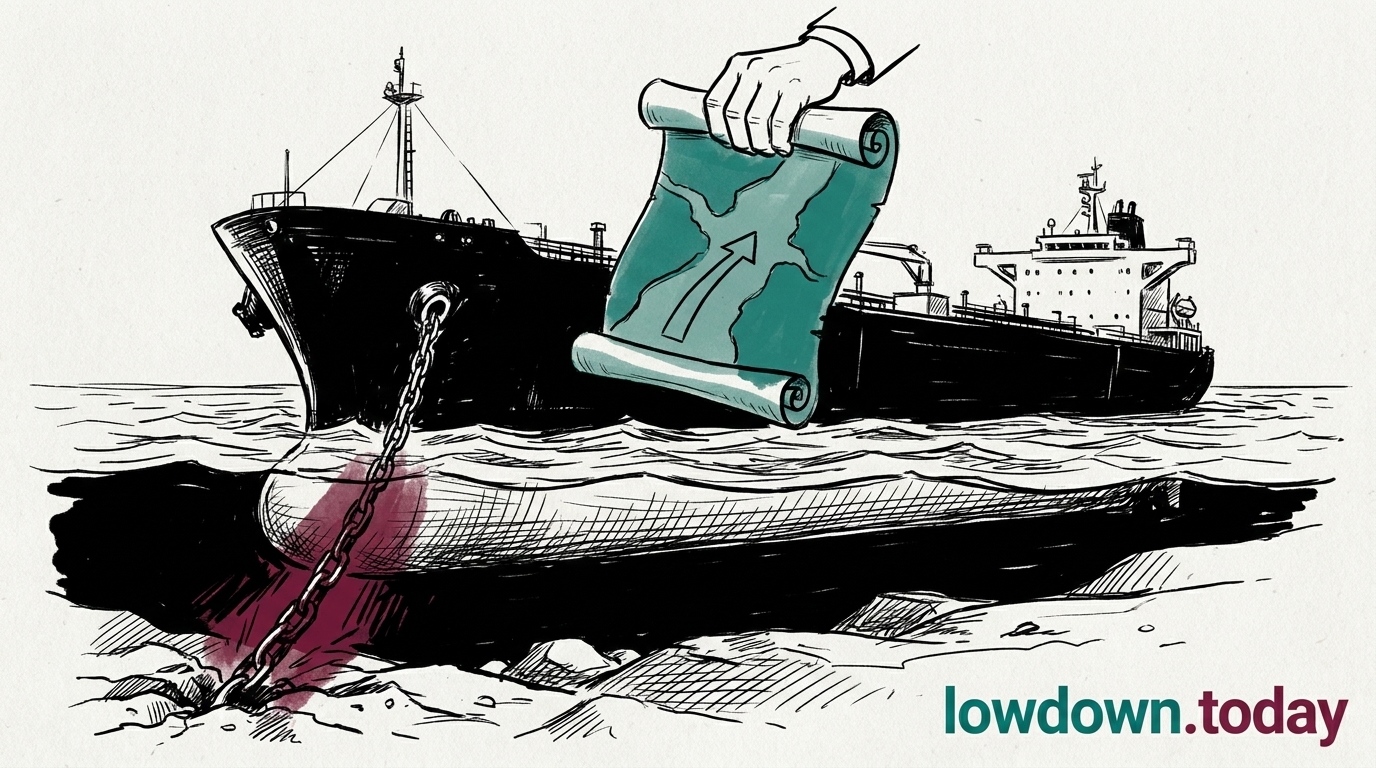
The House of Commons Science, Innovation and Technology Committee found the UK has 'no coherent strategic framework' for sovereign technology, warning it 'risks being cut off at whim'. It named the Trump order barring Anthropic's models as the trigger.

EconomicDeveloping
Key takeaway

MPs named the UK's dependence on US AI models a strategic gap with no plan behind it.

The House of Commons Science, Innovation and Technology Committee, chaired by Dame Chi Onwurah, published a report on 7 July finding the government has "no coherent strategic framework" for sovereign technology and warning that the UK "risks being cut off at whim" by foreign partners. 1 The committee is the cross-party group of MPs that scrutinises UK technology policy, and this is the first UK legislative body to put an official record behind the sovereignty-gap thesis.

The committee named its trigger. In June the Trump administration ordered a bar on foreign access to Anthropic's Fable 5 and Mythos 5 models, and Anthropic pulled them worldwide ; the US Commerce Department partially lifted the restriction on 27 June . A British research user lost access to two frontier AI models overnight on a decision taken in Washington, and that is the dependency the report says has no strategy behind it.

The report answers ASML's silence from the opposite direction. Where the company stopped naming its exposure to Washington in the same fortnight, the committee named the country's exposure out loud. The market went quiet on the dependency exactly as the politicians put it on the record.

The report lands against the £1.1bn AI Hardware Plan the UK announced at London Tech Week in June . Its argument is that the money buys hardware without a strategy to keep access to the frontier models that hardware would run.


Deep Analysis

In plain English

A House of Commons select committee is a group of MPs from different parties that investigates a specific policy area and publishes reports. The Science, Innovation and Technology Committee looked at whether the UK has a proper plan for 'sovereign technology', meaning the ability to keep using critical digital tools even if a foreign government decides to cut access. Its report, published 7 July, concluded the UK has no such plan. It pointed to a real example: in June, the US government temporarily blocked non-US users, including in the UK, from accessing two of Anthropic's AI models, then partially reversed the block twelve days later. The committee's point: Britain doesn't control that decision either way, and has no back-up plan if it happens again with a tool the country actually depends on.

Deep Analysis
Root Causes

The UK has no domestic frontier-model developer or hyperscaler-scale compute at the frontier, so it depends entirely on US suppliers for the layer where access decisions like the Anthropic order get made.

It also has no legal instrument comparable to the EU's AI Act GPAI (general-purpose AI) regime, which activates 2 August 2026, giving Westminster no compliance-based lever over US providers the way trade tariffs or state aid can be used elsewhere.

Escalation

Direction: the committee's finding raises pressure on government to publish a strategic framework, but no government response or funding commitment had followed as of 7 July. Evidence: the report's own language, 'no coherent strategic framework', describes an absence rather than an escalating dispute, so this sits as a policy-gap warning rather than an active confrontation.

What could happen next?
  • Risk

    Without a domestic frontier-model developer or a legal lever over US providers, the UK has no mechanism to prevent a repeat of the June access restriction.

  • Precedent

    The EU's AI Act GPAI (general-purpose AI) enforcement, activating 2 August 2026, gives Brussels a compliance lever over US model providers that Westminster currently lacks.

First Reported In

Update #12 · ASML's tool boom skips Europe's logic gap

The Register· 16 Jul 2026
Read original
Different Perspectives
Gulf oil producer
Gulf oil producer
Secured OPEC's confirmed 188,000 b/d September increment with the next meeting set for 6 September, but the Secretariat's own 2 August release says nothing about the fourth quarter. Output guidance beyond September remains undisclosed even as delegate sourcing keeps filling that gap.
Money manager positioned in WTI
Added 21,402 lots to a 108,307 net long in NYMEX WTI in the week to 28 July, against just 1,485 added to Brent's 15,740, a roughly fourteen-to-one split. Conviction sits in the American benchmark even as the European diesel story sets the record.
Indian refiner buying Urals
Bought Russian crude at a discount that narrowed to $1-2 a barrel in the week to 29 July from over $10, as Hormuz risk pushed it toward Urals. If that risk eases with the strike now called off, the discount it is currently enjoying could re-widen just as fast.
Russian diesel exporter
Novak tied any lifting of the diesel export ban, due to lapse 31 July, to an unspecified market recovery with no date, and pushed the gasoline ban to end-2026. An open-ended constraint suits an exporter benefiting from the record European crack it feeds.
War-risk underwriter
Withdrew war-risk cover for Saudi-linked hulls on 24 July and has not reinstated it, holding Bab el-Mandeb tanker transits near 7.5 a day. A cancelled strike does not by itself trigger the committee review needed to re-accept the class.
Northwest European refiner
Sources only 17% of diesel imports from Saudi Red Sea ports against the Mediterranean's 24%, so the ARA crack at $85.86 trails the Med print by $5.81. Lower Red Sea exposure is cushioning it against the rerouting cost, not eliminating it.



