Skip to content
You can now search across every topic, entity and event.What's new
European Oil Markets
22JUN

US partly lifts its Anthropic model curb

3 min read
09:55UTC

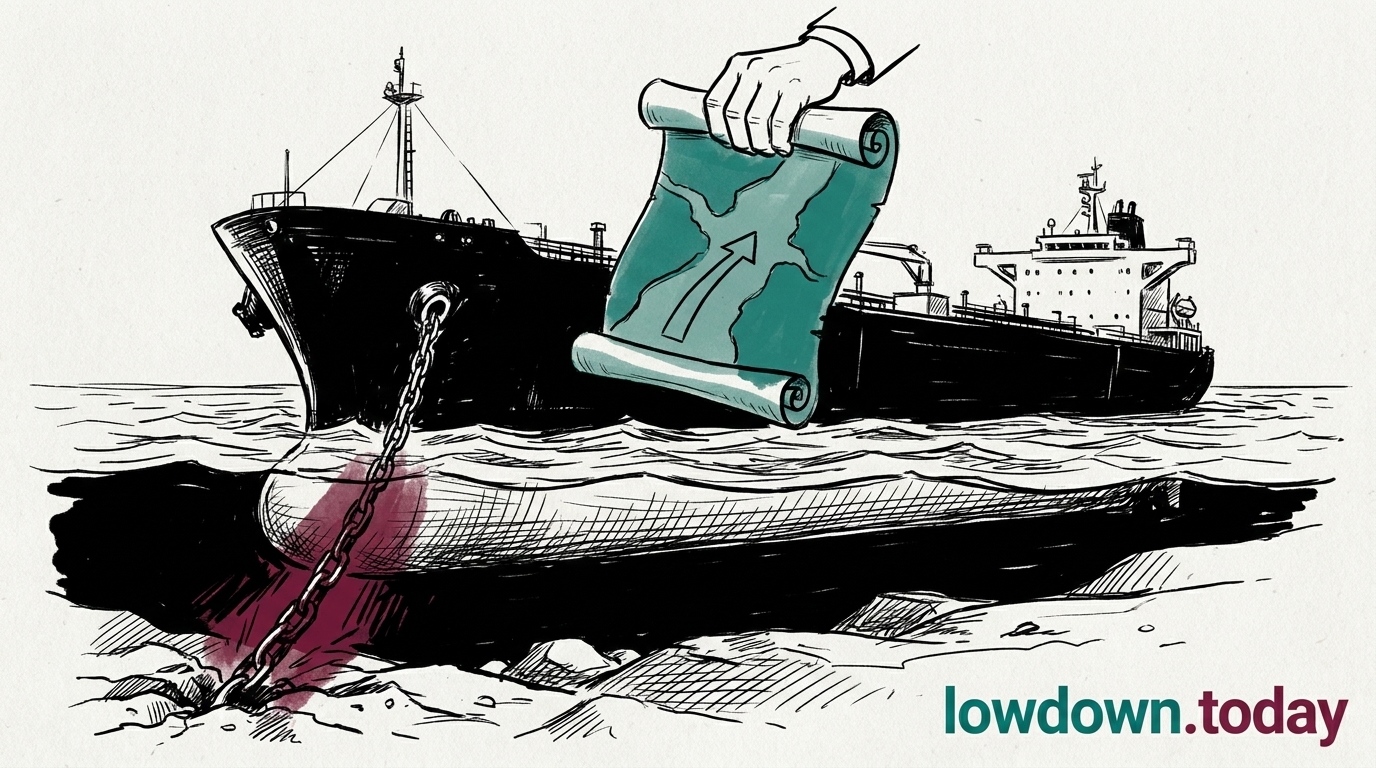
The US Commerce Department partially lifted its restriction on Anthropic's top models on 27 June, fifteen days after the order, turning a hard cut-off into a fast-moving one.

EconomicDeveloping
Key takeaway

Commerce partly lifted the Anthropic restriction within fifteen days, exposing US model access as an adjustable policy lever.

The US Commerce Department partially lifted its restriction on Anthropic's frontier models on 27 June, turning a hard cut-off into a fast-moving one. The reversal came fifteen days after the original order that had pulled the two models worldwide, converting an outright block into a partial, conditional restriction whose remaining scope is still unsettled.

Commerce did not spell out which users regain access or on what terms. The speed of the climbdown, barely two weeks from order to partial lift, shows the restriction working as a policy lever rather than a fixed technical limit, one Washington can tighten or loosen at will. The same discretion runs through the 24 July trade ruling now approaching .

The episode lands five weeks before the EU AI Act's general-purpose AI (GPAI) rules start to bite on 2 August, the date the bloc's AI Office can begin fining model providers. European enterprises weighing procurement against that clock now face a moving target. A model whose availability can change inside a single quarter is hard to standardise on, and that hands the European labs an opening they did not have to win.


Deep Analysis

In plain English

Fifteen days after the US government ordered Anthropic to cut off access to its most powerful AI models for users outside America, a different US government body, the Commerce Department, partially reversed that decision on 27 June. The models were not fully restored to their previous state, but users could access them again under new conditions. The episode matters not because access was cut and then partially restored, but because of what that sequence reveals: the US government treated Anthropic model access as a switch it controls, turned it off, and then turned it partly back on within a fortnight. European businesses that had built their software or services around Anthropic models now know that the switch exists. Five weeks later, the EU's new rules for powerful AI models come into force, and any business using those models needs to plan for the possibility that access could be interrupted again.

What could happen next?
  • Risk

    European enterprises that retained Anthropic models after the partial lift face a documented precedent: the US can reimpose the restriction without advance notice, leaving GPAI-regulated workflows in compliance jeopardy.

    Immediate · Assessed
  • Opportunity

    The partial lift's demonstrated conditionality accelerates commercial migration to EU-incorporated AI providers, creating a defined addressable market for Mistral and Aleph Alpha among GPAI-regulated enterprise buyers.

    Short term · Reported
  • Precedent

    The 15-day order-to-reversal cycle establishes that US export controls on AI models can be imposed and partially lifted on policy grounds within a single business month, making frontier-model access a managed political variable rather than a stable commercial service.

    Long term · Assessed
First Reported In

Update #10 · Digital euro to trilogue; Senate bars CBDC

CNBC· 30 Jun 2026
Read original
Causes and effects
This Event
US partly lifts its Anthropic model curb
The fast partial reversal shows US restrictions on frontier-model access can move within a single quarter, complicating European procurement before 2 August enforcement.
Different Perspectives
Gulf oil producer
Gulf oil producer
Secured OPEC's confirmed 188,000 b/d September increment with the next meeting set for 6 September, but the Secretariat's own 2 August release says nothing about the fourth quarter. Output guidance beyond September remains undisclosed even as delegate sourcing keeps filling that gap.
Money manager positioned in WTI
Added 21,402 lots to a 108,307 net long in NYMEX WTI in the week to 28 July, against just 1,485 added to Brent's 15,740, a roughly fourteen-to-one split. Conviction sits in the American benchmark even as the European diesel story sets the record.
Indian refiner buying Urals
Bought Russian crude at a discount that narrowed to $1-2 a barrel in the week to 29 July from over $10, as Hormuz risk pushed it toward Urals. If that risk eases with the strike now called off, the discount it is currently enjoying could re-widen just as fast.
Russian diesel exporter
Novak tied any lifting of the diesel export ban, due to lapse 31 July, to an unspecified market recovery with no date, and pushed the gasoline ban to end-2026. An open-ended constraint suits an exporter benefiting from the record European crack it feeds.
War-risk underwriter
Withdrew war-risk cover for Saudi-linked hulls on 24 July and has not reinstated it, holding Bab el-Mandeb tanker transits near 7.5 a day. A cancelled strike does not by itself trigger the committee review needed to re-accept the class.
Northwest European refiner
Sources only 17% of diesel imports from Saudi Red Sea ports against the Mediterranean's 24%, so the ARA crack at $85.86 trails the Med print by $5.81. Lower Red Sea exposure is cushioning it against the rerouting cost, not eliminating it.



