Skip to content
You can now search across every topic, entity and event.What's new
European Oil Markets
22JUN

Baghdad sacks two Maysan chiefs over the launches

2 min read
09:55UTC

Iraqi Prime Minister Ali al-Zaidi dismissed the Maysan Operations Commander and the provincial police chief on Saturday 12 September and ordered a special investigative council, after investigators traced the drones to a launch site in the province.

EconomicDeveloping

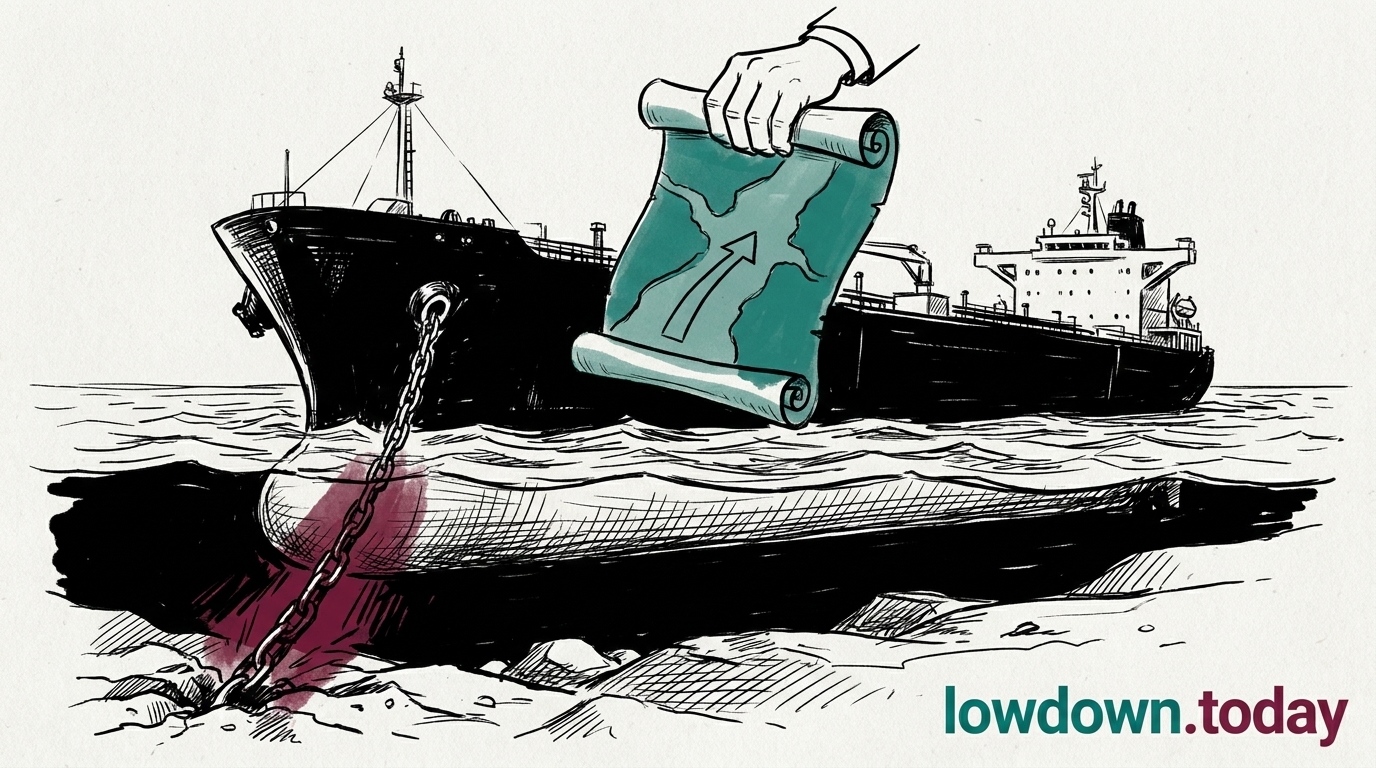
Iraqi Prime Minister Ali al-Zaidi dismissed the Maysan Operations Commander and the Maysan provincial police chief on Saturday 12 September 2026 and ordered a special investigative council, after Iraqi authorities traced the drones that hit the Saudi pipeline to a launch site in the province 1. Maysan sits on the Iranian border in southern Iraq. An umbrella group of Iran-backed militias in Iraq denied any involvement 2.

Al-Zaidi is the prime minister The New York Times reported carrying a US ceasefire proposal to Tehran in July , which makes the dismissals a move by a government with a working channel to Iran rather than one without options. Sacking a provincial commander is the fastest instrument a prime minister holds. It requires no warrant, no charge and no parliamentary vote, and it produces a name on the same day the accusation lands.

The dismissals produce no launch group. The two officers removed are the men responsible for the ground the drones flew from, not the men who flew them, and the investigative council is the body that would have to close that gap. Until it does, Baghdad has answered an attack on a neighbour's oil infrastructure by punishing its own chain of command.


Deep Analysis

In plain English

Drones that hit a Saudi oil pipeline on 10 September were tracked back to a launch site inside Iraq, in a province called Maysan on the Iranian border. Iraq's prime minister, Ali al-Zaidi, responded by sacking the two men in charge of security there: the army officer who runs operations in the province and the provincial police chief. He also set up a special council to investigate. Sacking the local commanders does not catch whoever launched the drones. It removes the people who were supposed to be watching the ground, and the investigation into who actually fired is still open.

Deep Analysis
Root Causes

Maysan runs along the Iranian border, and armed groups aligned with Tehran operate there alongside the Iraqi state's own forces. Riyadh published an assessment on 6 August naming energy facilities, ports and airports as the targets of an Iraqi militia and Houthi campaign coordinated under Revolutionary Guard guidance .

A prime minister has fast instruments and slow ones. Dismissal needs no warrant, no charge and no vote, and it produces a name on the day the accusation lands. Prosecution needs evidence, custody and a court, and Baghdad has none of the three yet.

Riyadh supplies the pressure. Saudi Arabia has tied its own restraint to Baghdad stopping further launches, so Iraq's answer has to be visible to Riyadh within days rather than correct within months.

Escalation

Down in the short term and unresolved beyond it. The dismissals buy Baghdad time with Riyadh; the investigative council's first published finding, or the absence of one, is what decides whether that holds.

What could happen next?
  • Consequence

    Baghdad has accepted in public that the attack on a neighbour's oil infrastructure was mounted from Iraqi soil, which is the finding every later argument now starts from.

    Immediate · Reported
  • Risk

    If the investigative council reports without naming a launch group, the dismissals become the whole of Iraq's answer to Riyadh.

    Short term · Assessed
  • Precedent

    Two provincial security posts are now the price of a launch from Iraqi territory, which gives future Iraqi commanders a reason to search their own ground harder.

    Medium term · Suggested
First Reported In

Update #178 · Saudi bypass hit, and Riyadh holds fire

Al Jazeera· 13 Sept 2026
Read original
Different Perspectives
Gulf oil producer
Gulf oil producer
Secured OPEC's confirmed 188,000 b/d September increment with the next meeting set for 6 September, but the Secretariat's own 2 August release says nothing about the fourth quarter. Output guidance beyond September remains undisclosed even as delegate sourcing keeps filling that gap.
Money manager positioned in WTI
Added 21,402 lots to a 108,307 net long in NYMEX WTI in the week to 28 July, against just 1,485 added to Brent's 15,740, a roughly fourteen-to-one split. Conviction sits in the American benchmark even as the European diesel story sets the record.
Indian refiner buying Urals
Bought Russian crude at a discount that narrowed to $1-2 a barrel in the week to 29 July from over $10, as Hormuz risk pushed it toward Urals. If that risk eases with the strike now called off, the discount it is currently enjoying could re-widen just as fast.
Russian diesel exporter
Novak tied any lifting of the diesel export ban, due to lapse 31 July, to an unspecified market recovery with no date, and pushed the gasoline ban to end-2026. An open-ended constraint suits an exporter benefiting from the record European crack it feeds.
War-risk underwriter
Withdrew war-risk cover for Saudi-linked hulls on 24 July and has not reinstated it, holding Bab el-Mandeb tanker transits near 7.5 a day. A cancelled strike does not by itself trigger the committee review needed to re-accept the class.
Northwest European refiner
Sources only 17% of diesel imports from Saudi Red Sea ports against the Mediterranean's 24%, so the ARA crack at $85.86 trails the Med print by $5.81. Lower Red Sea exposure is cushioning it against the rerouting cost, not eliminating it.



