Skip to content
You can now search across every topic, entity and event.What's new
European Oil Markets
18MAY

Rubio says US mediation has now ended

2 min read
17:30UTC

Marco Rubio confirmed on 22 May that US-led peace mediation had stagnated and that no talks were occurring, three days before Lavrov's evacuation demand. The withdrawal leaves Turkey's Istanbul bilateral channel as the sole active diplomatic format.

EconomicDeveloping
Key takeaway

The US is no longer mediating; Istanbul is now the war's only diplomatic channel.

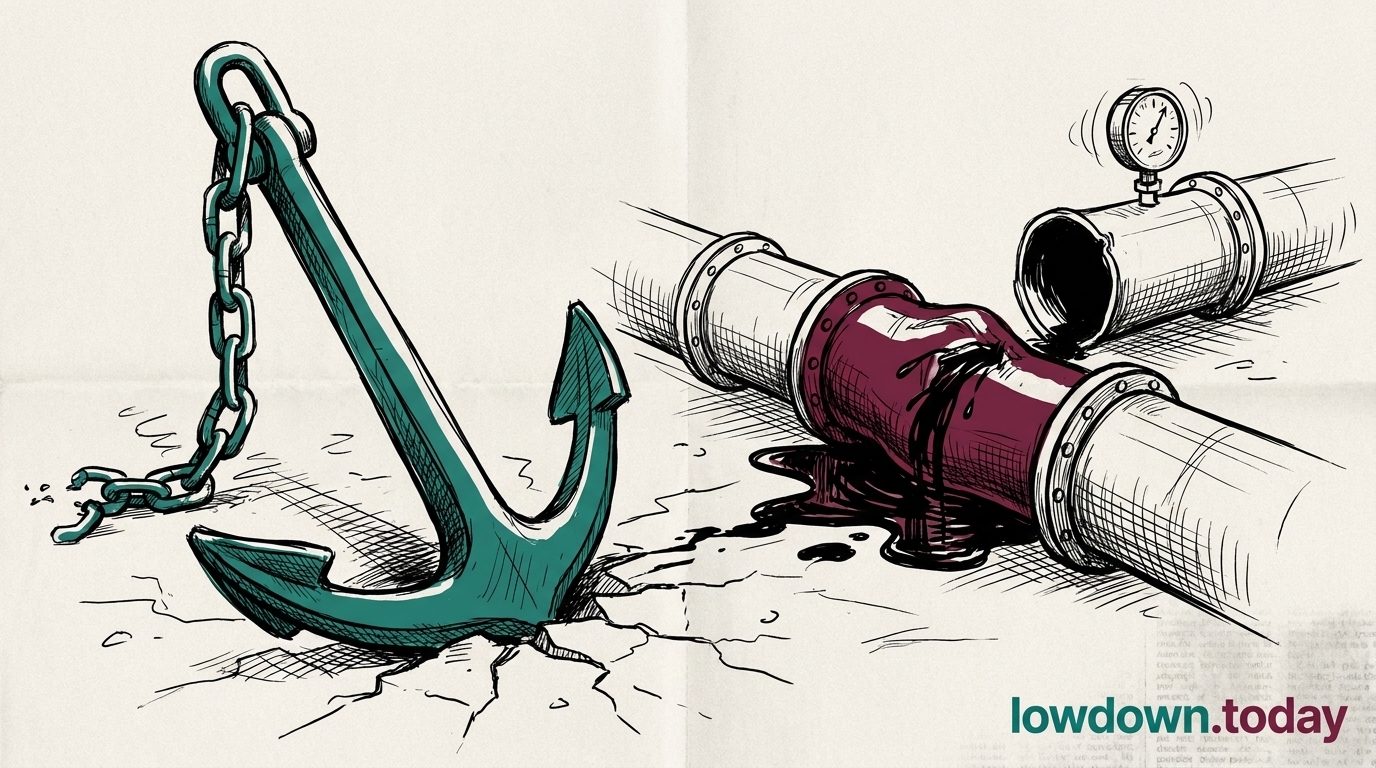
Marco Rubio confirmed on 22 May that US-led peace mediation had "stagnated" and that "no talks" were occurring, closing the chapter that opened with Trump's February re-engagement push. The sequence is revealing: Rubio announced stagnation on 22 May, then received Lavrov's evacuation demand on 25 May. Russia's escalation tracks the absence of American mediation rather than its presence.

With the US out, the Istanbul bilateral channel, which runs without American participation, is the only active format. That consolidates Turkey's mediator role and strips US leverage from any future attempt to re-enter the process. The next entry point is likely the GL 134C sanctions cliff on 17 June, where Treasury's decision can act as economic coercion even without a diplomatic channel.

Rubio's phrasing, "we're not interested in endless meetings that lead to nothing," mirrors the Russian critique of Western diplomacy and may signal deliberate distancing from the Zelenskyy position.

The exit follows Istanbul Round 1 , which produced the first direct talks since 2022 without US participation, demonstrating that the bilateral channel functions independently of Washington.


Deep Analysis

In plain English

America's top diplomat said on 22 May that the US had given up trying to arrange peace talks between Russia and Ukraine. He said the talks had gone nowhere and the US was done with meetings that produce nothing. Before this, the US had been trying to get Russia and Ukraine to talk directly. Without the US pushing for talks, the only place the two sides are meeting directly is Istanbul, Turkey, through a separate arrangement that Turkey is running. The timing matters: Rubio said this three days before Russia's top diplomat called him to warn about more strikes on Kyiv. The US had no active channel to de-escalate when the escalation came.

Deep Analysis
Root Causes

US mediation under Rubio inherited a structural impossibility: Russia's minimum precondition (full Ukrainian withdrawal from all four annexed regions) exceeds Ukraine's maximum concession at any point short of total military defeat. No US mediator can bridge a gap of that size without coercive leverage that Washington has not been willing to apply simultaneously to both parties.

Rubio's formulation, 'endless meetings that lead to nothing,' mirrors Russian critiques of Western diplomatic engagement. That framing serves the Trump administration's domestic narrative: it assigns failure to the process rather than to either party, allowing re-engagement later without having to retract a position.

What could happen next?
  • Consequence

    Turkey consolidates its role as sole peace mediator, gaining leverage the US previously held over both parties.

  • Risk

    Without an active US mediation channel, the GL 134C sanctions cliff becomes the primary US pressure instrument by default.

First Reported In

Update #18 · Oreshnik doubles as Russia's front collapses

Ukrainska Pravda· 1 Jun 2026
Read original
Different Perspectives
Indian refiners
Indian refiners
Indian refiners kept lifting discounted Urals as the India/Baltic price split widened past $9-10 a barrel, a gap that only grows as GL X1's Iranian wind-down cuts an alternative discounted grade off the market by 17 July. Cheaper Russian feedstock is being locked in while it lasts.
Chinese refiners
Chinese refiners
Chinese refiners gain leverage as the Urals-Brent discount widens, since Beijing's state buyers already source discounted Russian barrels near the fiscal floor unaffected by Western insurance costs. A wider discount, if it holds past 23 July, lets them lock in cheaper term contracts regardless of the cap's outcome.
US money managers (CFTC-tracked)
Managed money trimmed WTI net length into the rally, positioning that reflects doubt the Hormuz premium survives without freight or war-risk confirmation. The Brent-WTI spread widening almost entirely on the Brent leg supports that scepticism about a broad-based repricing.
OPEC+ (Saudi-led subgroup)
Saudi Arabia is defending market share through a fourth straight 188kbd August hike even as OPEC's own July MOMR cut 2026 demand growth for the fourth consecutive month. At a $108-111 fiscal breakeven, every added barrel costs Riyadh revenue it cannot recoup, so the hike reads as a positioning signal, not a demand bet.
Greek shipping registries
Greece, backed by Cyprus and Malta, is pushing a three-month cap-freeze compromise against the Commission's freeze to January 2027 ahead of the 23 July vote. Athens' and Valletta's combined tanker registrations mean a shorter review gives their insurers more frequent chances to reprice risk on Russian cargoes.
Russia (Deputy PM Alexander Novak)
Novak extended the diesel export restriction to producers on 8 July, the first producer-binding curb of the war, protecting the domestic pump price ahead of any refinery repair timeline. Urals still trades below Russia's $59 budget floor even as Brent gained, so the ban trades export revenue for fiscal stability at home.