Skip to content
You can now search across every topic, entity and event.What's new
European Oil Markets
18MAY

IRGC fires hours after halt order

2 min read
17:30UTC

Hours after Pezeshkian's broadcast, Iranian missiles hit Dubai, Saudi oil facilities, and Bahrain. The 31 autonomous IRGC provincial commands — built to survive decapitation — cannot be halted by a president who never commanded them.

EconomicDeveloping

Within hours of Pezeshkian's address, Iranian missiles and drones struck Dubai, Saudi oil facilities, and Bahrain. The Interim Leadership Council's ceasefire directive was ignored before its broadcast had finished circulating across state media. Pezeshkian attributed the defiance to "miscommunication within the ranks" following Khamenei's death — a characterisation that treats institutional insubordination as a communications error.

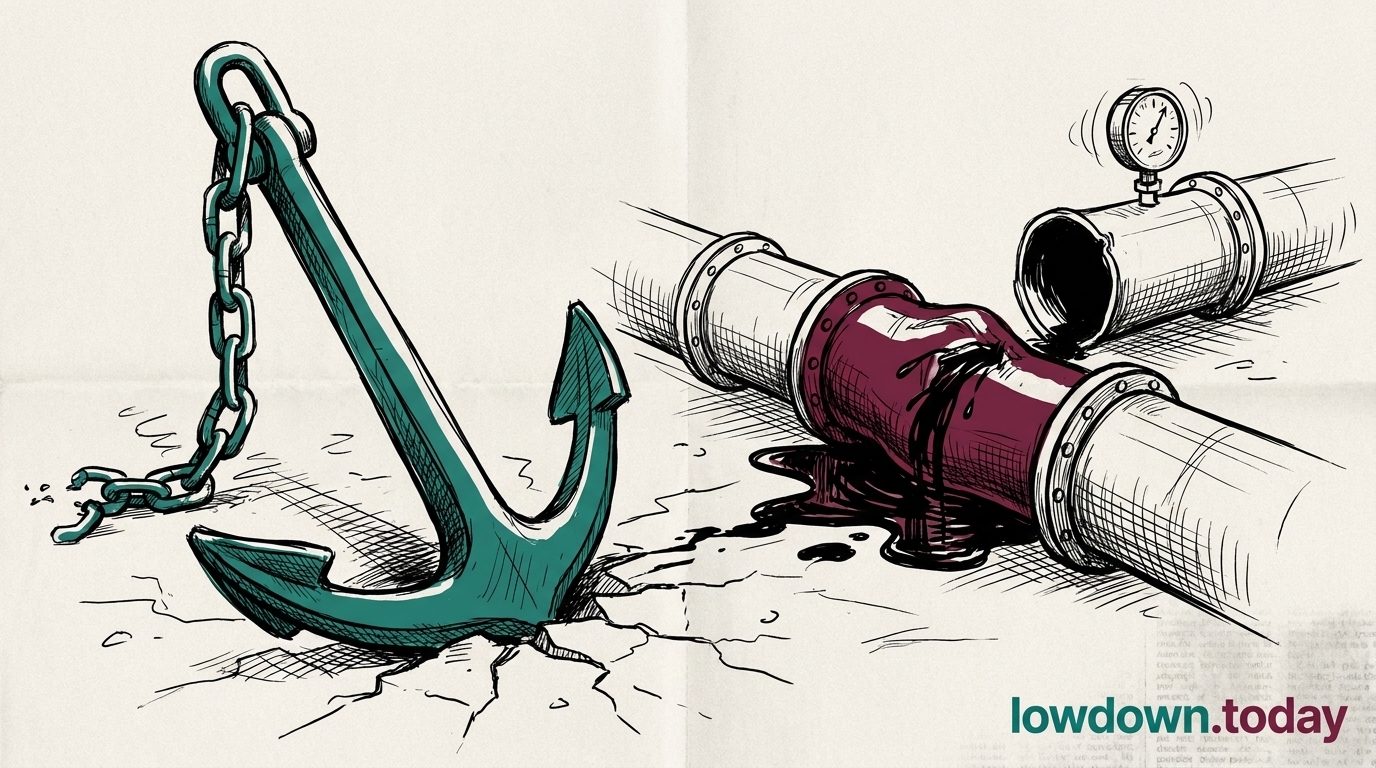
The IRGC's 31 autonomous provincial commands were designed for exactly this kind of operational independence. The Decentralised Mosaic Defence structure that sustained 109 drones and 9 ballistic missiles against UAE targets in a single day — days after CENTCOM claimed a 90% reduction in Iran's ballistic missile capacity — does not require orders from Tehran to function. It was built not to. The provincial commands' continued strikes on Gulf targets are not a malfunction; they are the system operating as engineered, with one consequence its designers did not anticipate: the system cannot be switched off by anyone except The Supreme Leader, and The Supreme Leader is dead.

"Miscommunication within the ranks" does not describe what happened. The IRGC does not report to the civilian president. It has never reported to the civilian president. The chain of command from The Supreme Leader to the IRGC was personal and religious, grounded in the doctrine of velayat-e faqih — the guardianship of the Islamic jurist. No interim council composed of political figures can replicate that authority, particularly when the Council's own legitimacy is contested and the IRGC's operational culture was specifically hardened against dependence on any single node of authority. The IRGC fought a war against Iraq for eight years under conditions of institutional autonomy that were formalised, not improvised. The current situation differs only in that no Supreme Leader exists to reimpose direction if he chose to.

The strike on Saudi Arabia's Shaybah oilfield — approximately one million barrels per day of production — followed the same escalation pattern visible since Day 4: military infrastructure first, then diplomatic targets, then energy infrastructure, reprising the September 2019 Abqaiq-Khurais playbook. Whether the Shaybah strike was ordered before or after Pezeshkian's address is unknown, but operationally irrelevant. The IRGC provincial commands hold pre-delegated targeting authority. The missiles that hit Shaybah did not need a phone call from Tehran.


First Reported In

Update #26 · President orders halt; IRGC ignores him

NPR· 7 Mar 2026
Read original
Causes and effects
This Event
IRGC fires hours after halt order
The IRGC's defiance within hours of the presidential halt order confirms that Iran's decentralised military architecture, built to survive external decapitation, has made the civilian government unable to control its own offensive operations. The system that kept Iran fighting after the loss of central command cannot be switched off from above.
Different Perspectives
Indian refiners
Indian refiners
Indian refiners kept lifting discounted Urals as the India/Baltic price split widened past $9-10 a barrel, a gap that only grows as GL X1's Iranian wind-down cuts an alternative discounted grade off the market by 17 July. Cheaper Russian feedstock is being locked in while it lasts.
Chinese refiners
Chinese refiners
Chinese refiners gain leverage as the Urals-Brent discount widens, since Beijing's state buyers already source discounted Russian barrels near the fiscal floor unaffected by Western insurance costs. A wider discount, if it holds past 23 July, lets them lock in cheaper term contracts regardless of the cap's outcome.
US money managers (CFTC-tracked)
Managed money trimmed WTI net length into the rally, positioning that reflects doubt the Hormuz premium survives without freight or war-risk confirmation. The Brent-WTI spread widening almost entirely on the Brent leg supports that scepticism about a broad-based repricing.
OPEC+ (Saudi-led subgroup)
Saudi Arabia is defending market share through a fourth straight 188kbd August hike even as OPEC's own July MOMR cut 2026 demand growth for the fourth consecutive month. At a $108-111 fiscal breakeven, every added barrel costs Riyadh revenue it cannot recoup, so the hike reads as a positioning signal, not a demand bet.
Greek shipping registries
Greece, backed by Cyprus and Malta, is pushing a three-month cap-freeze compromise against the Commission's freeze to January 2027 ahead of the 23 July vote. Athens' and Valletta's combined tanker registrations mean a shorter review gives their insurers more frequent chances to reprice risk on Russian cargoes.
Russia (Deputy PM Alexander Novak)
Novak extended the diesel export restriction to producers on 8 July, the first producer-binding curb of the war, protecting the domestic pump price ahead of any refinery repair timeline. Urals still trades below Russia's $59 budget floor even as Brent gained, so the ban trades export revenue for fiscal stability at home.