Skip to content
You can now search across every topic, entity and event.What's new
European Oil Markets
18MAY

France chairs G7 with nothing to table

3 min read
17:30UTC

France chairs the G7 Digital Ministerial at Bercy on Friday 29 May, two days after the sovereignty package it had planned to showcase failed to adopt. The agenda omits cloud sovereignty entirely.

EconomicDeveloping
Key takeaway

France hosts its G7 digital moment with the one instrument it built the week around left off the agenda.

France chairs the G7 Digital Ministerial at Bercy, the Paris seat of the French Finance Ministry, on Friday 29 May 2026, with no adopted sovereignty package to put before its partners . The G7 Digital Ministerial is the annual meeting of digital ministers from the seven major industrial democracies, and France holds the 2026 chair. Anne Le Henanff, France's Minister Delegate for AI and Digital Affairs, presides over an official agenda built on four priorities: AI safety, SME AI adoption, environmental sustainability and child safety online 1. The agenda names none of cloud sovereignty, CAIDA, or the EU-US digital trade tensions.

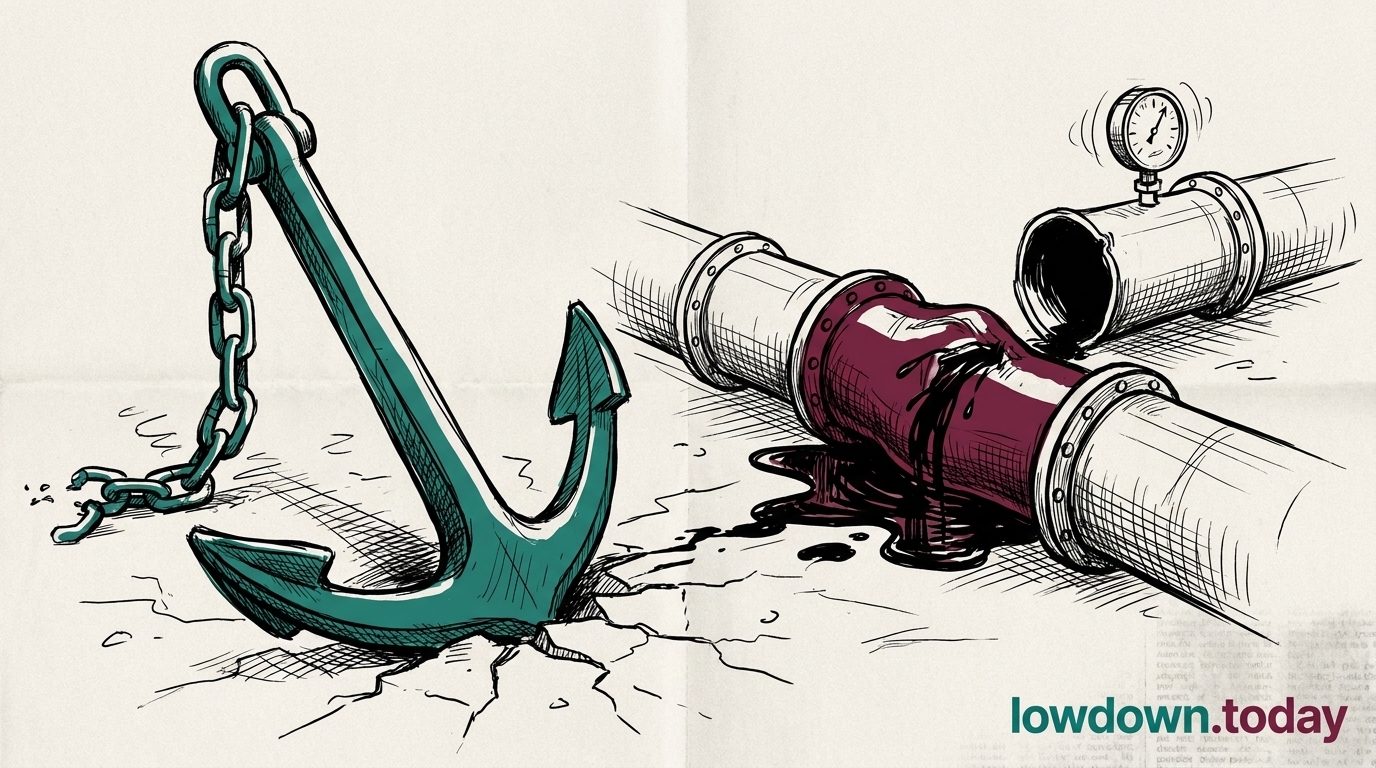
France had scheduled Bercy as the international stage on which to present the Cloud and AI Development Act to Washington, Tokyo and Ottawa, the first test of whether allies read the package as a partner framework or a trade barrier; the omission of cloud sovereignty from the agenda is what defeat looks like before partners. The third adoption slip two days earlier emptied that stage. G7 working groups closed their preparatory talks on 26 and 27 May, the very days CAIDA was meant to adopt, and the ministerial will "endorse results" rather than bind partners to anything 2.

France now carries the harder cost of a chair without a deliverable. A chair without a deliverable spends its presidency moment managing the gap between the agenda it planned and the agenda it can defend. France now hosts a forum about AI-safety consensus when its own headline instrument cannot survive the Paris-Berlin split that delayed it. The rewrite from cloud sovereignty to Hiroshima-style AI principles is what a presidency does when the centrepiece will not arrive on time.


Deep Analysis

In plain English

The G7 is a club of seven wealthy democracies (US, UK, France, Germany, Italy, Japan, Canada) that meet regularly to coordinate on major issues. France held the rotating presidency in 2026 and hosted a special G7 meeting focused on digital issues at the Bercy finance ministry in Paris on 29 May. France had planned to use this meeting to unveil Europe's new digital sovereignty rules (CAIDA) to its allies and get an endorsement from the G7. But CAIDA was delayed at the last moment for the third time. So France chaired a meeting about AI safety and child online protection instead, with no mention of cloud sovereignty at all. It was like hosting a product launch party when the product has not arrived from the factory.

Deep Analysis
Root Causes

France designed the Bercy ministerial sequencing on the assumption that CAIDA would be adopted by 27 May, two days before the ministerial convened. The first slip (March) and second slip (April) were already known when the Bercy agenda was finalised in early May; France chose to proceed rather than redesign the agenda.

This reflects a structural problem in EU-G7 coordination: the Commission controls the adoption calendar independently of the Presidency's multilateral diary, and member-state G7 chairs cannot compel Commission legislative timing.

The working-group conclusions of 26-27 May, which endorsed rather than committed, reflect the standard G7 digital ministerial output mechanism. Binding digital commitments require a treaty process or a regulatory instrument, neither of which is available at a ministerial. France's loss is specifically the loss of international launch visibility for CAIDA, not the loss of any binding multilateral commitment that was ever on offer.

Escalation

The diplomatic cost of the third slip compounds forward: the next natural multilateral staging point for CAIDA would be the June European Council, where Heads of State rather than digital ministers would need to endorse the package's direction. A fourth slip would push CAIDA past that window too.

What could happen next?
  • Consequence

    France spent its G7 digital presidency capital on an agenda it did not design; the Bercy ministerial will be cited in EU institutional records as endorsing AI safety and child-protection priorities, not cloud sovereignty.

  • Risk

    G7 partners (Japan, Canada, UK) who expected a CAIDA presentation at Bercy must now form their positions on the package without a French-framed multilateral introduction, increasing the risk that Washington shapes the G7 narrative on European cloud rules before Brussels does.

First Reported In

Update #6 · Brussels slips sovereignty law a third time

Direction generale des Entreprises (France)· 27 May 2026
Read original
Different Perspectives
Indian refiners
Indian refiners
Indian refiners kept lifting discounted Urals as the India/Baltic price split widened past $9-10 a barrel, a gap that only grows as GL X1's Iranian wind-down cuts an alternative discounted grade off the market by 17 July. Cheaper Russian feedstock is being locked in while it lasts.
Chinese refiners
Chinese refiners
Chinese refiners gain leverage as the Urals-Brent discount widens, since Beijing's state buyers already source discounted Russian barrels near the fiscal floor unaffected by Western insurance costs. A wider discount, if it holds past 23 July, lets them lock in cheaper term contracts regardless of the cap's outcome.
US money managers (CFTC-tracked)
Managed money trimmed WTI net length into the rally, positioning that reflects doubt the Hormuz premium survives without freight or war-risk confirmation. The Brent-WTI spread widening almost entirely on the Brent leg supports that scepticism about a broad-based repricing.
OPEC+ (Saudi-led subgroup)
Saudi Arabia is defending market share through a fourth straight 188kbd August hike even as OPEC's own July MOMR cut 2026 demand growth for the fourth consecutive month. At a $108-111 fiscal breakeven, every added barrel costs Riyadh revenue it cannot recoup, so the hike reads as a positioning signal, not a demand bet.
Greek shipping registries
Greece, backed by Cyprus and Malta, is pushing a three-month cap-freeze compromise against the Commission's freeze to January 2027 ahead of the 23 July vote. Athens' and Valletta's combined tanker registrations mean a shorter review gives their insurers more frequent chances to reprice risk on Russian cargoes.
Russia (Deputy PM Alexander Novak)
Novak extended the diesel export restriction to producers on 8 July, the first producer-binding curb of the war, protecting the domestic pump price ahead of any refinery repair timeline. Urals still trades below Russia's $59 budget floor even as Brent gained, so the ban trades export revenue for fiscal stability at home.