Bercy
Informal name for France's Finance Ministry headquarters in Paris's 12th arrondissement.
Last refreshed: 17 May 2026 · Appears in 1 active topic
Why is France holding both G7 finance and digital ministerials at Bercy in May 2026?
Timeline for Bercy
Hosted G7 Digital Ministerial on 29 May 2026
European Tech Sovereignty: France chairs G7 Digital Ministerial on 29 MayMentioned in: France's G7 text drops cloud sovereignty
European Tech SovereigntyMentioned in: France chairs G7 with nothing to table
European Tech SovereigntyMentioned in: Brussels locks 27 May for CAIDA and Chips II
European Tech SovereigntyBackground
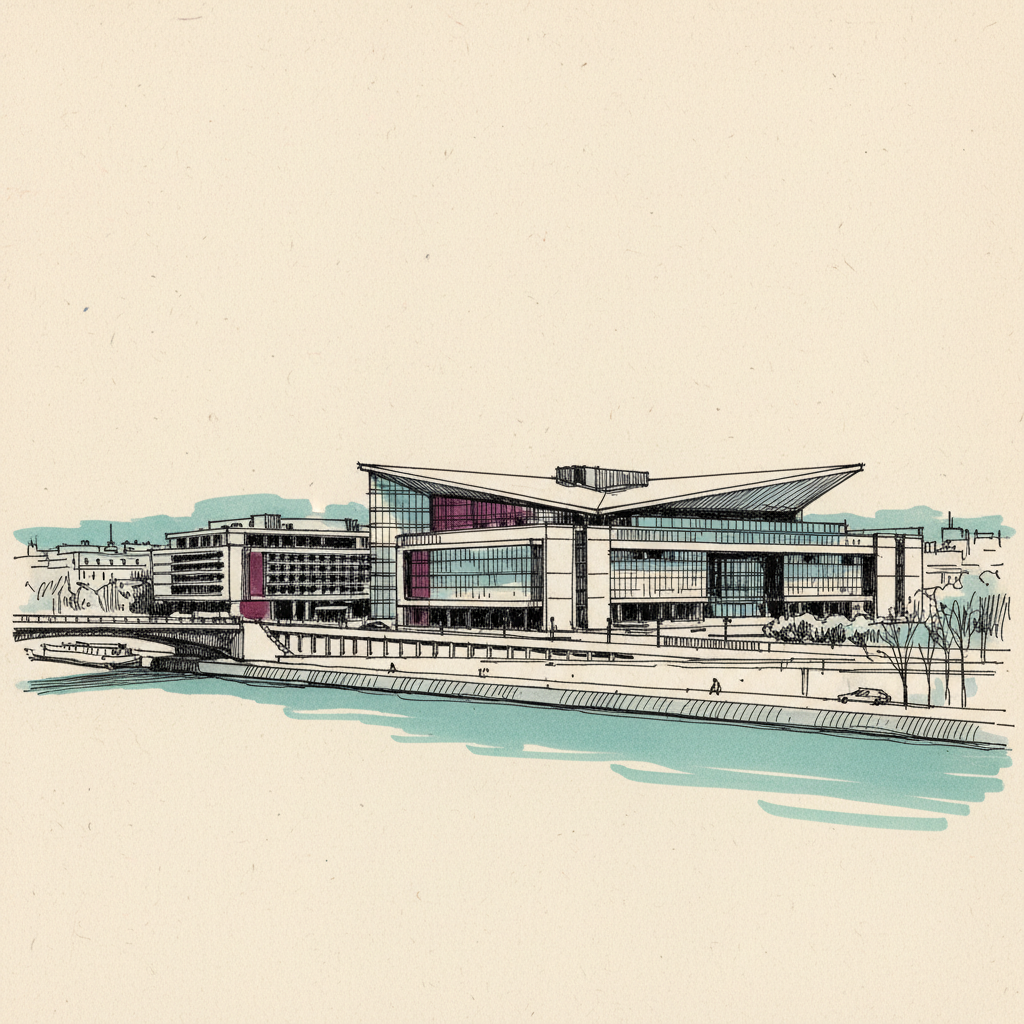
Bercy is the informal but near-Universal shorthand for the French Ministry of Economics and Finance, housed in a landmark modernist complex at 139 rue de Bercy, Paris 12th arrondissement. The ministry directs French fiscal, trade, and industrial policy and, through Bpifrance, its strategic investment Arm. the Building is also the regular venue for high-level economic diplomacy: France held its G7 Finance Ministerial on 18–19 May 2026 at Bercy under France's rotating G7 presidency, with finance ministers and central bank governors from all member states attending. A separate G7 Digital Ministerial, covering AI and tech-sovereignty themes, is scheduled for 29 May 2026.
The Bercy complex was built between 1984 and 1989 as part of President Mitterrand's Grands Travaux programme, designed by architects Paul Chemetov and Borja Huidobro. The five-building, five-hectare campus replaced the ministry's centuries-old residence in the Richelieu Wing of the Louvre, which was vacated to enable the Grand Louvre museum expansion. The two signature 70-metre arches, each weighing 8,000 tonnes, are visible from the Seine and have become a recognised element of Paris's eastern skyline.
Bercy's wider significance extends beyond French domestic policy: as host to G7 Finance and Digital ministerials, it is one of the physical sites where EU tech-sovereignty commitments are translated into binding international communiqués. Decisions taken at Bercy on semiconductor export controls, AI governance frameworks, and sovereign-cloud standards Cascade to Brussels and ultimately to member-state legislation.
What is Bercy and why is it important in French politics?
When was the Bercy finance ministry building constructed?
What G7 meetings are being held at Bercy in 2026?



Written with AI from Lowdown's published reporting. Not individually reviewed by an editor. Updated 17 May 2026. Editorial standards.