Skip to content
You can now search across every topic, entity and event.What's new
European Energy Markets
23JUL

LNG carriers run under a separate cap

2 min read
19:31UTC

QatarEnergy's LNG restart stays paced by naval-escort capacity, not diplomacy, as carriers cross Hormuz on a separate convoy schedule from crude and two destroyed Ras Laffan trains hold recovery near 83% of nameplate.

EconomicAssessed
Key takeaway

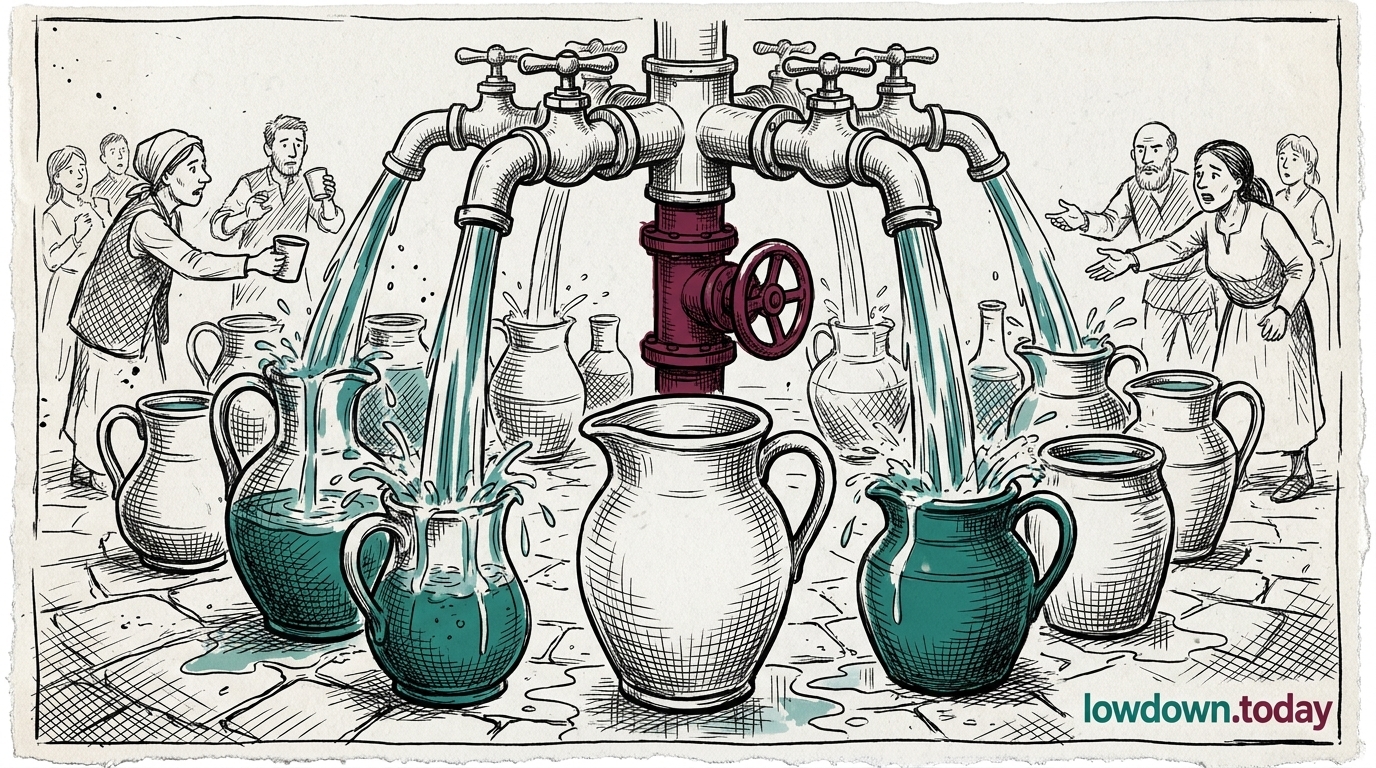
LNG carriers queue for escorts separately from crude, so the tanker rebound leaves QatarEnergy's gas restart capped.

QatarEnergy's LNG restart stayed paced by naval-escort capacity rather than diplomacy through the tanker rebound, with Lloyd's List reporting escort slots, not the talks in Qatar, as the binding constraint 1. LNG carriers cross the Strait of Hormuz on a separate convoy schedule from crude tankers.

A strong day for crude exits therefore carries no read on the LNG throughput a European gas desk actually prices. Two destroyed Ras Laffan trains hold recovery near 83% of pre-conflict nameplate, a plant-level ceiling that no transit count can lift.

TTF settled around EUR 43.6/MWh on 1 July, a two-week high driven by US-Iran-talks-in-Qatar jitters rather than any change in physical LNG supply 2. The JKM-TTF arb had already compressed towards parity as two Qatar trains stayed offline , and neither leg moved on the tanker news.

Deep Analysis

In plain English

European gas prices ticked up on 1 July, but not because less gas is actually flowing. The rise tracked worries about US-Iran talks in Qatar, a country that supplies a large share of Europe's liquefied natural gas (LNG). LNG tankers use a different, separately escorted route through the Strait of Hormuz than the oil tankers making headlines. Qatar's gas terminal at Ras Laffan still has two production units destroyed by earlier strikes, capping output at about 83% of normal, a limit that will not lift quickly: rebuilding a destroyed LNG unit typically takes years, not weeks.

Deep Analysis
Root Causes

QatarEnergy's restart is capped by two independent constraints that do not resolve on the same timeline. The physical constraint, two destroyed trains at Ras Laffan, holds nameplate near 83% regardless of diplomacy.

A second, narrower logistics constraint compounds it: Lloyd's List reports escort convoys clear only three to four tankers a day through Hormuz on seven to eight warships, a ratio that cannot scale without adding more warships to the corridor.

What could happen next?
  • Consequence

    QatarEnergy's 83% nameplate ceiling is likely to persist for years rather than months, since rebuilding a destroyed LNG train typically takes three to five years from start.

    Long term · Assessed
  • Risk

    The escort-convoy cap of three to four tankers a day cannot expand without additional naval escort ships in the corridor, a decision outside QatarEnergy's control.

    Medium term · Reported
  • Meaning

    TTF's two-week high on 1 July reflects diplomatic sentiment rather than a fresh physical supply loss, since the escort-convoy LNG regime did not lose capacity that day.

    Immediate · Assessed
First Reported In

Update #24 · Hormuz tanker rebound is no LNG relief

Lloyd's List· 6 Jul 2026
Read original
Different Perspectives
French industrial power consumers
France's day-ahead discount to Germany has nearly closed as TTF and EUA rise together on both sides of the border, eroding the arbitrage French industry relied on through the summer. A standing negative spark removes the German demand buffer that kept that spread wide.
TTF trading desks
TTF trading desks
Desks are reading the inversion as an injection-arbitrage trade: buy TTF at EUR 62.4/MWh now, accept the near-term loss on the spread, and sell into the winter strip once caverns are forced back into the market. The 0.8 GWh/day German print makes that trade increasingly asymmetric.
Oxford Institute for Energy Studies
Two straight sessions of negative clean spark spread confirm gas has stopped setting German power prices cleanly; CCGT dispatch now follows the spread's sign, not storage need. Caverns quitting the prompt bid on 21 July is that mechanism working exactly as the structural read predicts.
European Commission
European Commission
State-aid approval for StromVKG has not been granted, a status Bundesnetzagentur's own scheme page confirms, and Brussels was not consulted before the auction opened. Every award from the 8 September deadline stays exposed to a formal proceeding or clawback once the Commission rules.
Bundesnetzagentur
Bundesnetzagentur
Bundesnetzagentur opened the first 4.5 GW StromVKG capacity auction on 21 July, bids due 8 September, without waiting for EU state-aid clearance. Berlin is treating Germany's 24% share of EU storage as urgent enough to move first on capacity and negotiate the state-aid question with Brussels afterwards.
Marine insurers and AIS trackers covering Hormuz
AIS data shows severe curtailment on 20 July, 479 vessels anchored, 36 dark, 123 still broadcasting inside the strait, not the closure the IRGC claims. War-risk premiums move on the unresolved CENTCOM-IRGC contest itself, since underwriters price the dispute as much as the count.

