Skip to content
You can now search across every topic, entity and event.What's new
European Energy Markets
22JUN

Washington rejects the Majlis Hormuz transit bill

2 min read
13:56UTC

NPR reported on 6 August that the Trump administration has rejected Iran's parliamentary plan for the Strait of Hormuz, while intermediaries keep working on the corridor deal with Oman.

EconomicDeveloping
Key takeaway

Washington is negotiating one Iranian Hormuz track while rejecting the other outright.

NPR reported on Thursday 6 August, timestamped 20:58 UTC and carried under its own International Desk byline, that Donald Trump's administration has rejected the Majlis plan for governing traffic through the Strait of Hormuz 1. The rejection matches a position the administration has held throughout the Hormuz talks. The Washington Times reported on Wednesday 5 August that Washington, kept informed of the Iran and Oman negotiation, had insisted it would accept no deal containing tolls in the strait 2.

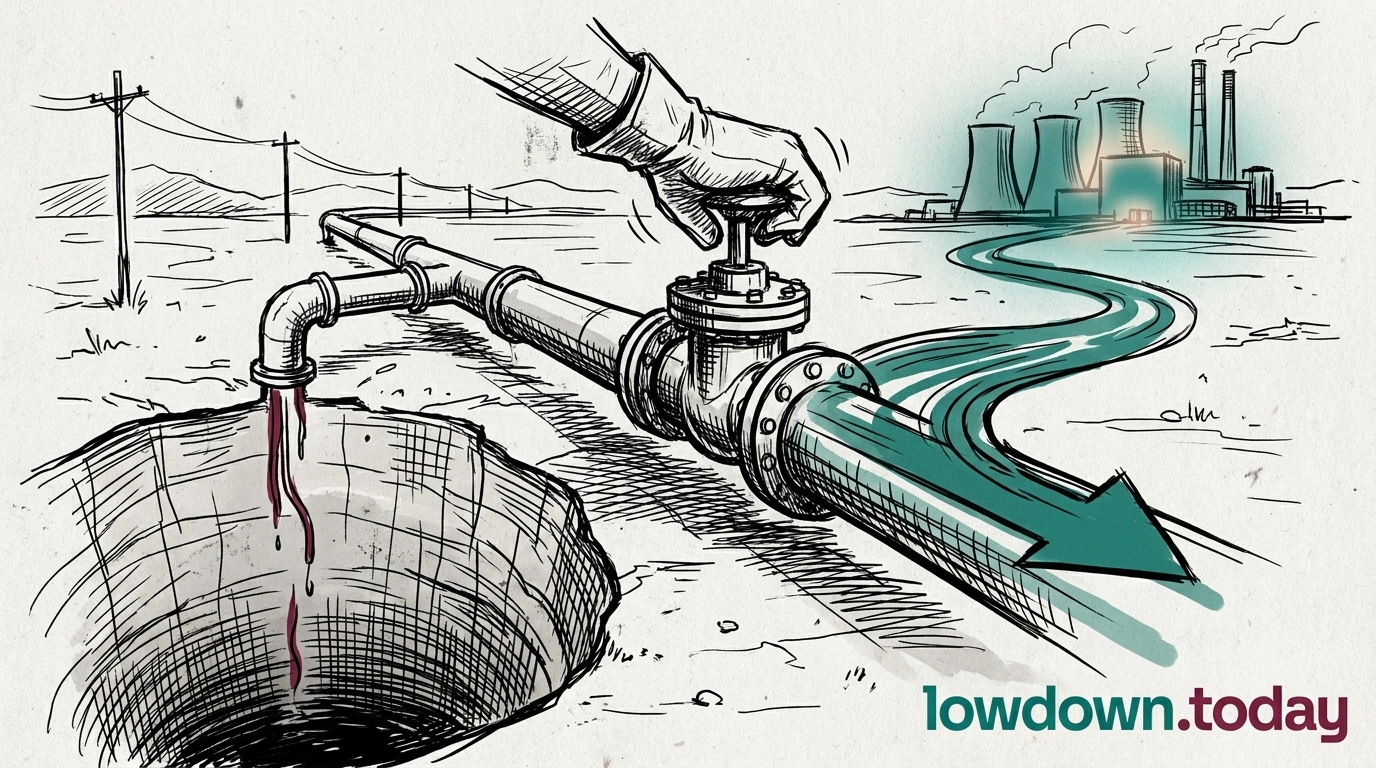
That leaves the United States holding two postures towards two Iranian Hormuz tracks inside a single week: working the Oman corridor through intermediaries, rejecting the parliamentary bill outright. Tehran holds both, and they do different jobs for it. The negotiated track can deliver a reopening and needs American acquiescence. The legislative one can be passed unilaterally if the negotiation collapses, and it needs nobody's consent to exist.

Set the rejection against what the administration has actually done since the president promised on Tuesday 4 August that the strait would reopen soon . Its regional command reported a higher interdiction count two days later, with the same frozen tally of disabled and boarded hulls. On Thursday evening it dismissed Iran's own legal instrument for the waterway. Both moves tighten rather than loosen, which in practice leaves the Oman corridor as the only route to the reopening the president described.

The counter-argument deserves stating. Rejecting a bill still sitting in committee costs Washington nothing and forecloses nothing. A public rejection may also be aimed less at Tehran than at Iran's foreign ministry, strengthening Abbas Araghchi's hand against a parliament writing terms he would otherwise have to defend at the table.


Deep Analysis

In plain English

The US government rejected a plan from Iran's parliament, the Majlis, that would have let Iran fine foreign ships up to a fifth of their cargo's value and block ships linked to Israel from passing through the Strait of Hormuz, the narrow waterway carrying much of the world's oil. This is separate from a different set of talks, mediated by Oman, where Iran's foreign minister has already given preliminary approval to a different Hormuz plan that still needs sign-off from Iran's Supreme Leader. The US has not rejected that channel, only parliament's version.

Deep Analysis
Root Causes

Iran has run two Hormuz tracks at once: a negotiated corridor process through Oman, where its foreign minister already holds preliminary approval for a draft , and a unilateral legislative track inside the Majlis, which needs no other party's consent to exist. Washington has treated the two differently, rejecting the legislative bill while staying engaged on the Oman-mediated corridor question.

A Majlis bill does not bind Iran on its own. Any text the Majlis passes still needs ratification by the Guardian Council before it takes legal effect, so Thursday's rejection lands on a measure that has not yet cleared its own domestic process.

What could happen next?
  • Consequence

    The rejection strengthens Araghchi's hand for arguing that the executive-led Oman channel, not the Majlis, is the route to an enforceable Hormuz arrangement.

  • Risk

    If the Majlis presses ahead regardless of the US rejection, Iran would have two contradictory Hormuz positions in play, one signed off internally, one not, at the same time.

First Reported In

Update #167 · Riyadh names its next targets; Najran is hit

NPR· 7 Aug 2026
Read original
Causes and effects
This Event
Washington rejects the Majlis Hormuz transit bill
Tehran holds two Hormuz tracks and Washington has answered them differently, rejecting the one it cannot negotiate with.
Different Perspectives
Cross-border power traders
The France-Germany day-ahead spread flipped from a EUR 17.20 German premium on 1 August to a EUR 4.15 French premium on 3 August, the same day French curtailment peaked. They cannot yet attribute the flip to curtailment alone, since a like-for-like overnight comparison shows French nuclear output rising while wind fell and demand returned on the weekday step.
EDF
EDF
River-cooling limits took 7.6 GW, 12 per cent of its fleet, offline on 3 August, the highest curtailment since the heatwave began, with an easing forecast to 4.3 GW on 4 August and 3 GW after. It manages the cut as a recurring seasonal constraint, expecting it to lift with river temperature, not repair.
Gasunie
Gasunie
TTF, the Dutch hub it operates, drifted to roughly EUR 55 to 58 per MWh across the window, staying inside its recent range through both the German spark reversal and the French curtailment. It reads a flat hub price as evidence that neither event this window carried enough weight to move the fuel leg on its own.
German gas-fired generators
Record German solar of 18,761 MW on 2 August pushed the clean spark spread to minus 18.48 EUR/MWh, a loss-making day, before it returned to plus 16.20 on 3 August. They now price dispatch against post-solar residual load rather than wind alone, since the sign flipped inside 48 hours on unchanged fuel and carbon costs.
European Commission (DG Energy)
Its implementing-measures register logged transposition notices from only Portugal and Slovakia against Wednesday's Article 94 deadline for Directive (EU) 2024/1788, with 25 states silent. It expects the register to fill only gradually, since filing routinely lags legislating and any infringement track against non-notifying states runs on a slower clock than the deadline itself.
Spain's LNG terminal operators
Spain's 9,145 GWh terminal inventory is the largest single stock in the EU LNG network, an option value that can reroute cargoes wherever the winter strip pays best rather than a cavern gas obligation tied to a fixed date. That flexibility matters more as Germany's cavern shortfall pushes more of the winter security question onto import infrastructure.



