Skip to content
Welcome, thoughtbot's Giant Robots listeners!Start here
European Energy Markets
22JUN

Ukraine exports the factory, not the drone

3 min read
13:56UTC

RSI Europe in Vilnius and Ukraine's The Fourth Law signed a memorandum at Eurosatory on 18 June to build drones in Lithuania, deepening a corridor that puts Ukrainian production lines and combat-iterated software on EU soil.

EconomicDeveloping
Key takeaway

Ukraine's export ban has become a know-how export, seeding combat-proven production lines across NATO states.

RSI Europe, a Lithuanian drone manufacturer in Vilnius, signed a memorandum of understanding with Ukraine's The Fourth Law at Eurosatory on 18 June 2026 to build drones in Lithuania under the Build with Ukraine framework⁠1. The Fourth Law supplies the artificial-intelligence, computer-vision and manufacturing know-how; Ukrainian citizens are given priority for the production jobs. RSI is already delivering 9,500 Shpak FPV first-person-view drones to an undisclosed NATO buyer.

The deal advances a corridor that opened when Fire Point broke ground on a Danish plant and Kyiv announced ten EU export offices. Ukraine's Fire Point is scaling FP-1 output to more than 100 a day at Denmark's Skrydstrup airbase, set against the roughly 4 million drones Ukraine builds at home each year. The volume travelling abroad is small by that measure, which is not the point of the move.

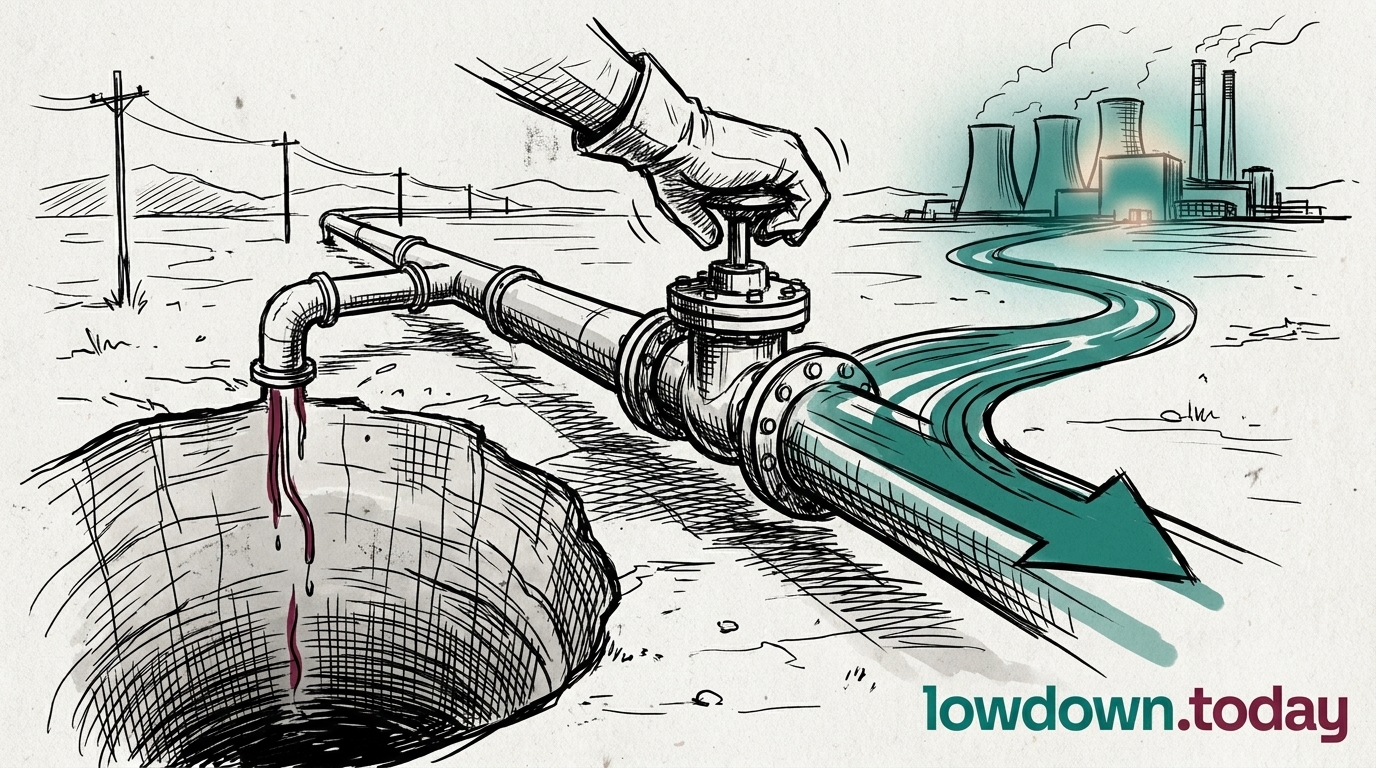
What travels with the production matters more than the throughput. Design know-how and combat-iterated software, refined over three years against Russian drones, now flow into NATO states alongside the airframes. Kyiv's wartime export ban still blocks the hardware, so it sells the harder asset instead, while host states absorb the manufacturing and the political risk of weapons plants on their territory. The export ban has been converted into an industrial-transfer business: Lithuania for assembly, Denmark for propellant and airframes, with Ukraine retaining the intellectual property.


Deep Analysis

In plain English

Ukraine produces roughly 4 million drones per year and has developed advanced manufacturing knowledge during the war. But Ukraine cannot legally export finished drones to most allied countries under its own export controls. Instead, Ukrainian firms are licensing their know-how to manufacturers in NATO countries. RSI Europe, a Lithuanian company, signed an agreement with Ukrainian firm The Fourth Law to build drones in Lithuania using Ukrainian AI and manufacturing methods. Ukrainian workers get priority for the jobs. This is Ukraine exporting a factory's worth of knowledge rather than the products themselves.

What could happen next?
  • Consequence

    The Baltic drone manufacturing corridor (Lithuania, Denmark hosting Fire Point and RSI Europe) is becoming a distinct regional industrial cluster that could attract further Ukrainian technology transfers and NATO supply contracts ahead of the UK and Germany.

  • Risk

    Manufacturing know-how transferred to Lithuania before the Ukraine war ends could be re-licensed to third parties outside Ukraine's control, reducing Ukraine's post-war export leverage in defence markets.

First Reported In

Update #13 · Air Force shuts primes out of drone wingman

euenergy.live (ENTSO-E data)· 25 Jun 2026
Read original →
Different Perspectives
Cross-border power traders
The France-Germany day-ahead spread flipped from a EUR 17.20 German premium on 1 August to a EUR 4.15 French premium on 3 August, the same day French curtailment peaked. They cannot yet attribute the flip to curtailment alone, since a like-for-like overnight comparison shows French nuclear output rising while wind fell and demand returned on the weekday step.
EDF
EDF
River-cooling limits took 7.6 GW, 12 per cent of its fleet, offline on 3 August, the highest curtailment since the heatwave began, with an easing forecast to 4.3 GW on 4 August and 3 GW after. It manages the cut as a recurring seasonal constraint, expecting it to lift with river temperature, not repair.
Gasunie
Gasunie
TTF, the Dutch hub it operates, drifted to roughly EUR 55 to 58 per MWh across the window, staying inside its recent range through both the German spark reversal and the French curtailment. It reads a flat hub price as evidence that neither event this window carried enough weight to move the fuel leg on its own.
German gas-fired generators
Record German solar of 18,761 MW on 2 August pushed the clean spark spread to minus 18.48 EUR/MWh, a loss-making day, before it returned to plus 16.20 on 3 August. They now price dispatch against post-solar residual load rather than wind alone, since the sign flipped inside 48 hours on unchanged fuel and carbon costs.
European Commission (DG Energy)
Its implementing-measures register logged transposition notices from only Portugal and Slovakia against Wednesday's Article 94 deadline for Directive (EU) 2024/1788, with 25 states silent. It expects the register to fill only gradually, since filing routinely lags legislating and any infringement track against non-notifying states runs on a slower clock than the deadline itself.
Spain's LNG terminal operators
Spain's 9,145 GWh terminal inventory is the largest single stock in the EU LNG network, an option value that can reroute cargoes wherever the winter strip pays best rather than a cavern gas obligation tied to a fixed date. That flexibility matters more as Germany's cavern shortfall pushes more of the winter security question onto import infrastructure.

Written with AI from Lowdown's published reporting. Not individually reviewed by an editor. Editorial standards.
