Skip to content
Welcome, thoughtbot's Giant Robots listeners!Start here
European Energy Markets
22JUN

Drone Gauntlet now judges the parts

4 min read
13:56UTC

The Pentagon's Drone Dominance Gauntlet Stage 1 closed on 20 June after testing 49 companies and 79 drones; the next round bars Chinese, Russian, Iranian and North Korean motors and batteries, enforced by physical teardown.

EconomicDeveloping
Key takeaway

Gauntlet II's component bar makes parts provenance, not flight performance, the decisive qualifier.

The Pentagon's Drone Dominance Gauntlet Stage 1 ran 8-20 June at Camp Grayling, Michigan, testing 49 companies and 79 drones before closing on 20 June 2026⁠1. The Gauntlet is a Pentagon procurement competition built to qualify drone manufacturers for large-volume attritable orders, the throwaway airframes meant to be fielded in bulk. About ten vendors per mission area are expected to advance to the second round, and Ukraine's Defense Drones Tech Corp competed as a returning Phase 1 winner. An initial batch of roughly 2,000 drones was accepted on the spot.

Advancing carries a heavy demand. Each Gauntlet II finalist must field 120 drones for orders of 4,000 to 9,500 units, under price ceilings of $5,500 for long-range and $4,500 for close-quarters airframes⁠2. A single winning lot is therefore worth more than $40 million, and qualifying turns a prototype shop into a volume manufacturer overnight. This beat advances the stage that opened on 8 June; the new detail is the results and the component rule attached to the next round.

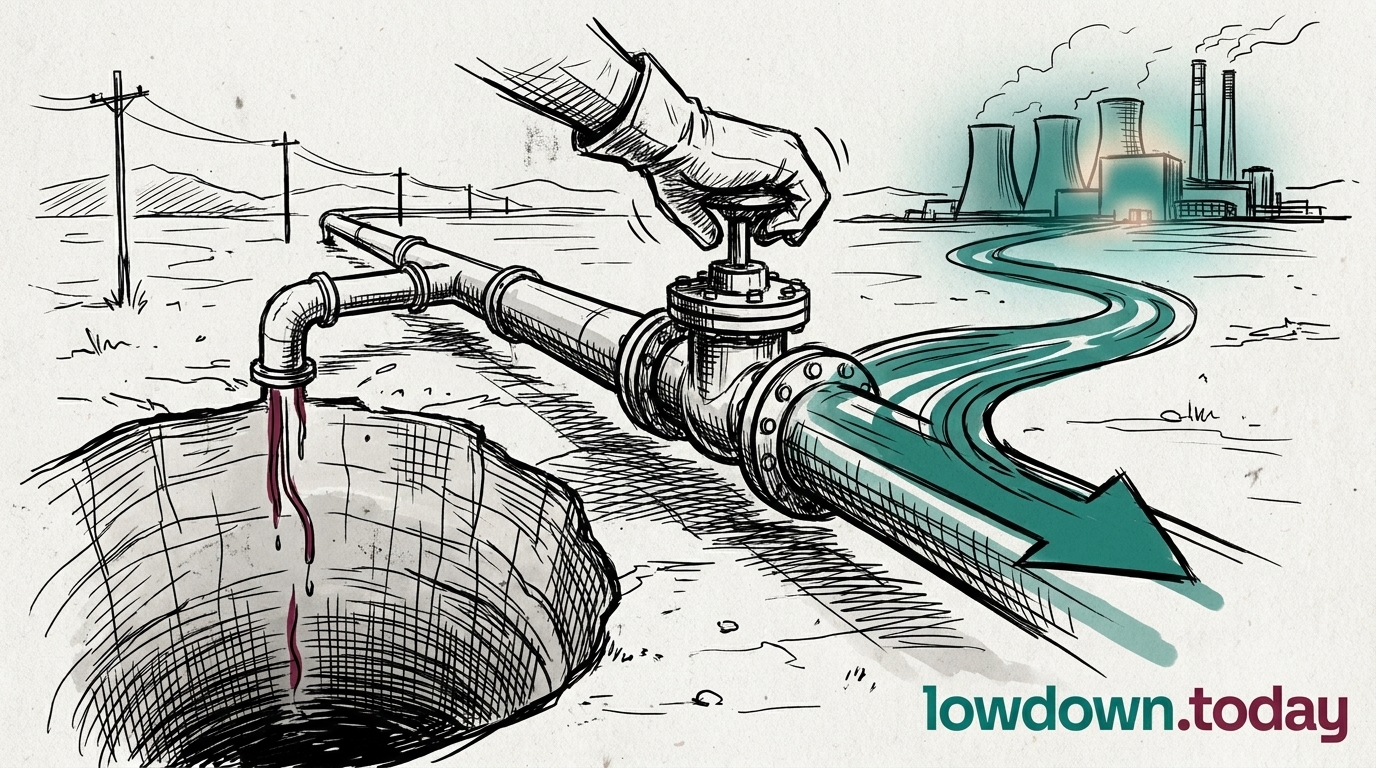
The component rule decides more than flight performance does. Motors and batteries from China, Russia, Iran or North Korea are barred, enforced through bill-of-materials review and physical inspection later this summer. Many FPV assemblers built their cost advantage on Chinese motors and cells, and a drone that flies well can still fail on a teardown. The contest is moving from who builds the best drone to who can prove where every part came from, a slower and more structural reordering of the supply base than any single award.


Deep Analysis

In plain English

The Pentagon held a two-week competition at a military training base in Michigan, testing drones from 49 different companies. This was Stage 1 of the 'Drone Dominance Gauntlet', the US military's programme to buy cheap attack drones in large numbers. For the next stage, there are new rules: any drone that uses motors or batteries made in China, Russia, Iran or North Korea is disqualified. Inspectors will physically check every drone's parts. This matters because cheap Chinese components are what made it possible to build drones at the target prices the Pentagon wants. Manufacturers now have to find alternatives , and those cost more.

Deep Analysis
Root Causes

The Gauntlet II component bar addresses a structural contradiction in the Pentagon's attritable drone programme: the $4,500-$5,500 unit price targets were set assuming Chinese-sourced motors and batteries, which cost approximately 40-60% less than equivalent Western components.

Phase 1's failure to achieve full acceptance (1,040 of 2,400 Archer drones cleared, per prior reporting) was partly attributable to quality variance in Chinese-sourced components under accelerated delivery schedules. The Gauntlet II bar is thus simultaneously a national security measure and a quality-control mechanism , Chinese components under production pressure exhibited failure rates that degraded acceptance testing pass rates.

The 49 companies and 79 drones in Stage 1 also reveal a structural asymmetry: roughly 1.6 drones per company, indicating that many entrants brought a single airframe design rather than a platform family. Gauntlet II's requirement for 120 drones per qualifying company will naturally select for manufacturers with either production volume or manufacturing scalability rather than design novelty.

What could happen next?
  • Consequence

    Drone manufacturers using Chinese components at Gauntlet II price ceilings face a structural margin squeeze; those without US-aligned battery and motor supply chains will either miss the price ceiling or exit the competition.

    Immediate · Assessed
  • Opportunity

    US and allied motor and battery manufacturers face a Pentagon-mandated demand signal at scale; companies like Molicel (Canadian) and Texas Instruments' motor controller division are positioned to capture supply chain substitution orders.

    Short term · Assessed
  • Risk

    Supply chain verification that stops at tier-one finished components rather than sub-component origins replicates the known failure mode of the Pentagon's prior counterfeit electronics programme, providing compliance theatre rather than genuine security.

    Medium term · Assessed
First Reported In

Update #13 · Air Force shuts primes out of drone wingman

Inside Unmanned Systems· 25 Jun 2026
Read original →
Different Perspectives
Cross-border power traders
The France-Germany day-ahead spread flipped from a EUR 17.20 German premium on 1 August to a EUR 4.15 French premium on 3 August, the same day French curtailment peaked. They cannot yet attribute the flip to curtailment alone, since a like-for-like overnight comparison shows French nuclear output rising while wind fell and demand returned on the weekday step.
EDF
EDF
River-cooling limits took 7.6 GW, 12 per cent of its fleet, offline on 3 August, the highest curtailment since the heatwave began, with an easing forecast to 4.3 GW on 4 August and 3 GW after. It manages the cut as a recurring seasonal constraint, expecting it to lift with river temperature, not repair.
Gasunie
Gasunie
TTF, the Dutch hub it operates, drifted to roughly EUR 55 to 58 per MWh across the window, staying inside its recent range through both the German spark reversal and the French curtailment. It reads a flat hub price as evidence that neither event this window carried enough weight to move the fuel leg on its own.
German gas-fired generators
Record German solar of 18,761 MW on 2 August pushed the clean spark spread to minus 18.48 EUR/MWh, a loss-making day, before it returned to plus 16.20 on 3 August. They now price dispatch against post-solar residual load rather than wind alone, since the sign flipped inside 48 hours on unchanged fuel and carbon costs.
European Commission (DG Energy)
Its implementing-measures register logged transposition notices from only Portugal and Slovakia against Wednesday's Article 94 deadline for Directive (EU) 2024/1788, with 25 states silent. It expects the register to fill only gradually, since filing routinely lags legislating and any infringement track against non-notifying states runs on a slower clock than the deadline itself.
Spain's LNG terminal operators
Spain's 9,145 GWh terminal inventory is the largest single stock in the EU LNG network, an option value that can reroute cargoes wherever the winter strip pays best rather than a cavern gas obligation tied to a fixed date. That flexibility matters more as Germany's cavern shortfall pushes more of the winter security question onto import infrastructure.

Written with AI from Lowdown's published reporting. Not individually reviewed by an editor. Editorial standards.