Skip to content
Welcome, thoughtbot's Giant Robots listeners!Start here
European Energy Markets
22JUN

Trump taxes drone parts at 100 per cent

3 min read
13:56UTC

Presidential Proclamation 11055, signed on 13 August and published on 19 August, taxes imported drone components at 100 per cent from 3 September while offering a duty-free lane to firms that commit to building in America.

EconomicDeveloping
Key takeaway

The tariff hits imported drone components four times harder than the completed aircraft.

President Donald Trump signed Presidential Proclamation 11055 on 13 August under Section 232, the US national-security tariff statute, and the Federal Register published the text on 19 August⁠1. From 3 September a 100 per cent duty falls on the uncrewed aircraft systems, docking stations and critical components listed in Annex I. Annex II, which covers finished aircraft, is taxed at 25 per cent. A third tranche of components, in Annex III, joins them at 25 per cent from 9 February 2027, and the Commerce Secretary may move items onto either list by notice.

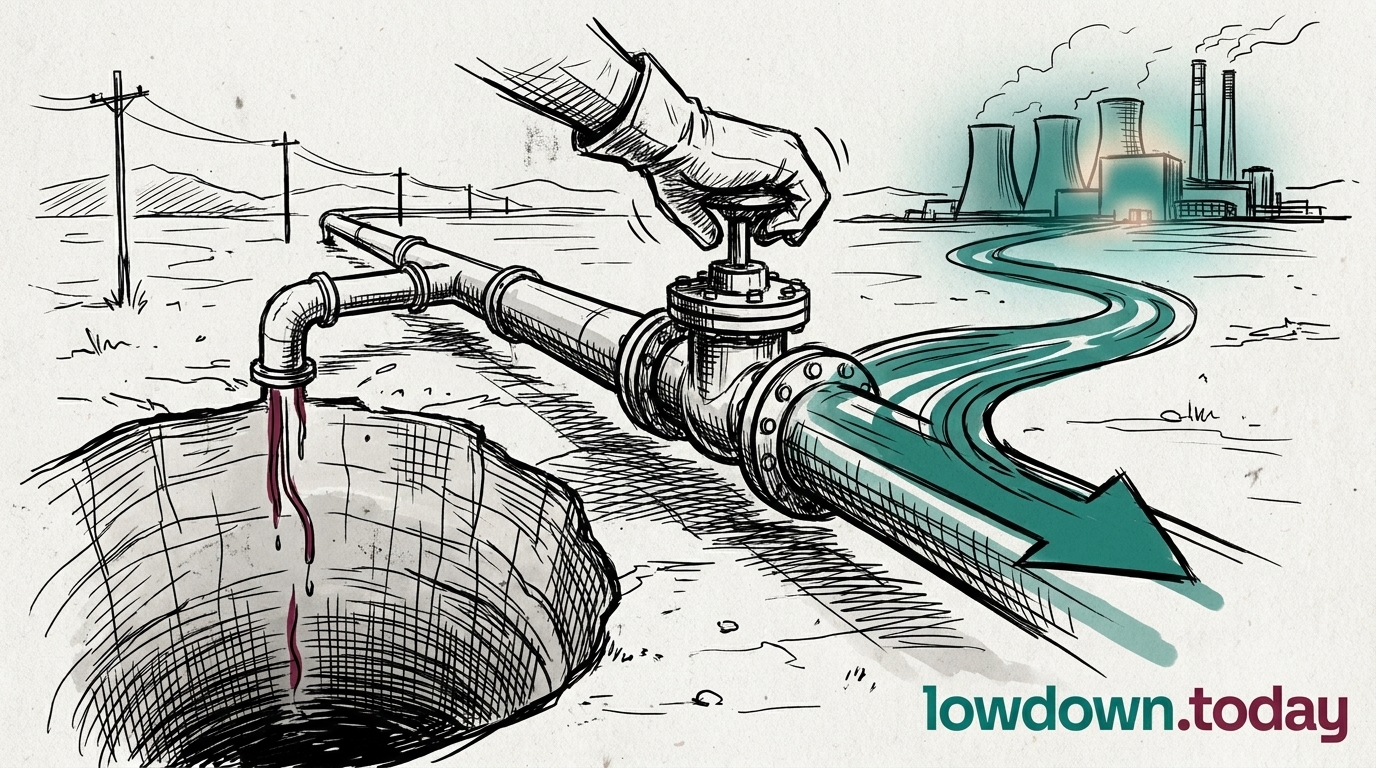
The rate structure inverts the usual order of protection. Charging four times as much on the part as on the whole aircraft penalises the importer who assembles in America and spares the one who ships a complete airframe in. A Chinese-made docking station cleared on 3 September costs twice what the same unit cost in August.

One clause reopens the door. A company with an approved US onshoring plan, with construction committed before 20 January 2029, may bring those components in duty-free while its factory goes up. Annex I therefore runs as two instruments at once: a penalty on the imported part and a tariff holiday for anyone laying foundations. The sorting is done by balance sheet, because only a firm that can commit construction capital reaches the exempt lane.

Readers of this topic were told in June that the Section 232 investigation had passed its statutory deadline with nothing published. The outcome is heavier than the trade press had priced, and it lands on parts and ground equipment rather than on finished aircraft alone.


Deep Analysis

In plain English

Section 232 is a US trade law that lets the president raise tariffs (import taxes) on goods judged a threat to national security, without needing a new act of Congress. President Trump used it here to tax imported drone parts at 100 per cent and finished drones at 25 per cent, starting 3 September. There is an escape route: a company that commits, before January 2029, to a plan for building the parts in the US instead of importing them can avoid the tariff entirely. The tariff is therefore less a wall than a deadline, pushing manufacturers to either pay more or build US factories.

Deep Analysis
Root Causes

The tariff sits on top of a drone component supply chain that remains heavily dependent on Chinese-origin motors, batteries and flight controllers even after two years of Pentagon pressure to remove them, so the duty-free carve-out for pre-2029 onshoring plans is effectively an admission that the domestic base cannot yet supply the volume the tariff would otherwise tax.

Layering the measure atop China's own licensing restriction five days earlier means US assemblers are now squeezed from both directions: slower Chinese shipments and, from 3 September, a 100 per cent duty on whatever does arrive.

What could happen next?
  • Consequence

    US drone assemblers face a 100 per cent duty on imported components from 3 September unless they have a qualifying onshoring plan in place, pushing costs onto buyers in the short term.

  • Precedent

    The duty-free carve-out for pre-2029 onshoring commitments sets a template other administrations could reuse: tariff as industrial-policy deadline rather than permanent trade barrier.

First Reported In

Update #17 · Two walls close on the drone supply chain

Federal Register· 20 Aug 2026
Read original →
Different Perspectives
Cross-border power traders
The France-Germany day-ahead spread flipped from a EUR 17.20 German premium on 1 August to a EUR 4.15 French premium on 3 August, the same day French curtailment peaked. They cannot yet attribute the flip to curtailment alone, since a like-for-like overnight comparison shows French nuclear output rising while wind fell and demand returned on the weekday step.
EDF
EDF
River-cooling limits took 7.6 GW, 12 per cent of its fleet, offline on 3 August, the highest curtailment since the heatwave began, with an easing forecast to 4.3 GW on 4 August and 3 GW after. It manages the cut as a recurring seasonal constraint, expecting it to lift with river temperature, not repair.
Gasunie
Gasunie
TTF, the Dutch hub it operates, drifted to roughly EUR 55 to 58 per MWh across the window, staying inside its recent range through both the German spark reversal and the French curtailment. It reads a flat hub price as evidence that neither event this window carried enough weight to move the fuel leg on its own.
German gas-fired generators
Record German solar of 18,761 MW on 2 August pushed the clean spark spread to minus 18.48 EUR/MWh, a loss-making day, before it returned to plus 16.20 on 3 August. They now price dispatch against post-solar residual load rather than wind alone, since the sign flipped inside 48 hours on unchanged fuel and carbon costs.
European Commission (DG Energy)
Its implementing-measures register logged transposition notices from only Portugal and Slovakia against Wednesday's Article 94 deadline for Directive (EU) 2024/1788, with 25 states silent. It expects the register to fill only gradually, since filing routinely lags legislating and any infringement track against non-notifying states runs on a slower clock than the deadline itself.
Spain's LNG terminal operators
Spain's 9,145 GWh terminal inventory is the largest single stock in the EU LNG network, an option value that can reroute cargoes wherever the winter strip pays best rather than a cavern gas obligation tied to a fixed date. That flexibility matters more as Germany's cavern shortfall pushes more of the winter security question onto import infrastructure.

Written with AI from Lowdown's published reporting. Not individually reviewed by an editor. Editorial standards.
