Skip to content
You can now search across every topic, entity and event.What's new
European Energy Markets
18JUN

Three accounts of one Doha room

2 min read
09:57UTC

Trump called the Doha talks positive and said Iran requested them; Baghaei said Tehran will not meet the Americans at any level; Qatar said Witkoff and Kushner met mediators, not Iranians.

EconomicDeveloping
Key takeaway

Three governments gave three accounts of one Doha round, and nothing signed exists to settle which is true.

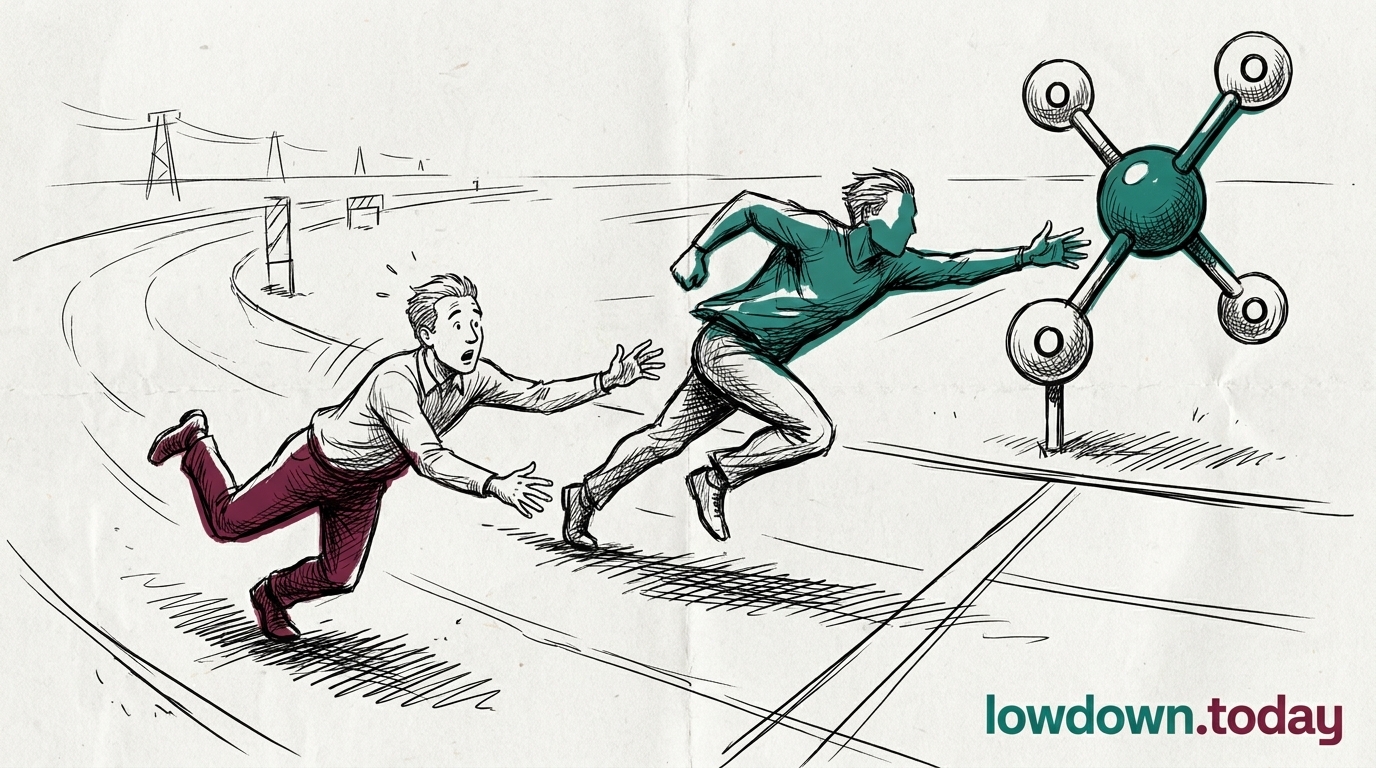
On 1 July, Washington, Tehran and Doha gave three irreconcilable accounts of the same negotiation in Qatar's capital. Donald Trump said Iran had "requested a meeting", and a senior US official told Bloomberg the technical talks were "positive and progressing" 1. Iran's foreign ministry spokesman Esmaeil Baghaei said the opposite: Tehran "will not have any negotiation meetings at any level with the American side in the coming days", and its delegation "has nothing to do with" the US visit 2.

Deputy foreign minister Kazem Gharibabadi called reports of technical working-group talks "not confirmed". Qatar backed neither version. Spokesman Majed al-Ansari said US envoys Steve Witkoff and Jared Kushner were meeting Qatari mediators, not Iranian officials 3. The two had flown in after the 29 June verbal halt in the fighting , and Iran had already fixed its posture, skipping the 28 June session and sending officials only to observe .

The $6 billion in frozen Iranian assets runs the same way. Masoud Pezeshkian claimed on 29 June that the funds, held in Qatar, would return to Tehran 4. Qatar and the United States contradicted him within a day: the money stays frozen and would move only "according to the advancement of negotiations" 56. A president announces a transfer its custodian says has not happened, over a meeting the counterparty denies attending.


Deep Analysis

In plain English

Three governments are describing the same meeting in Doha, Qatar, on 1 July, and telling three different stories about it. A senior US official called the talks 'positive and progressing'. Iran's foreign ministry spokesman, Esmaeil Baqaei, said Iran won't meet US officials at all in the coming days. Qatar, which is hosting and mediating, said the two American envoys, Steve Witkoff and Jared Kushner, only met the go-between mediators, not Iranian officials directly. The $6 billion mentioned is money Iran wants released from frozen accounts in Qatar. Doha says Iran only gets it if the wider talks keep moving. None of this is unusual for this kind of indirect diplomacy: each government can describe a closed-door session however it wants, because there is no shared, public record of what was actually said in the room.

Deep Analysis
Root Causes

The Islamabad MOU, signed 16 June, set up a shuttle format with Qatari and Pakistani mediators but did not require a joint communique after each round. Washington, Tehran and Doha are each free to brief their own press without contradicting a shared record.

Baqaei's flat denial also serves a domestic purpose. Iran's clerical establishment issued fresh statements the same day questioning whether the deal covers the Supreme Leader's demands, so a public 'no negotiations' line insulates Pezeshkian's team from an accusation of caving while the technical contact continues underneath it.

What could happen next?
  • Meaning

    Qatar's confirmation that Witkoff and Kushner met only the mediators, not Iranian officials directly, shows the US and Iran remain in indirect contact 15 days after the Islamabad MOU, with no upgrade to face-to-face talks.

  • Risk

    Baqaei's public 'not at any level' line gives Tehran's hardliners a talking point that could make any later concession look like a reversal, raising the domestic cost of compromise in the next round.

First Reported In

Update #142 · Doha: three stories, no signed paper

Al Jazeera· 1 Jul 2026
Read original
Different Perspectives
Cross-border power traders
The France-Germany day-ahead spread flipped from a EUR 17.20 German premium on 1 August to a EUR 4.15 French premium on 3 August, the same day French curtailment peaked. They cannot yet attribute the flip to curtailment alone, since a like-for-like overnight comparison shows French nuclear output rising while wind fell and demand returned on the weekday step.
EDF
EDF
River-cooling limits took 7.6 GW, 12 per cent of its fleet, offline on 3 August, the highest curtailment since the heatwave began, with an easing forecast to 4.3 GW on 4 August and 3 GW after. It manages the cut as a recurring seasonal constraint, expecting it to lift with river temperature, not repair.
Gasunie
Gasunie
TTF, the Dutch hub it operates, drifted to roughly EUR 55 to 58 per MWh across the window, staying inside its recent range through both the German spark reversal and the French curtailment. It reads a flat hub price as evidence that neither event this window carried enough weight to move the fuel leg on its own.
German gas-fired generators
Record German solar of 18,761 MW on 2 August pushed the clean spark spread to minus 18.48 EUR/MWh, a loss-making day, before it returned to plus 16.20 on 3 August. They now price dispatch against post-solar residual load rather than wind alone, since the sign flipped inside 48 hours on unchanged fuel and carbon costs.
European Commission (DG Energy)
Its implementing-measures register logged transposition notices from only Portugal and Slovakia against Wednesday's Article 94 deadline for Directive (EU) 2024/1788, with 25 states silent. It expects the register to fill only gradually, since filing routinely lags legislating and any infringement track against non-notifying states runs on a slower clock than the deadline itself.
Spain's LNG terminal operators
Spain's 9,145 GWh terminal inventory is the largest single stock in the EU LNG network, an option value that can reroute cargoes wherever the winter strip pays best rather than a cavern gas obligation tied to a fixed date. That flexibility matters more as Germany's cavern shortfall pushes more of the winter security question onto import infrastructure.



