Skip to content
You can now search across every topic, entity and event.What's new
European Energy Markets
18JUN

Qatar says the $6bn never left

2 min read
09:57UTC

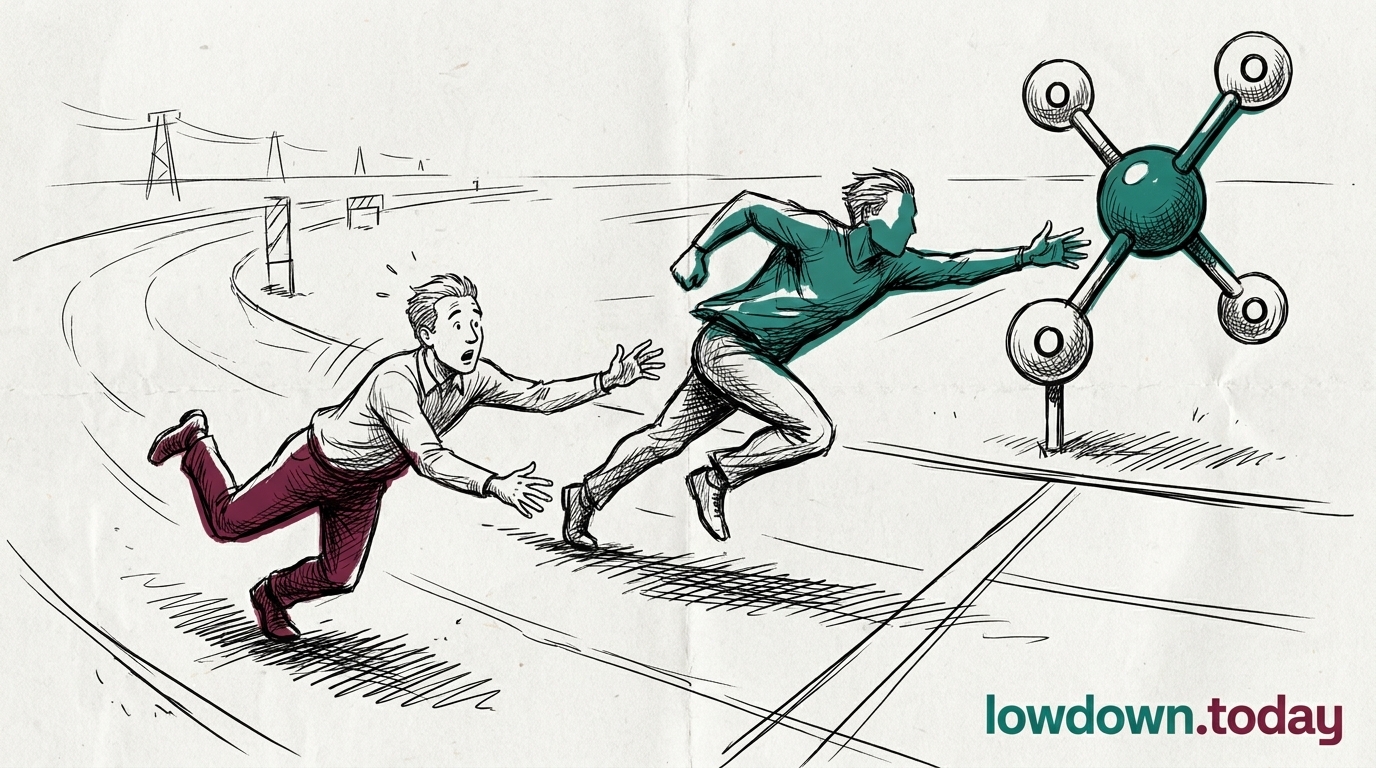
Qatar's Foreign Ministry said the $6bn tranche of Iranian funds it holds has not moved, directly contradicting President Masoud Pezeshkian's 29 June claim that the money was returning to Tehran.

EconomicDeveloping
Key takeaway

Qatar says Iran's $6bn remains frozen, spendable only on food and medicine through a US-supervised account.

Qatar's Foreign Ministry said on 3 July that the $6bn tranche of Iranian funds it holds remains frozen, directly contradicting President Masoud Pezeshkian, who claimed on 29 June that the money was returning to Tehran without US conditions 1. Any release depends on a US-Qatar-Iran mechanism, restricted to food and medicine, that has not been finalised.

The escrow unlocks only against approved humanitarian invoices, so even a signed deal would not put cash in Tehran's hands. It would let Iran draw down against wheat and medicine purchases run through a US-supervised account. Pezeshkian described a return of sovereign money; Doha described a spending line for food.

The account mirrors a 2023 arrangement in which $6bn of Iranian oil money sat in Qatar for humanitarian purchases before being refrozen, and the same food-and-medicine ringfence Washington set on the disputed $12bn tranche last week . Same custodian, same ledger, same reversibility. A president announcing a return of funds structured this way is describing an invoice line, not a transfer, which is the distinction Doha's rebuttal makes public. Pezeshkian's announcement is the second Iranian claim of a win this week that the paperwork does not support.


Deep Analysis

In plain English

Qatar has been holding billions of dollars of Iranian money that international sanctions froze. On 29 June, Iran's President Masoud Pezeshkian told the Iranian public that $6bn of that money was finally coming home, with no conditions attached. Qatar's Foreign Ministry said on 3 July that Pezeshkian's version is wrong. The $6bn is still frozen exactly where it was before. Qatar cannot release the funds without permission from the US Treasury, which has not been given, so Iran's president appears to have promised his own people something no one had actually agreed to.

Deep Analysis
Root Causes

Qatar's central bank holds the funds under US secondary-sanctions exposure, not Iranian ownership terms. Any release without an explicit Treasury licence risks Doha's own banks losing correspondent relationships with American institutions, a far larger cost to Qatar than the diplomatic friction of contradicting Pezeshkian.

That constraint has not changed since Qatar first confirmed in April that any release requires Treasury approval it has not granted. Pezeshkian has no authority over that process either. As a civilian president with no command role over the IRGC or the nuclear file, his public statements on sanctions relief are aimed at Iranian audiences rather than at commitments Washington or Doha are bound by.

First Reported In

Update #145 · Iran's heir skips the funeral built for him

Iran International· 4 Jul 2026
Read original
Causes and effects
This Event
Qatar says the $6bn never left
Qatar's rebuttal shows the $6bn is a US-supervised humanitarian spending line, not the returning sovereign cash Pezeshkian described to a domestic audience.
Different Perspectives
Cross-border power traders
The France-Germany day-ahead spread flipped from a EUR 17.20 German premium on 1 August to a EUR 4.15 French premium on 3 August, the same day French curtailment peaked. They cannot yet attribute the flip to curtailment alone, since a like-for-like overnight comparison shows French nuclear output rising while wind fell and demand returned on the weekday step.
EDF
EDF
River-cooling limits took 7.6 GW, 12 per cent of its fleet, offline on 3 August, the highest curtailment since the heatwave began, with an easing forecast to 4.3 GW on 4 August and 3 GW after. It manages the cut as a recurring seasonal constraint, expecting it to lift with river temperature, not repair.
Gasunie
Gasunie
TTF, the Dutch hub it operates, drifted to roughly EUR 55 to 58 per MWh across the window, staying inside its recent range through both the German spark reversal and the French curtailment. It reads a flat hub price as evidence that neither event this window carried enough weight to move the fuel leg on its own.
German gas-fired generators
Record German solar of 18,761 MW on 2 August pushed the clean spark spread to minus 18.48 EUR/MWh, a loss-making day, before it returned to plus 16.20 on 3 August. They now price dispatch against post-solar residual load rather than wind alone, since the sign flipped inside 48 hours on unchanged fuel and carbon costs.
European Commission (DG Energy)
Its implementing-measures register logged transposition notices from only Portugal and Slovakia against Wednesday's Article 94 deadline for Directive (EU) 2024/1788, with 25 states silent. It expects the register to fill only gradually, since filing routinely lags legislating and any infringement track against non-notifying states runs on a slower clock than the deadline itself.
Spain's LNG terminal operators
Spain's 9,145 GWh terminal inventory is the largest single stock in the EU LNG network, an option value that can reroute cargoes wherever the winter strip pays best rather than a cavern gas obligation tied to a fixed date. That flexibility matters more as Germany's cavern shortfall pushes more of the winter security question onto import infrastructure.



