Skip to content
You can now search across every topic, entity and event.What's new
European Energy Markets
18JUN

OFAC silent as sanctions licence lapses

4 min read
09:57UTC

General Licence V expired over the weekend, and on the first banking day after, OFAC posted no guidance on whether Hengli's last-minute restructure clears the 50% Rule. Four Chinese state banks must now decide for themselves.

EconomicDeveloping
Key takeaway

OFAC's unanswered 50% Rule question leaves four Chinese banks to self-adjudicate their dollar-clearing exposure.

The US Treasury's Office of Foreign Assets Control (OFAC), the sanctions bureau, posted no guidance on Monday 25 May about the Dalian Changxing ownership question, the first banking day after General Licence V (GL V) expired on 24 May 1. GL V was the OFAC authorisation that let banks wind down dealings with sanctioned Chinese refiner Hengli.

Days before the licence lapsed, Hengli moved 95% of its Singapore trading arm to Dalian Changxing International Trade Co., a Chinese state-linked entity, keeping just 5% . The arithmetic matters because of OFAC's 50% Rule: a company owned more than half by a blocked person is itself blocked automatically. At a 5% stake, Dalian Changxing sits below that line, but no OFAC document confirms the restructure clears it.

Monday 25 May fell on US Memorial Day, a federal holiday, so OFAC's offices were shut and the day's silence is partly a calendar accident. The deliberate-ambiguity reading does not rest on this one day: OFAC kept mainland Chinese refiners off its sanctions list across three prior rounds , a documented pattern that the holiday non-action does not itself prove.

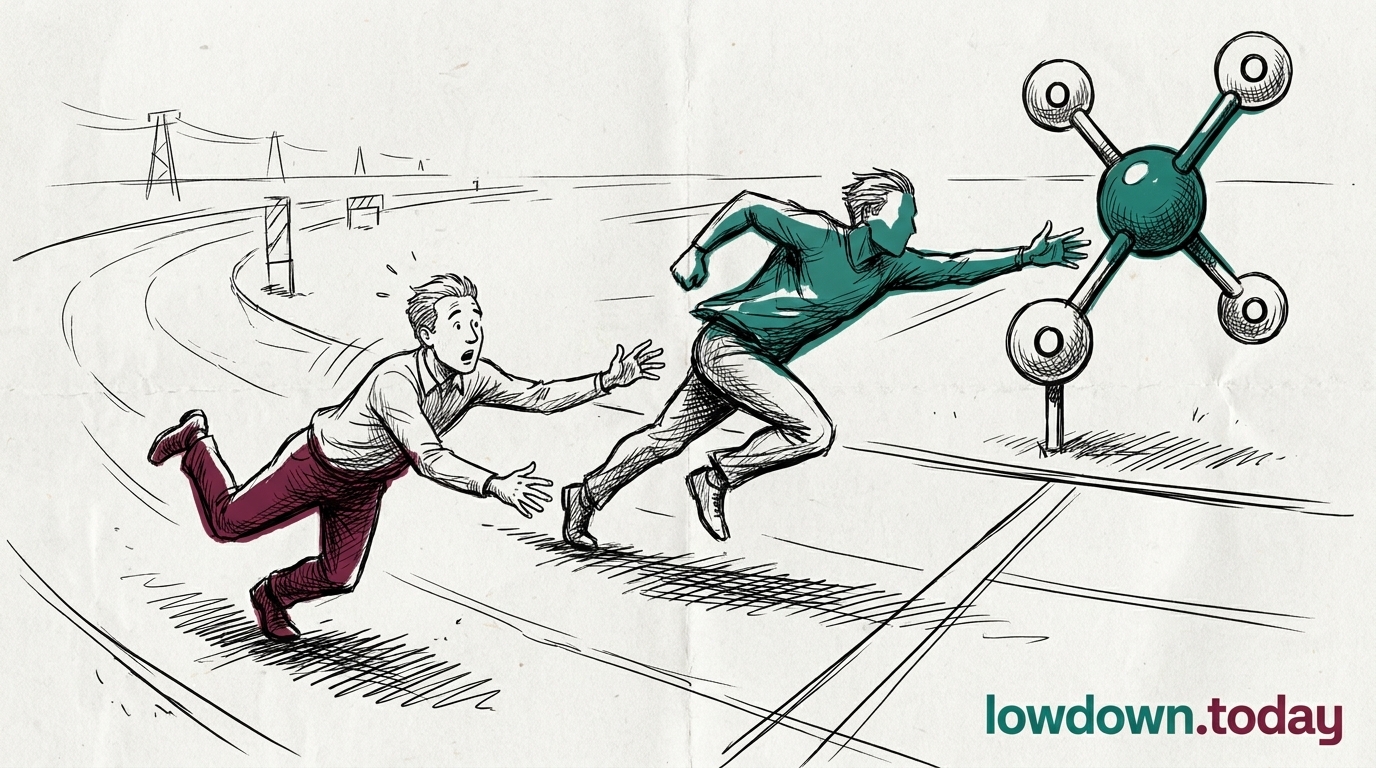
The banks cannot wait for the offices to reopen. Four Chinese state banks must decide, trade by trade, whether clearing dollar transactions for the restructured arm exposes them to secondary US sanctions, the penalty that cuts a foreign bank off from the dollar system . OFAC has published no safe-harbour they can point to. A wrong call on either side, freezing legitimate trade or clearing a still-blocked entity, carries a cost the banks alone now bear.


Deep Analysis

In plain English

The US Treasury's sanctions office, called OFAC (the Office of Foreign Assets Control), had placed a Chinese oil refinery called Hengli on its blocked list. That meant American banks, and most global banks that use American dollars, could not do business with it. Just before a special exemption expired, Hengli shifted most of its Singapore trading company into a different Chinese state-owned firm called Dalian Changxing. The idea was that the new owner is not on the blocked list, so trades should be allowed again. OFAC posted no guidance on 25 May. Four of China's biggest state banks now have to decide whether to process dollar trades for Dalian Changxing without knowing if doing so puts them at risk of US sanctions worth billions of dollars per institution.

Deep Analysis
Root Causes

OFAC's 50% Rule operates as an automatic algorithmic trigger: any entity 50% or more owned by a Specially Designated National (SDN) is treated as itself blocked, without a separate OFAC designation. OFAC does not vote or deliberate on each case; the threshold fires automatically on ownership data.

The Hengli-to-Changxing transfer exploited a structural gap in the rule: by dropping the designated entity's stake to exactly 5%, the restructured arm technically exits automatic blocking. But OFAC has the discretion to issue a formal determination letter stating that the restructure is a sham and the original block persists.

Its silence on Memorial Day left that determination un-issued, creating a 24-48 hour window in which banks self-adjudicate, and in which every trade they clear either sets or avoids a compliance precedent, without knowing which.

What could happen next?
  • Risk

    If ICBC chooses to clear Changxing trades and OFAC later issues a formal determination that the restructure was a sham, ICBC faces secondary-sanctions exposure on every transaction cleared in the window.

    Short term · Assessed
  • Consequence

    The MOFCOM blocking statute versus OFAC secondary-sanctions conflict, unresolved as of 25 May, forces Chinese state banks into a legal choice their boards cannot fully hedge.

    Immediate · Assessed
  • Precedent

    However ICBC and Bank of China resolve the Changxing question, their decision will become the de facto compliance standard for the full Chinese banking sector on similar OFAC grey-zone cases.

    Medium term · Assessed
First Reported In

Update #107 · Two markets, two prices on one Iran deal

OFAC / US Treasury· 25 May 2026
Read original
Different Perspectives
Cross-border power traders
The France-Germany day-ahead spread flipped from a EUR 17.20 German premium on 1 August to a EUR 4.15 French premium on 3 August, the same day French curtailment peaked. They cannot yet attribute the flip to curtailment alone, since a like-for-like overnight comparison shows French nuclear output rising while wind fell and demand returned on the weekday step.
EDF
EDF
River-cooling limits took 7.6 GW, 12 per cent of its fleet, offline on 3 August, the highest curtailment since the heatwave began, with an easing forecast to 4.3 GW on 4 August and 3 GW after. It manages the cut as a recurring seasonal constraint, expecting it to lift with river temperature, not repair.
Gasunie
Gasunie
TTF, the Dutch hub it operates, drifted to roughly EUR 55 to 58 per MWh across the window, staying inside its recent range through both the German spark reversal and the French curtailment. It reads a flat hub price as evidence that neither event this window carried enough weight to move the fuel leg on its own.
German gas-fired generators
Record German solar of 18,761 MW on 2 August pushed the clean spark spread to minus 18.48 EUR/MWh, a loss-making day, before it returned to plus 16.20 on 3 August. They now price dispatch against post-solar residual load rather than wind alone, since the sign flipped inside 48 hours on unchanged fuel and carbon costs.
European Commission (DG Energy)
Its implementing-measures register logged transposition notices from only Portugal and Slovakia against Wednesday's Article 94 deadline for Directive (EU) 2024/1788, with 25 states silent. It expects the register to fill only gradually, since filing routinely lags legislating and any infringement track against non-notifying states runs on a slower clock than the deadline itself.
Spain's LNG terminal operators
Spain's 9,145 GWh terminal inventory is the largest single stock in the EU LNG network, an option value that can reroute cargoes wherever the winter strip pays best rather than a cavern gas obligation tied to a fixed date. That flexibility matters more as Germany's cavern shortfall pushes more of the winter security question onto import infrastructure.



