Skip to content
You can now search across every topic, entity and event.What's new
European Energy Markets
15JUN

Ukraine cuts into Crimea's supply spine

2 min read
12:23UTC

Ukraine's Code 9.2 drone unit struck the Chonhar Bridge on 7 June as occupied Crimea cut petrol rationing to 20 litres per vehicle a week.

EconomicDeveloping
Key takeaway

Ukraine struck the Chonhar Bridge as Crimea cut petrol rationing to 20 litres a vehicle per week.

Occupied Crimea is now rationing petrol at 20 litres per vehicle a week, down from 20 litres a day, and the QR codes needed to buy it sold out within two hours on 7 June 1. ISW reports shortages of buckwheat, sugar, rice and flour spreading across the peninsula alongside the rationing. For ordinary drivers that means queuing for a code that buys barely a week's commuting.

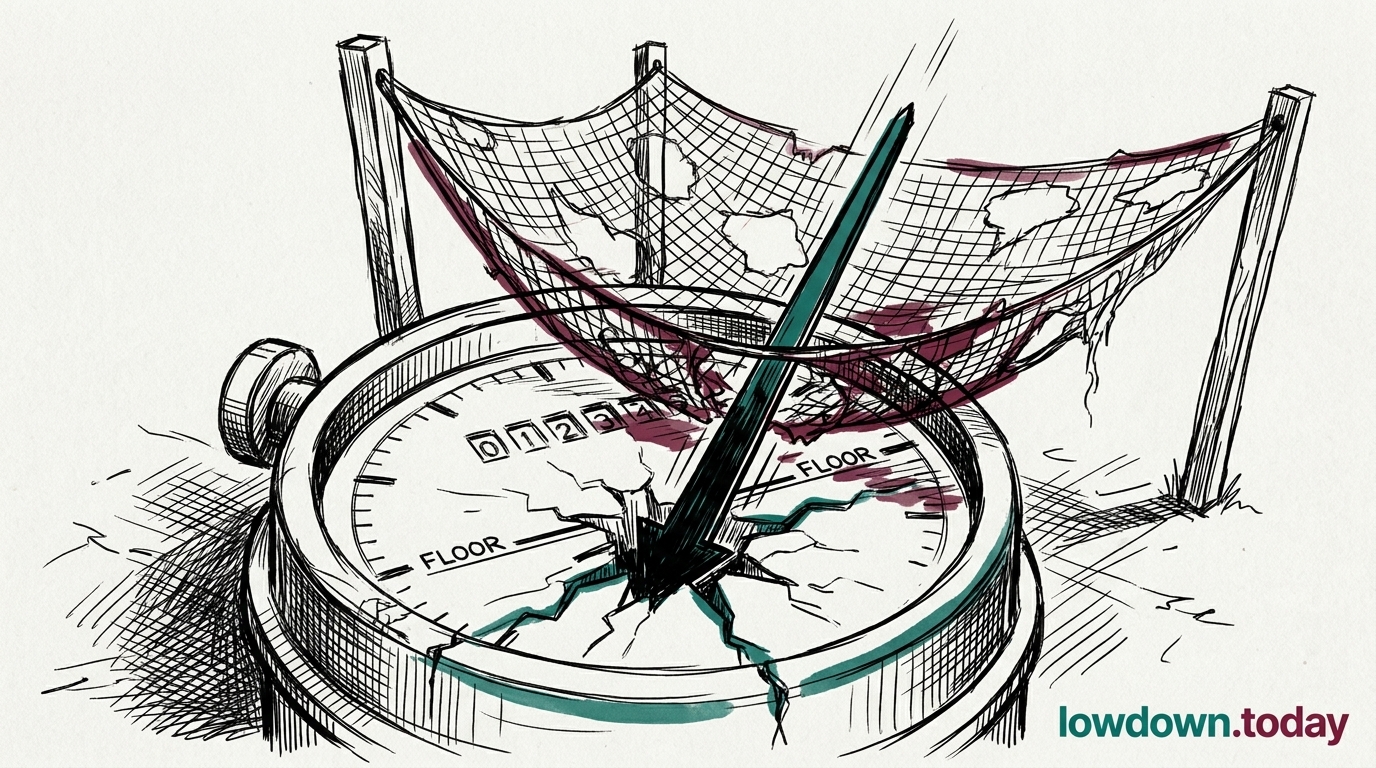
On 7 June, Ukraine's Code 9.2 drone unit struck the Chonhar Bridge, one of the road links from mainland Russia into Crimea, forcing traffic to reroute via Armyansk and adding roughly 130km to supply runs 2. A day earlier, ISW assessed Ukraine had achieved drone fire control over the T-22-09 land corridor, the route Russia opened in 2022 to bypass the Kerch bridge.

Russia can still resupply Crimea, yet the Kerch bridge, the T-22-09 corridor and now the Chonhar Bridge are each contested or lengthened. The squeeze is the same logic as Ukraine's strike on the Baltic Fleet and its run of net territorial gains since the spring : interdict the rear rather than batter a static front, and let the cost surface as queues and rationing far from the line of contact.


Deep Analysis

In plain English

Crimea is the Ukrainian peninsula Russia seized in 2014. Russia supplies it primarily by road across two bridges: the famous Kerch Bridge (which connects Crimea to mainland Russia across the Black Sea) and the smaller Chonhar Bridge (which connects Crimea to the Ukrainian mainland Russia now controls further north). Ukraine has repeatedly struck the Kerch Bridge in prior years. Striking the Chonhar Bridge now forces Russian supply convoys to take a much longer route via Armyansk in northern Crimea, adding roughly 130 kilometres of extra driving. Combined with the petrol ration being cut to 20 litres a week per vehicle (a seventh of what it was), civilian and military life on the peninsula is under severe supply pressure. The QR codes needed to buy fuel were selling out within two hours of release on 7 June.

Deep Analysis
Root Causes

Russia's Crimea logistics are structurally vulnerable because the peninsula has only two road corridors to the mainland controlled territory: Chonhar and Armyansk. The T-22-09 corridor was Russia's post-2022 bypass route after earlier Kerch Bridge damage.

Ukraine's drone reach now covers both routes simultaneously, a capability Ukraine did not have in 2022-23 when it relied on naval drones and cruise missiles. The 20-litres-per-week petrol ration is the downstream consequence of months of cumulative strike pressure on Crimea's supply chain.

What could happen next?
  • Consequence

    Russian military logistics to Crimea are degraded for as long as drone fire control over the T-22-09 corridor is maintained, raising the cost of every resupply run.

  • Risk

    Sustained Crimea supply pressure could force Russia to prioritise military over civilian fuel allocation, accelerating civilian discontent on the peninsula.

First Reported In

Update #19 · Ukraine burns the Baltic Fleet at Kronstadt

Institute for the Study of War· 9 Jun 2026
Read original
Different Perspectives
Spain's LNG terminal operators
Spain's 9,145 GWh terminal inventory is the largest single stock in the EU LNG network, an option value that can reroute cargoes wherever the winter strip pays best rather than a cavern gas obligation tied to a fixed date. That flexibility matters more as Germany's cavern shortfall pushes more of the winter security question onto import infrastructure.
European Commission
European Commission
Brussels holds the bloc to 90% on a flexible window while Germany, holding roughly a quarter of EU storage capacity, tracks toward missing its own lower 80% figure by 21 points. A national shortfall this size in the anchor market matters more to bloc security than the flexible timetable alone can absorb.
French power exporters and CRE
French day-ahead rose in step with Germany but by less, reopening a EUR 7-17 premium that makes northward export flows commercially attractive again after the EUR 43.09 discount evaporated in days. CRE separately authorised RTE and Enedis to buy flexibility locally, betting the coming winter's binding constraint is grid congestion rather than a shortage of firm capacity.
TTF trading desk
TTF trading desk
A visible national shortfall like Germany's 21-point gap is a directional signal, not noise, for a desk holding the summer-winter spread. TTF's flat EUR 58-60 range through this week's German price swings says the market has not yet chosen to reprice refill risk into the front of the curve.
German cavern and CCGT operators
German caverns kept buying prompt gas at TTF near EUR 58-60 through the inversion; the wind collapse to 2.4 GW then flipped the spark spread to plus EUR 29 and put turbines back in the same queue. Every day turbines win that bid, injection at a third of the 877 GWh/day pace needed falls further behind.
Slovakia
Slovakia
Slovakia says it dropped its hold-out on the 21st sanctions package only after Ursula von der Leyen personally signed written gas-price and supply guarantees. The Council of the European Union's own 17,238-character release on the package names neither Slovakia nor any guarantee, leaving Bratislava's account unconfirmed by the institutional record.



