Skip to content
You can now search across every topic, entity and event.What's new
European Energy Markets
15JUN

Three military options, no signed order

3 min read
12:23UTC

Donald Trump told reporters from the Oval Office on Monday 11 May that the ceasefire was on massive life support and called Iran's 10-point proposal a piece of garbage. Axios reported three military options on the table; the presidential-actions index logged zero new Iran instruments.

EconomicDeveloping
Key takeaway

Trump went hottest from the Oval Office on Monday and signed nothing; three military options sit as briefings, not orders.

Donald Trump told reporters from the Oval Office on Monday 11 May that the Iran ceasefire was on massive life support, characterised Tehran's 10-point counter-proposal as a piece of garbage and the weakest right now, and added that he had not even finished reading it 1. He said Iran would give the United States the nuclear dust. Iran Foreign Ministry spokesman Esmaeil Baqaei had defended the proposal as reasonable and responsible: end of war on all fronts, war-damage compensation, lifting of sanctions, removal of the oil-sales ban, Strait of Hormuz sovereignty and safe-passage guarantees, with no uranium handover provision in the published text 2.

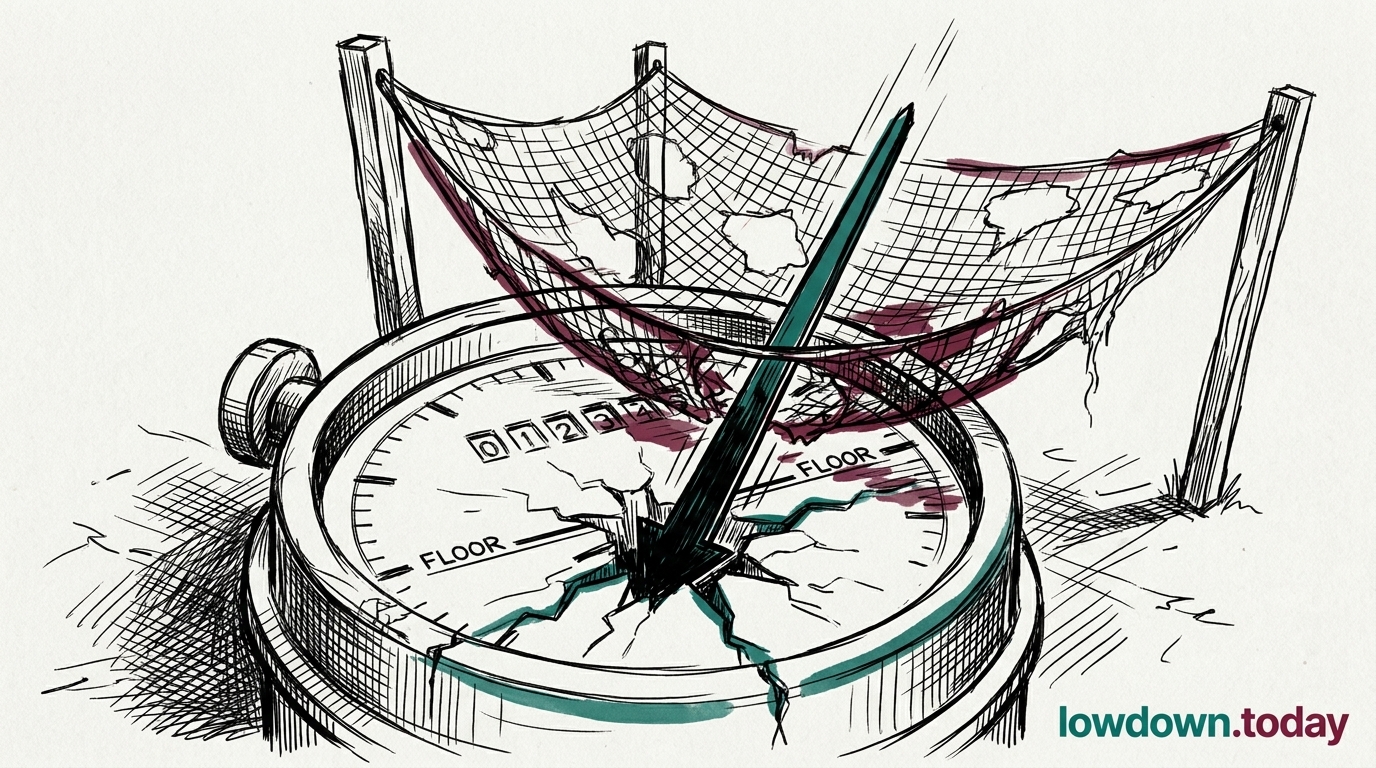
Axios reported, citing two unnamed US officials, that Trump was weighing three military options: resume bombing the remaining 25% of identified targets; a Special Forces operation to seize Iran's enriched uranium stockpile, requested by the Israeli government and one Trump was hesitant about due to high casualty risk; and a ground takeover of part of the strait of Hormuz to reopen commercial shipping 3. None of the three carries an executive order, a deployment directive or a United States Central Command (CENTCOM) operational order.

The White House presidential-actions index recorded no new Iran instrument on Monday. That is the 74-day pattern: the signing mechanism is operational (Trump signed a Cuba executive order on 1 May), but Iran-specific signing is a political choice the President has not made. The 1 May War Powers Resolution termination letter argued with same-day OFAC sanctions , the 8 May Truth Social run posted three contradictory positions in a single day , and Senator Lisa Murkowski cited the same paper-versus-post mismatch when she declined to file her AUMF on 9 May . Monday extended the pattern rather than breaking it.

The three options exist as Axios briefings, with no signed paper anchoring them. A strike directive issued on Trump's Friday return would land cold, without the documented chain of decision that prior US military operations carried. Six consecutive days have run with zero new signed Iran instruments while the President's verbal output has reached its loudest pitch of the war.


Deep Analysis

In plain English

Trump made a series of aggressive statements about Iran on 11 May. He said peace talks were barely alive, called Iran's negotiating proposal worthless, and suggested Iran would ultimately hand over its nuclear material; the 'nuclear dust' comment. Separately, a news website called Axios reported that US officials are weighing three possible military options: restarting the bombing campaign, sending Special Forces to seize Iran's enriched uranium, or taking control of part of the Strait of Hormuz by force. None of those options had been officially ordered. The gap between Trump's tough words and the absence of any signed orders is something Congress has noticed; Senator Lisa Murkowski has said she will not formally authorise military action until the White House produces a written plan with clear objectives.

Deep Analysis
Root Causes

The 1973 War Powers Resolution created a structural incentive for presidents to avoid paper commitments in conflict. If no executive instrument formally declares a military operation, the 60-day WPR clock never clearly starts. Trump's zero signed instrument track for 74 days exploits this ambiguity: verbal escalation signals intent without triggering the legal clock or requiring congressional authorisation.

The nuclear dust claim; that Iran would give the US the enriched uranium; has no verification mechanism. The IAEA has been locked out of Iranian nuclear facilities for eight months. Without IAEA access, any uranium surrender is unverifiable, which makes the claim function as a political statement rather than a concrete offer or threat.

Escalation

Trump's verbal escalation on 11 May is consistent with the established verbal-only pattern and does not represent a genuine escalation step without a signed instrument.

The Axios military options leak is directionally significant because it introduces the uranium-seizure and Hormuz ground-takeover concepts into the public record, raising their political cost if either is subsequently abandoned. The ceasefire 'life support' framing raises the baseline for what constitutes a credible deal.

What could happen next?
  • Risk

    Labelling the ceasefire 'on massive life support' publicly raises the cost of any subsequent deal: Trump must now credibly revive a framework he has pronounced near-dead.

    Short term · 0.8
  • Precedent

    Leaking three military options via Axios without executive orders demonstrates that public disclosure of option-space can function as a signalling tool that does not require a presidential signature.

    Medium term · 0.7
  • Consequence

    The Special Forces uranium-seizure option; even as a leaked consideration; forces Iran's IRGC to factor physical security of enriched uranium stockpiles into operational planning, regardless of whether the order is ever signed.

    Immediate · 0.65
First Reported In

Update #95 · OFAC opens the Hong Kong door

Al Jazeera· 12 May 2026
Read original
Different Perspectives
Spain's LNG terminal operators
Spain's 9,145 GWh terminal inventory is the largest single stock in the EU LNG network, an option value that can reroute cargoes wherever the winter strip pays best rather than a cavern gas obligation tied to a fixed date. That flexibility matters more as Germany's cavern shortfall pushes more of the winter security question onto import infrastructure.
European Commission
European Commission
Brussels holds the bloc to 90% on a flexible window while Germany, holding roughly a quarter of EU storage capacity, tracks toward missing its own lower 80% figure by 21 points. A national shortfall this size in the anchor market matters more to bloc security than the flexible timetable alone can absorb.
French power exporters and CRE
French day-ahead rose in step with Germany but by less, reopening a EUR 7-17 premium that makes northward export flows commercially attractive again after the EUR 43.09 discount evaporated in days. CRE separately authorised RTE and Enedis to buy flexibility locally, betting the coming winter's binding constraint is grid congestion rather than a shortage of firm capacity.
TTF trading desk
TTF trading desk
A visible national shortfall like Germany's 21-point gap is a directional signal, not noise, for a desk holding the summer-winter spread. TTF's flat EUR 58-60 range through this week's German price swings says the market has not yet chosen to reprice refill risk into the front of the curve.
German cavern and CCGT operators
German caverns kept buying prompt gas at TTF near EUR 58-60 through the inversion; the wind collapse to 2.4 GW then flipped the spark spread to plus EUR 29 and put turbines back in the same queue. Every day turbines win that bid, injection at a third of the 877 GWh/day pace needed falls further behind.
Slovakia
Slovakia
Slovakia says it dropped its hold-out on the 21st sanctions package only after Ursula von der Leyen personally signed written gas-price and supply guarantees. The Council of the European Union's own 17,238-character release on the package names neither Slovakia nor any guarantee, leaving Bratislava's account unconfirmed by the institutional record.



