Skip to content
You can now search across every topic, entity and event.What's new
European Energy Markets
15JUN

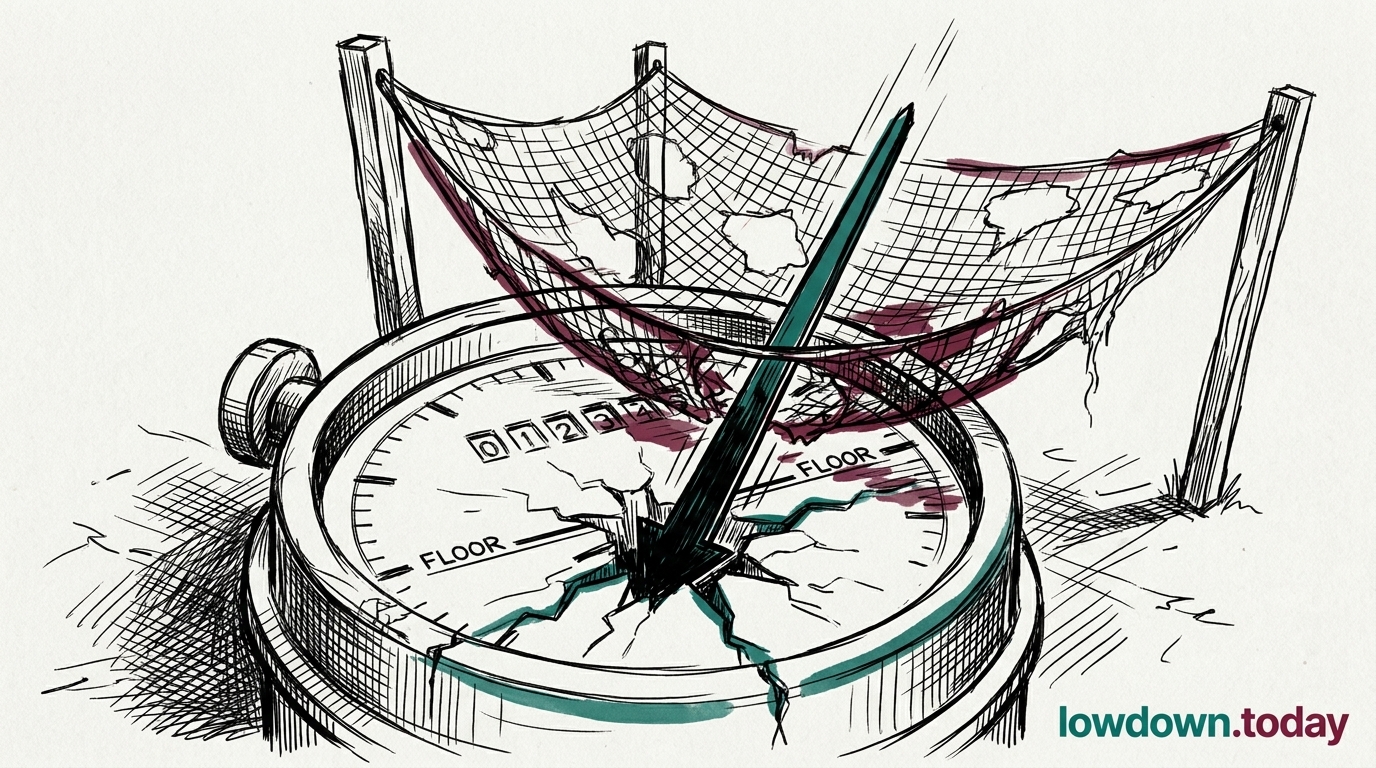
The dark fleet fakes an anchored ship

2 min read
12:23UTC

A sanctioned tanker loaded 1.87 million barrels at Kharg Island while faking an anchor-swing track that mimicked a parked ship, a spoof Windward says it had never documented before.

EconomicAssessed
Key takeaway

Iran's shadow tankers now fake the physics of anchoring, so only satellite imagery catches them loading crude.

An OFAC-sanctioned Guyana-flagged VLCC, a Very Large Crude Carrier, loaded an assessed 1.87 million barrels of Iranian crude at Kharg Island between 23 June and 4 July while broadcasting a fabricated position, according to Windward maritime intelligence 1. Kharg Island is Iran's main crude export terminal, and a VLCC carries about two million barrels, so this is close to a full cargo moved under sanctions. Rather than transmit a static false location, the 333-metre tanker faked an anchorage track that swung asymmetrically around a fixed point some 57 nautical miles to the west, mimicking the natural yaw of a ship riding its anchor chain.

The spoof exploits the rule enforcers use to flag suspect ships. An AIS, the Automatic Identification System transponder every vessel broadcasts, that sits perfectly motionless reads as suspicious; a slowly swinging track reads instead as a hull turning on its anchor in the current, so the automated filter clears it. Windward says it had not seen the pattern before this loading, and the fake was caught only when electro-optical satellite imagery contradicted the broadcast. Detecting evasion at Kharg now needs a photograph, no longer a signal alone.

The economic war runs underneath the kinetic one. Crude keeps loading even as OFAC winds down the waiver that let buyers pay for it , the same authorisation under which Iran had opened crude talks with Japan a week earlier . As the legal route to Iranian oil narrows, the covert one is adding techniques faster than stationary-position detection can follow.


Deep Analysis

In plain English

Ships are supposed to broadcast their location using a tracking system called AIS, which sanctions enforcers use to see which tankers are moving sanctioned oil. This tanker, flagged in Guyana and already under US sanctions, faked its AIS signal to look like it was anchored and not moving, while it was actually loading more than a million barrels of Iranian oil at Kharg Island, Iran's main oil export terminal. Analysts only caught the deception by comparing the fake signal against satellite photos, a method not seen used against this kind of trick before.

Deep Analysis
Root Causes

The approaching 17 July hard deadline on General License X1 creates a closing window that rewards concealment now: a tanker loading visibly before 17 July still risks OFAC designation, so operators have an incentive to mask the loading itself rather than simply accept sanctions exposure after the fact.

Electro-optical satellite imagery, not AIS data, caught the spoof, exposing a structural gap in sanctions monitoring: any system relying on a vessel's own broadcast position can be defeated by a vessel willing to fake it, which is why Windward needed a second, independent data source to catch this pattern at all.

First Reported In

Update #150 · Second US strike wave, first heavy toll

Investing.com / ICE· 9 Jul 2026
Read original
Causes and effects
This Event
The dark fleet fakes an anchored ship
A novel spoof that defeats stationary-position tracking pushes sanctions enforcement toward costly satellite imagery for every suspect cargo.
Different Perspectives
Spain's LNG terminal operators
Spain's 9,145 GWh terminal inventory is the largest single stock in the EU LNG network, an option value that can reroute cargoes wherever the winter strip pays best rather than a cavern gas obligation tied to a fixed date. That flexibility matters more as Germany's cavern shortfall pushes more of the winter security question onto import infrastructure.
European Commission
European Commission
Brussels holds the bloc to 90% on a flexible window while Germany, holding roughly a quarter of EU storage capacity, tracks toward missing its own lower 80% figure by 21 points. A national shortfall this size in the anchor market matters more to bloc security than the flexible timetable alone can absorb.
French power exporters and CRE
French day-ahead rose in step with Germany but by less, reopening a EUR 7-17 premium that makes northward export flows commercially attractive again after the EUR 43.09 discount evaporated in days. CRE separately authorised RTE and Enedis to buy flexibility locally, betting the coming winter's binding constraint is grid congestion rather than a shortage of firm capacity.
TTF trading desk
TTF trading desk
A visible national shortfall like Germany's 21-point gap is a directional signal, not noise, for a desk holding the summer-winter spread. TTF's flat EUR 58-60 range through this week's German price swings says the market has not yet chosen to reprice refill risk into the front of the curve.
German cavern and CCGT operators
German caverns kept buying prompt gas at TTF near EUR 58-60 through the inversion; the wind collapse to 2.4 GW then flipped the spark spread to plus EUR 29 and put turbines back in the same queue. Every day turbines win that bid, injection at a third of the 877 GWh/day pace needed falls further behind.
Slovakia
Slovakia
Slovakia says it dropped its hold-out on the 21st sanctions package only after Ursula von der Leyen personally signed written gas-price and supply guarantees. The Council of the European Union's own 17,238-character release on the package names neither Slovakia nor any guarantee, leaving Bratislava's account unconfirmed by the institutional record.



