Skip to content
You can now search across every topic, entity and event.What's new
European Energy Markets
15JUN

Russia oil revenue -38% as Q1 deficit hits ceiling

4 min read
12:23UTC

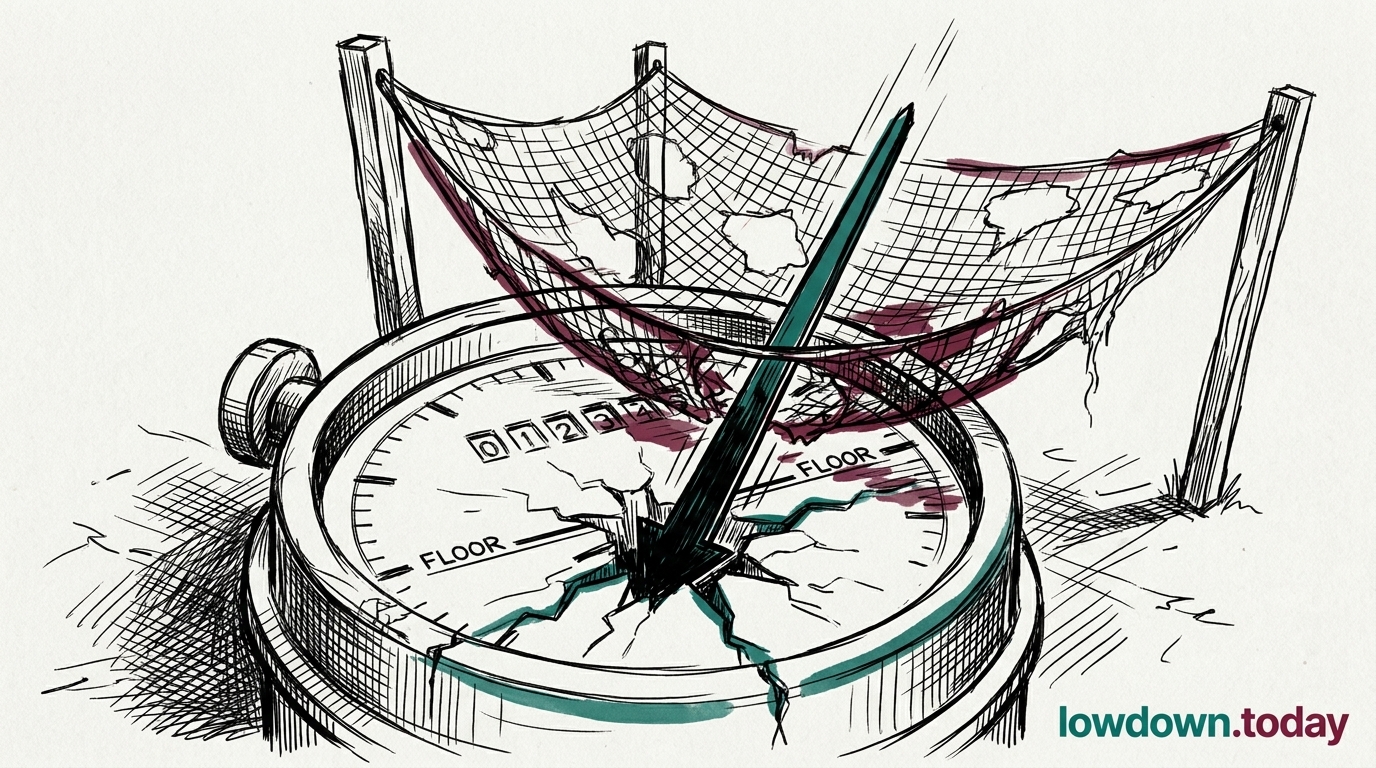
Russia's Finance Ministry published data on 8 May showing oil and gas revenues fell 38.3% year-on-year in January-April 2026 to 2.3 trillion roubles, while federal spending rose 15.7% and the Q1 deficit alone exceeded the full-year target.

EconomicDeveloping
Key takeaway

Russia's Q1 deficit already exceeded its full-year target; Brent at $107 maximises the cost of every blocked cargo.

Russia's Finance Ministry published quarterly data on 8 May 2026 showing oil and gas budget revenues fell 38.3% year-on-year in January-April to 2.3 trillion roubles ($30.77bn) 1. The government's baseline assumption was 2.8 trillion roubles, at an implied $59/barrel Urals; the actual figure suggests Urals averaged closer to $45-50/barrel once volume losses are factored in, not the headline Brent figure.

The spending side moved the other way. Federal expenditure rose 15.7% year-on-year to 17.6 trillion roubles over the same period, driven by defence allocations. The Q1 budget deficit alone exceeded the full-year target, a figure the Finance Ministry published without editorial comment 2. Russia's National Wealth Fund (NWF) held $49.1 billion in liquid assets on 1 May; the Finance Ministry is purchasing 110 billion roubles in NWF assets in May to recapitalise. That is a balance-sheet transfer that moves liquid cover from one government account to another, making the NWF position look healthier while draining the underlying buffer.

Economic Development Minister Maxim Reshetnikov warned in late April that the NWF's liquid share could fall to roughly $12.5 billion by year-end . The 8 May data confirms the trajectory that warning implied. Ukraine's strikes had reduced Russian refinery throughput to a 16-year low in early May , compounding the structural volume loss from shadow fleet SDN exposure and the Druzhba Kazakh transit halt.

Brent at $107/barrel, elevated partly by the Iran ceasefire wobble, sits at the heart of the paradox. Each Russian barrel that cannot leave legally earns nothing while a barrel that can leave earns roughly $82-87 at the Urals discount. High oil prices make blocked volume maximally costly; Russia earns more per barrel precisely as the volume constraint tightens. The second half of 2026, against a military budget growing at 15.7% on a 38.3%-smaller oil revenue base, runs the arithmetic in one direction.


Deep Analysis

In plain English

Russia funds its war partly through money it earns selling oil and gas. In the first four months of 2026, those earnings fell by 38% compared to the year before, largely because Ukraine has been hitting Russian export infrastructure and Western countries have been blocking Russian oil shipments. Russia has a savings account called the National Wealth Fund, used when revenues drop. That fund stood at about $49 billion at the start of May. But the government is spending far more than it earns, and the savings are being drawn down faster than expected. One of Russia's own ministers warned the liquid part of the fund could be nearly empty by the end of 2026. That would not end the war immediately, but it would force Moscow to make difficult choices about what it can afford.

What could happen next?
  • Consequence

    NWF depletion to the $12.5 billion projected year-end level would trigger a structural spending debate inside Moscow, with potential cuts to social programmes, military procurement, or both, creating domestic political pressure Putin has not faced since 2022.

  • Risk

    If oil prices fall from their Iran-war premium as sanctions stabilise, Russia's revenue shortfall deepens, making the fiscal constraint binding sooner than the year-end projection.

First Reported In

Update #16 · 800 drones, three ceasefires, one cliff

TASS / Russian Finance Ministry· 13 May 2026
Read original
Different Perspectives
Spain's LNG terminal operators
Spain's 9,145 GWh terminal inventory is the largest single stock in the EU LNG network, an option value that can reroute cargoes wherever the winter strip pays best rather than a cavern gas obligation tied to a fixed date. That flexibility matters more as Germany's cavern shortfall pushes more of the winter security question onto import infrastructure.
European Commission
European Commission
Brussels holds the bloc to 90% on a flexible window while Germany, holding roughly a quarter of EU storage capacity, tracks toward missing its own lower 80% figure by 21 points. A national shortfall this size in the anchor market matters more to bloc security than the flexible timetable alone can absorb.
French power exporters and CRE
French day-ahead rose in step with Germany but by less, reopening a EUR 7-17 premium that makes northward export flows commercially attractive again after the EUR 43.09 discount evaporated in days. CRE separately authorised RTE and Enedis to buy flexibility locally, betting the coming winter's binding constraint is grid congestion rather than a shortage of firm capacity.
TTF trading desk
TTF trading desk
A visible national shortfall like Germany's 21-point gap is a directional signal, not noise, for a desk holding the summer-winter spread. TTF's flat EUR 58-60 range through this week's German price swings says the market has not yet chosen to reprice refill risk into the front of the curve.
German cavern and CCGT operators
German caverns kept buying prompt gas at TTF near EUR 58-60 through the inversion; the wind collapse to 2.4 GW then flipped the spark spread to plus EUR 29 and put turbines back in the same queue. Every day turbines win that bid, injection at a third of the 877 GWh/day pace needed falls further behind.
Slovakia
Slovakia
Slovakia says it dropped its hold-out on the 21st sanctions package only after Ursula von der Leyen personally signed written gas-price and supply guarantees. The Council of the European Union's own 17,238-character release on the package names neither Slovakia nor any guarantee, leaving Bratislava's account unconfirmed by the institutional record.



