Skip to content
You can now search across every topic, entity and event.What's new
European Energy Markets
15JUN

Hammerfest runs two live outages at once

3 min read
12:23UTC

Equinor stacked a fresh 13-16 June maintenance window on top of the unresolved compressor fault that has kept Hammerfest LNG dark since 22 April, putting two live outages on one plant at once.

EconomicDeveloping

Equinor began a fresh planned maintenance window at Hammerfest LNG (4.3 mtpa), rescheduled from 8-11 to 13-16 June, layered on top of the unresolved compressor fault that has kept the Arctic plant dark since 22 April 1. Hammerfest is Norway's only seaborne LNG export terminal, on Melkoya island; Equinor is the state-majority operator and Europe's dominant gas supplier. For the first time the plant carries two distinct, simultaneously active stoppages rather than one prolonged outage.

Norwegian seaborne send-out into north-west Europe is therefore suppressed across the entire pre-ban window. Equinor's Troll A compressor fault of the same class ran 24 days past its first restart date , and a parallel Troll outage layered cuts the same way in late May , so a fault stacked under planned maintenance carries a real overrun risk rather than a clean 16 June return.

Equinor's doubly offline export terminal removes Norwegian volume outright, the kind of supply loss that would normally bid the front, yet the benchmark fell anyway through the same window. Where the LNG arb diverts flexible cargoes by spread, Hammerfest subtracts firm Norwegian molecules by fault, and neither lifted the price. That is the clearest evidence in the briefing that demand destruction, not supply, is setting the prompt into the binding date.


Deep Analysis

In plain English

Hammerfest is Norway's only LNG export terminal, sitting inside the Arctic Circle on an island called Melkoya. It liquefies natural gas from the Snohvit gas field in the Barents Sea, cooling it to -161 degrees Celsius so it can be loaded onto tankers and shipped to Europe. In mid-June 2026, the terminal was dealing with two separate problems at the same time for the first time. An older compressor fault that had been running since late April was still unresolved. Equinor, the Norwegian company that operates it, then stacked a fresh planned maintenance window on top of that, running 13-16 June. Two live stoppages simultaneously means the terminal was producing no LNG at all through the run-up to the EU pipeline ban deadline on 17 June, removing Norwegian seaborne supply from north-west European markets at the worst possible time for storage filling.

What could happen next?
  • Risk

    Hammerfest's documented history of maintenance overruns on the same compressor class means the 10 July 2026 return target carries non-trivial extension risk into late July or August, extending the Norwegian LNG supply gap through the peak injection window.

  • Consequence

    Two concurrent Hammerfest stoppages coinciding with the JKM arb pulling Atlantic cargoes east creates the worst-case combination for EU summer injection: the one Norwegian LNG supply source offline at precisely the moment flexible Atlantic cargoes are redirected away from Europe.

First Reported In

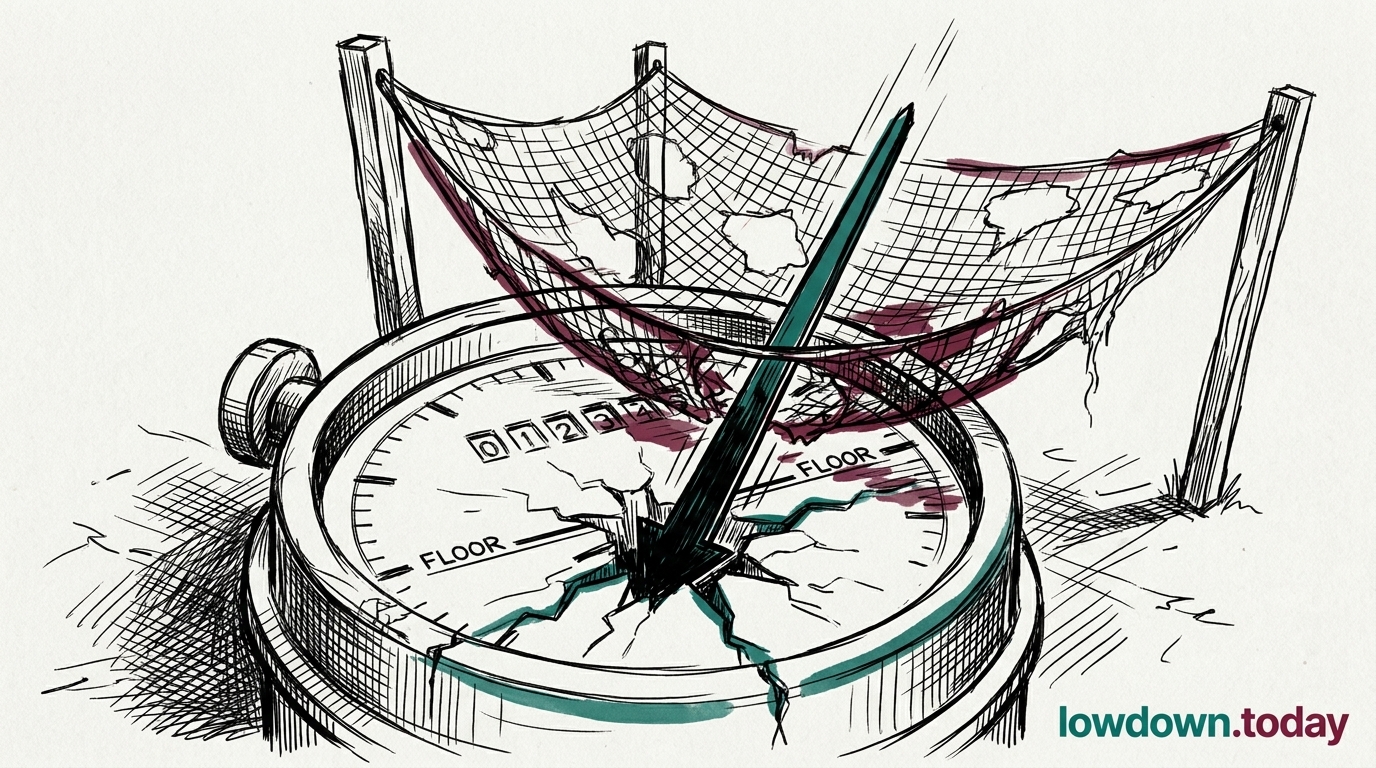
Update #18 · TTF breaks the floor into the import ban

LNG Prime· 15 Jun 2026
Read original
Different Perspectives
Equinor
Equinor
Equinor stacked a 13-16 June planned maintenance window on Hammerfest LNG directly atop the unresolved compressor fault running since 22 April, creating two simultaneous live stoppages at 4.3 mtpa capacity for the first time. The 10 July return target carries overrun risk: the same compressor class slipped 24 days in the 2025 maintenance cycle.
EDF and French nuclear-anchored power buyers
EDF's fleet repriced French July contracts roughly 10% in two days on cooling-water curtailment risk, flipping the FR-DE spread to France EUR 1.6 above Germany after a EUR 96.20 record in the other direction a week earlier. Industrial buyers long France against short Germany face EUR 97.7/MWh of spread swing in seven calendar days.
Hungary and Slovakia supply-security ministries
Hungary's Tisza government has reframed Russian gas dependency as a systemic risk, removing Budapest as a co-plaintiff in the CJEU challenge; MVM's 3.5 bcm long-term TurkStream contract remains exempt to September 2027, so Budapest's near-term supply is intact. Slovakia under Fico presses its QMV challenge alone and faces a 3-4 bcm/year short-term supply gap with no contracted LNG alternative.
LNG spot traders and cargo routers
At JKM-TTF of USD 5.26/MMBtu, every uncommitted Atlantic cargo loading in late June routes east; the arb sits roughly twice the OIES-assessed diversion threshold of USD 2.50-3.00/MMBtu after freight. European storage terminals are the losing bid in the cargo auction until TTF recovers or JKM eases.
European Commission / ACER
The Commission structured Regulation 2026/261 as a QMV trade measure to resist Article 194 unanimity challenges; the six-origin prior-authorisation waiver acknowledges that LNG capacity cannot substitute pipeline gas within the legislative window. ACER's cross-border enforcement powers activate in H2 2026, but jurisdiction over the Kipi entry point is legally contested.
German CCGT capacity planners
Capacity planners at Uniper and RWE face the StromVKG Wirtschaftsausschuss scrutiny as the decisive near-term fork: if the Greens' hydrogen-conversion amendment passes, the September 2026 auction becomes unbiddable on technology risk grounds and the capacity-payment fix delays into winter. Plants that have run at -EUR 44 spark spread for weeks cannot commercially sustain extended shut-in.



