Skip to content
You can now search across every topic, entity and event.What's new
European Energy Markets
15JUN

France's G7 text drops cloud sovereignty

3 min read
12:23UTC

The G7 Digital Ministerial Declaration, signed at Bercy in Paris on 29 May under French chairmanship, contained no mention of cloud sovereignty, CAIDA, or restrictions on US cloud providers.

EconomicDeveloping
Key takeaway

France chaired the G7 and left cloud sovereignty out of the text, exposing CAIDA's lack of international support.

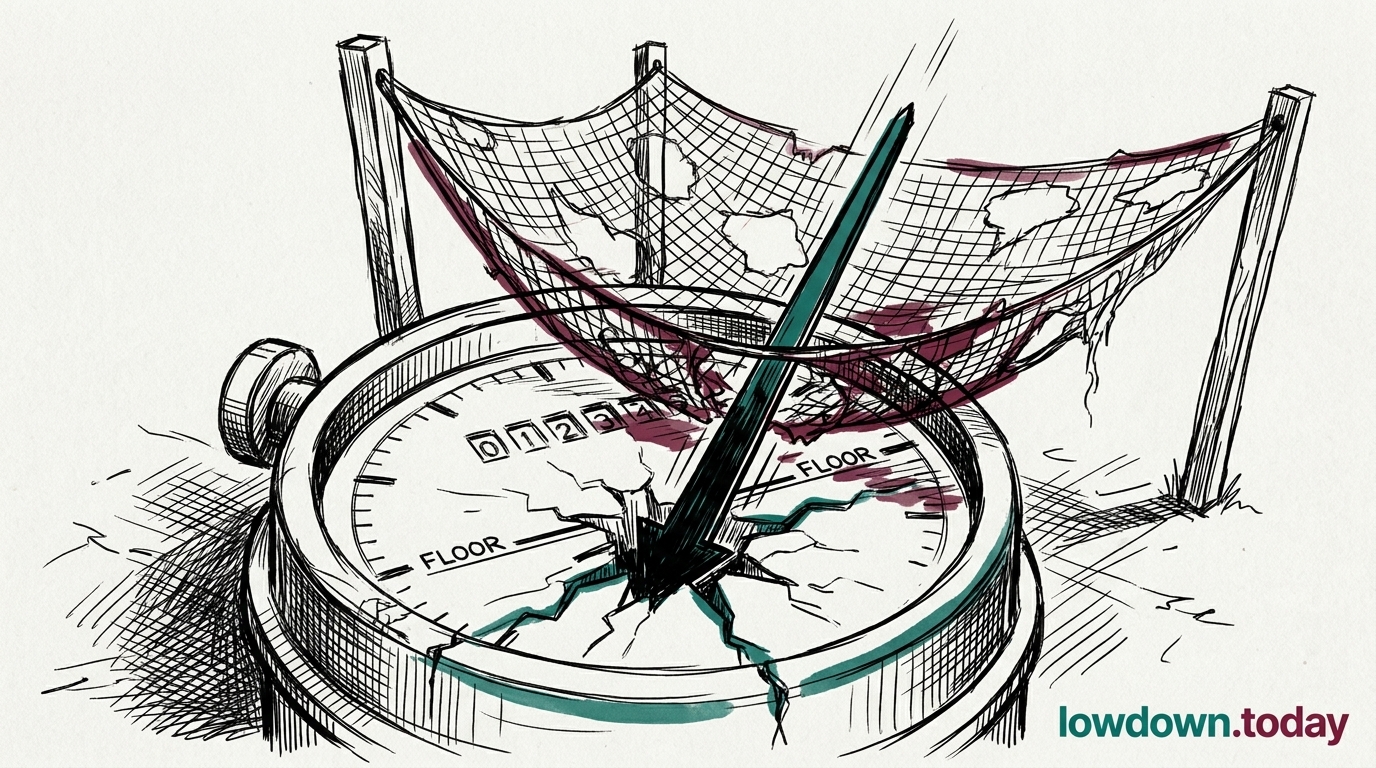
The G7 Digital and Technology Ministerial Declaration, signed at Bercy in Paris on Friday 29 May under French chairmanship, contained no mention of cloud sovereignty, CAIDA, or restrictions on US cloud providers 1. The G7 is the bloc of seven leading advanced economies; its digital ministers had gathered to agree shared priorities. The four they signed were AI security, AI openness for smaller firms, digital-sector resilience, and child safety online. The text held to the Hiroshima AI Process, the G7's 2023 AI-safety framework, rather than to France's own "Cloud au Centre" doctrine.

The signed communique confirmed what the ministerial agenda had already foreshadowed . The two frames in play do not combine: the Hiroshima AI Process treats AI as a safety problem to be governed cooperatively, while the sovereignty frame treats US cloud dominance as a strategic dependency to be reduced. A room containing the United States and Japan would accept only the first. France, chairing without an adopted package to table , had no instrument to defend and chose the text its partners could sign.

That choice is the measure of CAIDA's international isolation. The country leading the sovereignty argument inside the EU would not, or could not, carry it into a venue where Washington could object. The law's strongest advocate declined to defend it where defending it had a cost, which leaves Brussels adopting an instrument no G7 communique endorses.


Deep Analysis

In plain English

The G7 is a group of seven major democracies, including France, Germany, the US, the UK and Japan, that meet regularly to coordinate policy. In late May 2026, France chaired a G7 meeting specifically on digital technology in Paris. France had been expected to use the meeting to push other G7 members toward its vision of digital sovereignty, which involves restricting American cloud companies from handling sensitive data. Instead, the final agreed statement said nothing about cloud sovereignty at all. The four topics everyone agreed on were AI safety, helping smaller businesses use AI, protecting children online, and making digital systems more resilient against outages and attacks.

Deep Analysis
Root Causes

The Bercy outcome has two structural causes unrelated to French diplomatic skill. First, the G7 digital ministerial has no enforcement mechanism: it produces declarations, not binding instruments. This means the only value of sovereignty language in the text would be signalling and precedent, and France judged the signalling value insufficient to fight for against US opposition.

Second, France chaired without an adopted Tech Sovereignty Package to put on the table. CAIDA's fourth consecutive slip meant France had no legislative fact to anchor sovereignty language to. A G7 presidency cannot credibly demand international recognition of a doctrine its own Commission has failed to legislate in four attempts. France removed cloud sovereignty from the agenda because CAIDA's fourth slip left it without a legislative fact to anchor any sovereignty demand to.

What could happen next?
  • Consequence

    The Bercy precedent reduces the probability that a future G7 digital ministerial will include cloud-sovereignty language, even after CAIDA adopts, because the US will cite the Bercy silence as the baseline.

    Medium term · Reported
  • Risk

    A French presidency that could not secure sovereignty language at its own G7 ministerial weakens the diplomatic credibility of EU arguments at the WTO and in bilateral EU-US digital trade talks.

    Short term · Reported
  • Meaning

    The Hiroshima AI Process framework, which the Bercy declaration reaffirmed, was authored under Japanese presidency and does not include EU sovereignty positions; Bercy's reaffirmation locks the G7 to that baseline for another cycle.

    Long term · Assessed
First Reported In

Update #7 · Sovereignty arrives, minus Brussels

G7 France· 3 Jun 2026
Read original
Different Perspectives
Spain's LNG terminal operators
Spain's 9,145 GWh terminal inventory is the largest single stock in the EU LNG network, an option value that can reroute cargoes wherever the winter strip pays best rather than a cavern gas obligation tied to a fixed date. That flexibility matters more as Germany's cavern shortfall pushes more of the winter security question onto import infrastructure.
European Commission
European Commission
Brussels holds the bloc to 90% on a flexible window while Germany, holding roughly a quarter of EU storage capacity, tracks toward missing its own lower 80% figure by 21 points. A national shortfall this size in the anchor market matters more to bloc security than the flexible timetable alone can absorb.
French power exporters and CRE
French day-ahead rose in step with Germany but by less, reopening a EUR 7-17 premium that makes northward export flows commercially attractive again after the EUR 43.09 discount evaporated in days. CRE separately authorised RTE and Enedis to buy flexibility locally, betting the coming winter's binding constraint is grid congestion rather than a shortage of firm capacity.
TTF trading desk
TTF trading desk
A visible national shortfall like Germany's 21-point gap is a directional signal, not noise, for a desk holding the summer-winter spread. TTF's flat EUR 58-60 range through this week's German price swings says the market has not yet chosen to reprice refill risk into the front of the curve.
German cavern and CCGT operators
German caverns kept buying prompt gas at TTF near EUR 58-60 through the inversion; the wind collapse to 2.4 GW then flipped the spark spread to plus EUR 29 and put turbines back in the same queue. Every day turbines win that bid, injection at a third of the 877 GWh/day pace needed falls further behind.
Slovakia
Slovakia
Slovakia says it dropped its hold-out on the 21st sanctions package only after Ursula von der Leyen personally signed written gas-price and supply guarantees. The Council of the European Union's own 17,238-character release on the package names neither Slovakia nor any guarantee, leaving Bratislava's account unconfirmed by the institutional record.



