Skip to content
You can now search across every topic, entity and event.What's new
European Energy Markets
15JUN

EU's 21st sanctions package stalls again

1 min read
12:23UTC

The EU's 21st Russia sanctions package failed to clear Coreper on 15 July. Greece wants LNG re-export rights preserved; Austria wants a Deripaska-linked firm delisted.

EconomicDeveloping
Key takeaway

Watch which carve-outs make the final text, not whether the twenty-first package clears.

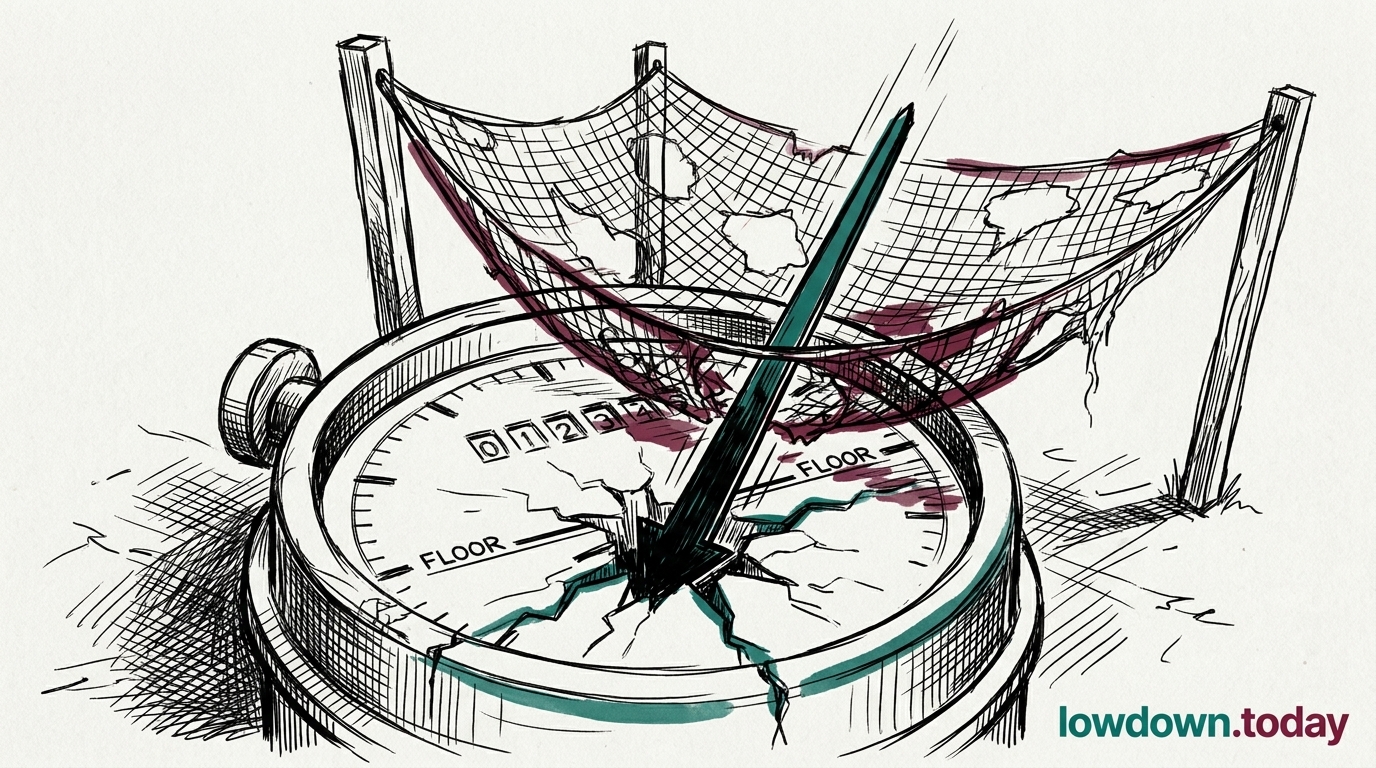
The European Union's 21st Russia sanctions package failed to clear Coreper, the committee of member states' permanent representatives in Brussels, on 15 July, with negotiators setting a new target of 22 July rather than letting it slip to autumn 1. Greece wants to preserve re-export rights for Russian liquefied natural gas. Austria wants Rasperia, an investment firm linked to the sanctioned aluminium magnate Oleg Deripaska, removed from the list so that frozen assets can be used to compensate Raiffeisen Bank International.

Neither objection is an argument about whether to pressure Moscow. Both are domestic commercial interests: Greek shipping's role in moving cargoes that pass through Europe rather than remaining in it, and Raiffeisen's search for compensation against its Russian exposure. Sanctions packages pass by unanimity, so a commercial interest in one member state carries the same stopping power as a strategic objection in another.

Each round of unanimity leaves its mark on the text. Holdouts extract a carve-out, the carve-out persists into later packages because reopening settled wording costs another round of unanimity, and the enforcement surface narrows even as the number on the package climbs. Brussels has been tightening on paper while Washington has been loosening in practice, most recently by letting its crude oil waiver lapse unrenewed . Whether Greece's LNG exemption and Austria's Rasperia demand survive into the final wording is the part worth watching on 22 July, not whether the package passes.


Deep Analysis

In plain English

The European Union tries to pass new rounds of sanctions against Russia as a package, and this one, the 21st since the war began, failed to get the votes it needed at a meeting in Brussels on 15 July. Two countries are blocking it for different reasons: Greece wants to keep the right to re-export Russian liquefied natural gas to other countries, and Austria wants a specific investment firm removed from the sanctions list so its frozen assets can be used to compensate an Austrian bank that lost money doing business with it. EU sanctions need every member country to agree, so either objection alone is enough to stop the whole package. A new vote is set for 22 July.

Deep Analysis
Root Causes

The package's two holdouts trace to different national exposures rather than a shared objection: Greece's shipping industry depends on revenue from re-exporting Russian LNG to third countries, while Austria's block is a compensation mechanism for Raiffeisen Bank International's frozen Russian exposure via Rasperia. Clearing the package therefore requires satisfying two unrelated national balance-sheet problems, not resolving one disputed principle.

Each objection is solvable in isolation (a carve-out for Greek re-export rights, a delisting tied to specific compensation terms for Austria), but EU sanctions require unanimity, so either holdout alone is enough to stall the whole 21st package regardless of how narrow its underlying demand is.

First Reported In

Update #24 · Fedorov sacked as the front stands still

Global Sanctions· 19 Jul 2026
Read original
Causes and effects
This Event
EU's 21st sanctions package stalls again
Two national carve-outs, neither about Russia policy, are holding an entire package.
Different Perspectives
Spain's LNG terminal operators
Spain's 9,145 GWh terminal inventory is the largest single stock in the EU LNG network, an option value that can reroute cargoes wherever the winter strip pays best rather than a cavern gas obligation tied to a fixed date. That flexibility matters more as Germany's cavern shortfall pushes more of the winter security question onto import infrastructure.
European Commission
European Commission
Brussels holds the bloc to 90% on a flexible window while Germany, holding roughly a quarter of EU storage capacity, tracks toward missing its own lower 80% figure by 21 points. A national shortfall this size in the anchor market matters more to bloc security than the flexible timetable alone can absorb.
French power exporters and CRE
French day-ahead rose in step with Germany but by less, reopening a EUR 7-17 premium that makes northward export flows commercially attractive again after the EUR 43.09 discount evaporated in days. CRE separately authorised RTE and Enedis to buy flexibility locally, betting the coming winter's binding constraint is grid congestion rather than a shortage of firm capacity.
TTF trading desk
TTF trading desk
A visible national shortfall like Germany's 21-point gap is a directional signal, not noise, for a desk holding the summer-winter spread. TTF's flat EUR 58-60 range through this week's German price swings says the market has not yet chosen to reprice refill risk into the front of the curve.
German cavern and CCGT operators
German caverns kept buying prompt gas at TTF near EUR 58-60 through the inversion; the wind collapse to 2.4 GW then flipped the spark spread to plus EUR 29 and put turbines back in the same queue. Every day turbines win that bid, injection at a third of the 877 GWh/day pace needed falls further behind.
Slovakia
Slovakia
Slovakia says it dropped its hold-out on the 21st sanctions package only after Ursula von der Leyen personally signed written gas-price and supply guarantees. The Council of the European Union's own 17,238-character release on the package names neither Slovakia nor any guarantee, leaving Bratislava's account unconfirmed by the institutional record.



