Skip to content
You can now search across every topic, entity and event.What's new
European Energy Markets
15JUN

EU clears its 21st sanctions package

2 min read
12:23UTC

All 27 EU member states approved the bloc's 21st Russia sanctions package on 23 July after Slovakia dropped a hold-out tied to a 2028 gas phase-out guarantee.

EconomicDeveloping
Key takeaway

The EU passed its 21st Russia package, but one veto capital at a time keeps stalling it.

All 27 EU member states approved the bloc's 21st Russia sanctions package on 23 July, eight days after it failed to clear a Coreper vote 1. Coreper is the committee of national ambassadors that prepares Council decisions in Brussels, so its 15 July rejection had left the package stalled short of adoption. Slovakia was the hold-out, and it dropped its objection after winning assurances on a 2028 guarantee for phasing out Russian gas.

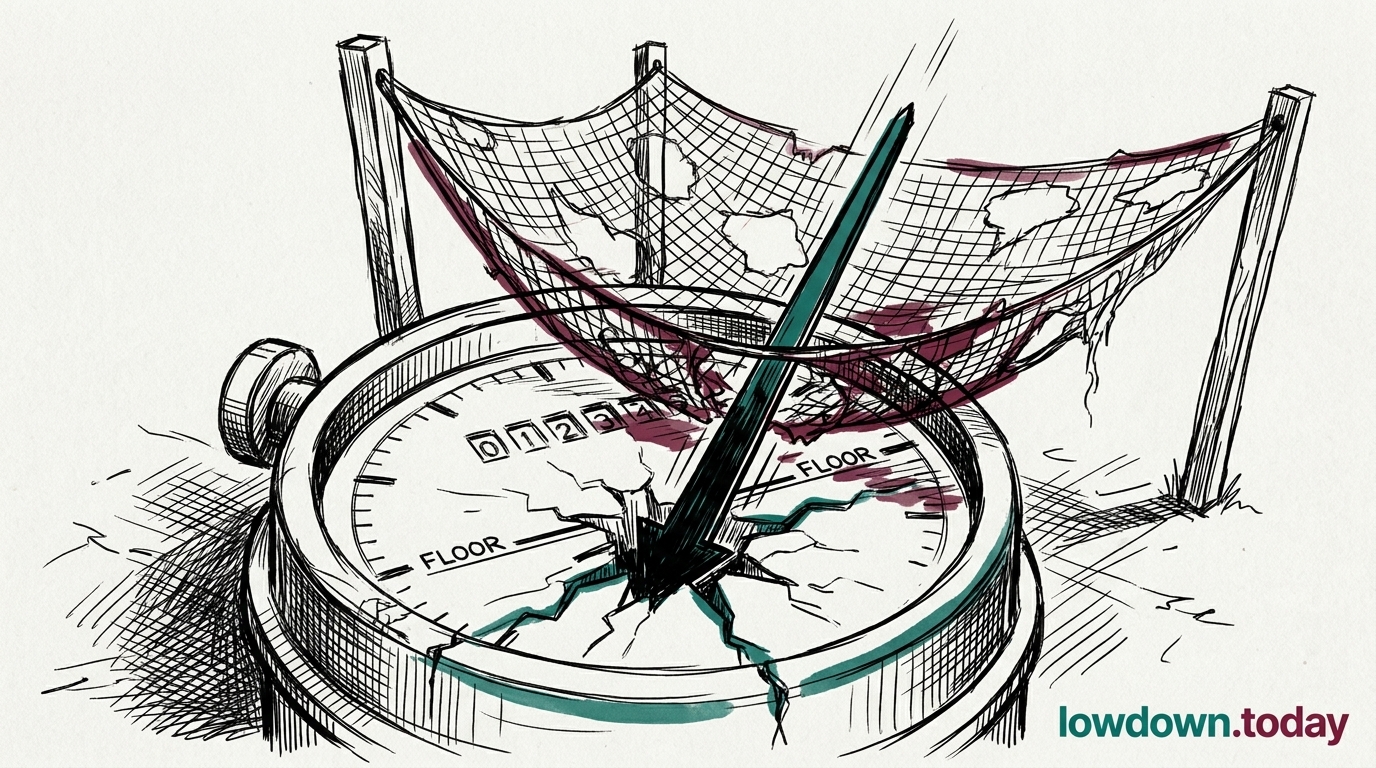
The package freezes a price-cap-adjacent mechanism for twelve months, so a rising oil price cannot automatically hand Moscow a higher cap. That matters because the sanctions architecture ties the reference price to the market: without the freeze, the recent crude rebound would have loosened the very ceiling the cap was built to hold down.

The obstruction changed seats but not shape. Hungary had blocked two of Ukraine's EU accession clusters only six days earlier , and the sanctions round has now stalled on one capital at a time twice running. Every member holds an effective veto on foreign policy, so a single government can delay the bloc's Russia measures for a fortnight; the pattern adds friction to each package rather than defeating it, and the next one starts with the same single point of failure.


Deep Analysis

In plain English

The EU can only sanction Russia if all 27 member states agree, giving each one an effective veto. On 23 July they approved a 21st package of sanctions after Slovakia, which depends on Russian pipeline gas, dropped its objection in exchange for a guarantee that supplies will be phased out gradually by 2028 rather than cut off suddenly. This pattern, one country holding up the whole bloc until it gets a concession, has repeated through most of the war's sanctions rounds.

Deep Analysis
Root Causes

The EU's Common Foreign and Security Policy requires unanimity for sanctions under Article 31 of the Treaty on European Union, a procedural veto point unrelated to any state's economic size or war exposure; Slovakia's leverage came entirely from that rule, not from a special claim on Russia policy.

Slovakia's specific holdout is grounded in a Druzhba pipeline dependency covering roughly 80% of its crude supply; a state with that structural energy dependency can credibly threaten to block any measure that raises its own import costs, which is why the resolution took the form of a multi-year phase-out rather than a flat refusal.

What could happen next?
  • Precedent

    Slovakia's 2028 gas guarantee sets a template for future holdouts to extract multi-year carve-outs rather than one-off exemptions.

  • Risk

    Austria's Rasperia asset demand and Greece's LNG re-export request remain unresolved, so the 22nd package will likely face the same single-state leverage pattern.

First Reported In

Update #25 · Ukraine rebuilds command as front freezes

The Moscow Times· 23 Jul 2026
Read original
Different Perspectives
Spain's LNG terminal operators
Spain's 9,145 GWh terminal inventory is the largest single stock in the EU LNG network, an option value that can reroute cargoes wherever the winter strip pays best rather than a cavern gas obligation tied to a fixed date. That flexibility matters more as Germany's cavern shortfall pushes more of the winter security question onto import infrastructure.
European Commission
European Commission
Brussels holds the bloc to 90% on a flexible window while Germany, holding roughly a quarter of EU storage capacity, tracks toward missing its own lower 80% figure by 21 points. A national shortfall this size in the anchor market matters more to bloc security than the flexible timetable alone can absorb.
French power exporters and CRE
French day-ahead rose in step with Germany but by less, reopening a EUR 7-17 premium that makes northward export flows commercially attractive again after the EUR 43.09 discount evaporated in days. CRE separately authorised RTE and Enedis to buy flexibility locally, betting the coming winter's binding constraint is grid congestion rather than a shortage of firm capacity.
TTF trading desk
TTF trading desk
A visible national shortfall like Germany's 21-point gap is a directional signal, not noise, for a desk holding the summer-winter spread. TTF's flat EUR 58-60 range through this week's German price swings says the market has not yet chosen to reprice refill risk into the front of the curve.
German cavern and CCGT operators
German caverns kept buying prompt gas at TTF near EUR 58-60 through the inversion; the wind collapse to 2.4 GW then flipped the spark spread to plus EUR 29 and put turbines back in the same queue. Every day turbines win that bid, injection at a third of the 877 GWh/day pace needed falls further behind.
Slovakia
Slovakia
Slovakia says it dropped its hold-out on the 21st sanctions package only after Ursula von der Leyen personally signed written gas-price and supply guarantees. The Council of the European Union's own 17,238-character release on the package names neither Slovakia nor any guarantee, leaving Bratislava's account unconfirmed by the institutional record.



