Skip to content
You can now search across every topic, entity and event.What's new
European Energy Markets
15JUN

EU storage margin narrows to 45 GWh/day

3 min read
12:23UTC

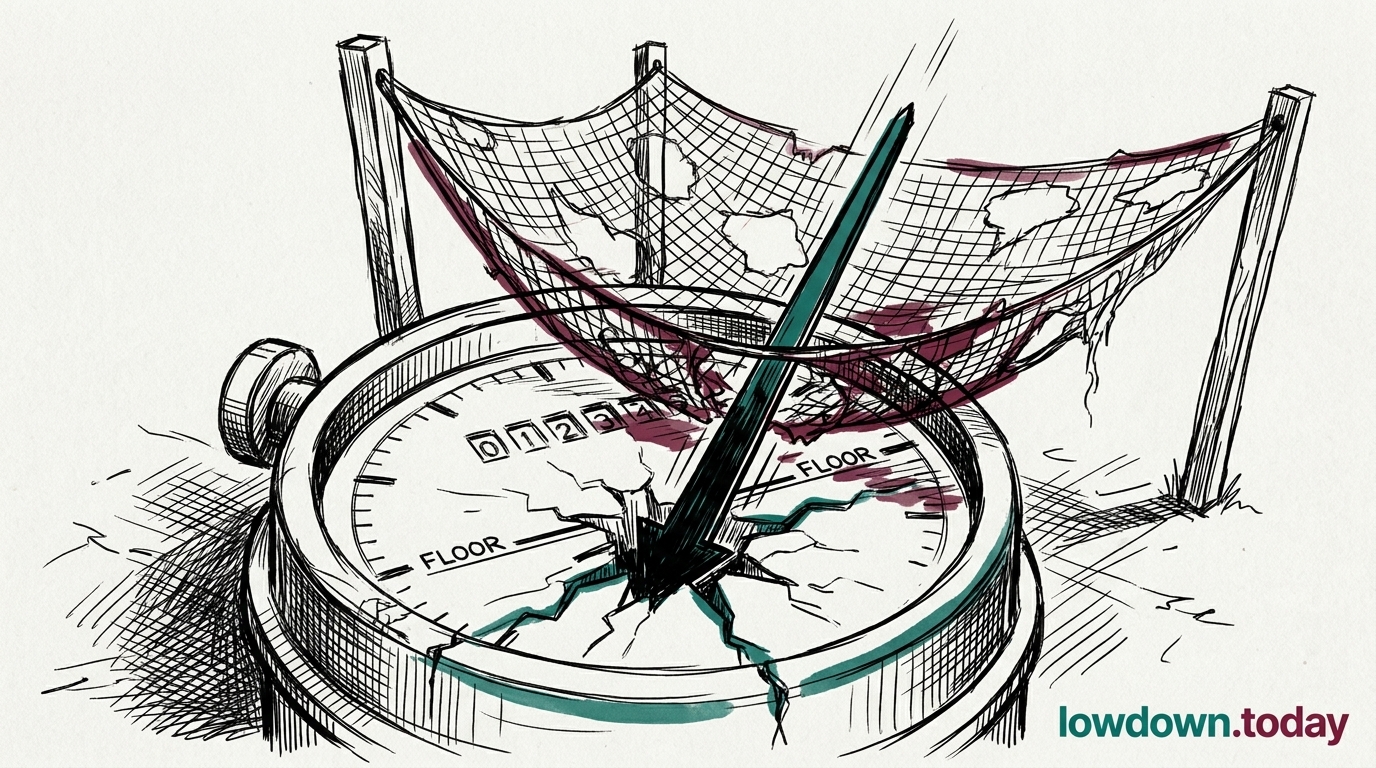
EU gas storage reached 39.1% on 29 May, clearing the 80% trajectory by a daily margin of just 45 GWh, a buffer that the Troll A outage alone exceeds 27 times over.

EconomicDeveloping
Key takeaway

Three national mandates are papering a 45 GWh/day margin that a single Norwegian outage day can erase.

GIE AGSI+ recorded EU aggregate storage at 39.1% on Thursday 29 May, with the seven-day injection pace running at 3,634 GWh/day against a required floor of 3,589 GWh/day to reach 80% by 1 November. The margin is 45 GWh/day, roughly 1.3 mcm/day of gas. At 15.9 percentage points below the five-year seasonal norm of 55%, the fill sits in the lower half of the historical range even against the softer target.

The number needs framing. The Troll A compressor fault removed 34.6 mcm/day from Norwegian send-out on 26 May. The injection doubling to 0.38 pp/day reported on 23-24 May pulled storage from structural deficit to marginal surplus. Three national regulators are doing the work that commercial economics will not: EBN in the Netherlands, CRE in France, and ARERA in Italy hold mandatory injection orders that carry the trajectory . Berlin confirmed on 20 May it will not introduce a summer incentive scheme , leaving Germany as the EU's only major unincentivised storage market after the levy lapsed on 1 January 2026.

The European Commission conceded on the target itself, relaxing the mandatory fill from 90% to 80% under flex provisions. ACER estimates the extra summer fill bill at EUR 10-15 billion. At EUR 47/MWh TTF and an inverted forward strip, commercial injectors face negative carry on every molecule stored; mandate-driven buying is the sole mechanism sustaining the trajectory.


Deep Analysis

In plain English

Think of Europe's gas storage as a giant underground battery that must be 80% full before winter hits in November. Right now it is only 39% full, and the pace of filling is barely above the minimum needed. Three countries' governments are legally ordering their state energy companies to keep buying gas and pumping it underground even though it costs more now than gas is expected to fetch in winter; a money-losing proposition no private company would voluntarily run. The problem is that the gap between the current fill rate and the required rate is paper-thin: a single Norwegian gas platform breaking down for longer than expected could tip the balance from 'on track' to 'behind schedule' within days.

Deep Analysis
Root Causes

Germany's abolition of the storage levy from 1 January 2026 removed the primary EU-wide market incentive mechanism, transferring the injection burden entirely to state-mandated operators in three member states. The inverted summer-winter TTF strip; confirmed by Timera Energy as more than EUR 0.5/MWh and tied to 58 mtpa of new LNG export capacity due online in H2 2026; eliminated the commercial spread incentive for the remainder of the market.

The 15.9 percentage-point deficit versus the five-year seasonal norm reflects two consecutive winters of under-storage, combined with the structural shift away from Russian pipeline gas that removed the cheapest, most flexible baseload supply.

What could happen next?
  • Risk

    Troll A slip past 2 June combined with a June heatwave could snap the 45 GWh/day margin into deficit within seven days, triggering a formal EC regulatory response before the 11 June ACER workshop.

    Immediate · Assessed
  • Consequence

    Germany's absence from mandated injection means the EU's aggregate 80% target conceals a two-speed storage market; Germany is likely to enter winter at 55-60% fill while the EU aggregate reads 78-82%.

    Medium term · Reported
  • Risk

    If one of the three national mandates (EBN, CRE, ARERA) faces political challenge at its annual renewal, the EU injection pace could fall below the floor requirement within weeks, with no commercial backstop.

    Short term · Assessed
First Reported In

Update #13 · Storage on track by 45 GWh; one outage away

Trading Economics / ICE· 29 May 2026
Read original
Different Perspectives
Equinor
Equinor
Equinor stacked a 13-16 June planned maintenance window on Hammerfest LNG directly atop the unresolved compressor fault running since 22 April, creating two simultaneous live stoppages at 4.3 mtpa capacity for the first time. The 10 July return target carries overrun risk: the same compressor class slipped 24 days in the 2025 maintenance cycle.
EDF and French nuclear-anchored power buyers
EDF's fleet repriced French July contracts roughly 10% in two days on cooling-water curtailment risk, flipping the FR-DE spread to France EUR 1.6 above Germany after a EUR 96.20 record in the other direction a week earlier. Industrial buyers long France against short Germany face EUR 97.7/MWh of spread swing in seven calendar days.
Hungary and Slovakia supply-security ministries
Hungary's Tisza government has reframed Russian gas dependency as a systemic risk, removing Budapest as a co-plaintiff in the CJEU challenge; MVM's 3.5 bcm long-term TurkStream contract remains exempt to September 2027, so Budapest's near-term supply is intact. Slovakia under Fico presses its QMV challenge alone and faces a 3-4 bcm/year short-term supply gap with no contracted LNG alternative.
LNG spot traders and cargo routers
At JKM-TTF of USD 5.26/MMBtu, every uncommitted Atlantic cargo loading in late June routes east; the arb sits roughly twice the OIES-assessed diversion threshold of USD 2.50-3.00/MMBtu after freight. European storage terminals are the losing bid in the cargo auction until TTF recovers or JKM eases.
European Commission / ACER
The Commission structured Regulation 2026/261 as a QMV trade measure to resist Article 194 unanimity challenges; the six-origin prior-authorisation waiver acknowledges that LNG capacity cannot substitute pipeline gas within the legislative window. ACER's cross-border enforcement powers activate in H2 2026, but jurisdiction over the Kipi entry point is legally contested.
German CCGT capacity planners
Capacity planners at Uniper and RWE face the StromVKG Wirtschaftsausschuss scrutiny as the decisive near-term fork: if the Greens' hydrogen-conversion amendment passes, the September 2026 auction becomes unbiddable on technology risk grounds and the capacity-payment fix delays into winter. Plants that have run at -EUR 44 spark spread for weeks cannot commercially sustain extended shut-in.



