Skip to content
You can now search across every topic, entity and event.What's new
European Energy Markets
15JUN

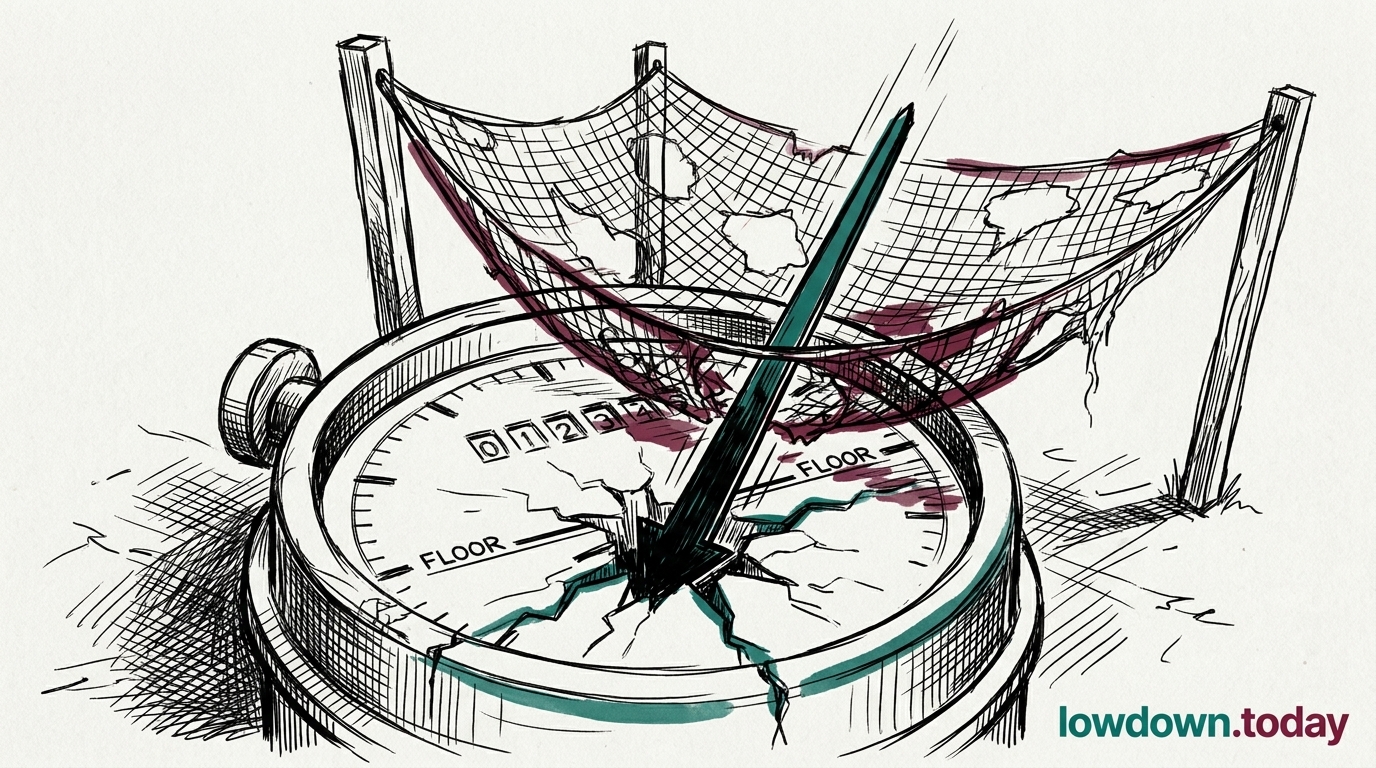
Brent jumps 6% as oil ends its shrug

2 min read
12:23UTC

Brent crude rose about 6 per cent to roughly $78.67 a barrel on 8 July, its biggest jump since the war's opening spike in March.

EconomicDeveloping
Key takeaway

Brent jumped about 6 per cent, its biggest since the war's March spike, pricing escalation it had spent months ignoring.

Brent Crude rose to about $78.67 a barrel on 8 July, up roughly 6 per cent, with West Texas Intermediate (WTI) at about $74.82, its sharpest single-day rise since the war's opening spike in March . 1 Brent is the benchmark that prices about two-thirds of internationally traded crude, so a move of this size feeds petrol, diesel and airline fares within weeks. It had sat near $73 after the Al Rekayyat strike alone .

Prices fell through every earlier shock of this conflict. Brent dropped to $71.99 through the June bombing of Qeshm Island , and the second quarter closed down about 30 per cent, the steepest quarterly fall since 2020 . What moved the market this time was not one more incident but a strike and a retaliation landing in the same cycle, which raises the probability traders assign to an actual closure of the strait of Hormuz.

Saudi Arabia floated an expansion of a Red Sea pipeline to route crude around Hormuz, and tankers began making U-turns in the Gulf, according to trade reporting. 2 The thirty-five tankers that cleared the strait at pre-war rates on 2 July now move under a threat level the market has finally chosen to price. A Saudi pipeline, if pursued, is a multi-year structural hedge rather than a quick fix, and tanker diversions tighten Gulf supply just as OPEC+ was adding barrels.


Deep Analysis

In plain English

Brent Crude and West Texas Intermediate (WTI) are the two main global oil price benchmarks. Brent jumped about 6 per cent in a single day, its biggest one-day rise of the whole war, after the CENTCOM strikes and Iran's Gulf retaliation raised fears that tankers moving through the Strait of Hormuz, the narrow waterway carrying roughly a fifth of the world's oil, could come under attack or be blocked. Saudi Arabia responded by floating a plan to expand a pipeline that would let its oil bypass Hormuz entirely by crossing overland to the Red Sea instead.

Deep Analysis
Root Causes

Oil traders price Hormuz risk through tanker insurance and freight rates as much as through headline events: P&I Clubs had already kept their Hormuz war-risk exclusion in force after the 7 July Al Rekayyat strike, meaning underwriters were signalling elevated risk before Brent moved.

Saudi Arabia's floated Red Sea pipeline expansion revives bypass capacity the kingdom has held since the 1980s Petroline system; reviving it now signals Riyadh expects further volatility rather than a one-off shock.

What could happen next?
  • Consequence

    Saudi Arabia's Red Sea pipeline expansion, if pursued, would give Riyadh a durable hedge against future Hormuz disruption independent of any US or Iranian action.

  • Risk

    A sustained price spike above $80 would test whether P&I Clubs' war-risk exclusion pushes tankers to demand naval escort before transiting Hormuz.

First Reported In

Update #149 · The first thing Washington signed on Iran: a revocation

The National· 8 Jul 2026
Read original
Different Perspectives
Spain's LNG terminal operators
Spain's 9,145 GWh terminal inventory is the largest single stock in the EU LNG network, an option value that can reroute cargoes wherever the winter strip pays best rather than a cavern gas obligation tied to a fixed date. That flexibility matters more as Germany's cavern shortfall pushes more of the winter security question onto import infrastructure.
European Commission
European Commission
Brussels holds the bloc to 90% on a flexible window while Germany, holding roughly a quarter of EU storage capacity, tracks toward missing its own lower 80% figure by 21 points. A national shortfall this size in the anchor market matters more to bloc security than the flexible timetable alone can absorb.
French power exporters and CRE
French day-ahead rose in step with Germany but by less, reopening a EUR 7-17 premium that makes northward export flows commercially attractive again after the EUR 43.09 discount evaporated in days. CRE separately authorised RTE and Enedis to buy flexibility locally, betting the coming winter's binding constraint is grid congestion rather than a shortage of firm capacity.
TTF trading desk
TTF trading desk
A visible national shortfall like Germany's 21-point gap is a directional signal, not noise, for a desk holding the summer-winter spread. TTF's flat EUR 58-60 range through this week's German price swings says the market has not yet chosen to reprice refill risk into the front of the curve.
German cavern and CCGT operators
German caverns kept buying prompt gas at TTF near EUR 58-60 through the inversion; the wind collapse to 2.4 GW then flipped the spark spread to plus EUR 29 and put turbines back in the same queue. Every day turbines win that bid, injection at a third of the 877 GWh/day pace needed falls further behind.
Slovakia
Slovakia
Slovakia says it dropped its hold-out on the 21st sanctions package only after Ursula von der Leyen personally signed written gas-price and supply guarantees. The Council of the European Union's own 17,238-character release on the package names neither Slovakia nor any guarantee, leaving Bratislava's account unconfirmed by the institutional record.



